
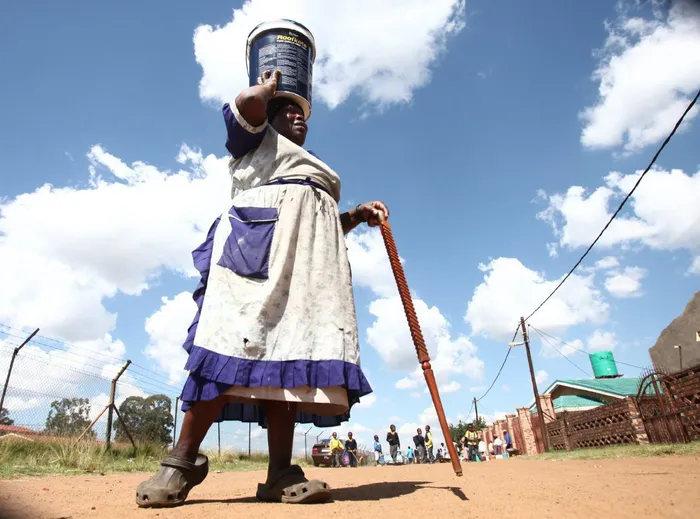
A woman fetches water in Caroline, Mpumalanga. A new Stats SA report shows that there has been a significant rise in the elderly population, with women living longer than men.
Image: Independent Newspapers Archives
In just over 20 years, the number of people aged 60 and above has risen from 3.6 million to 6.6 million. That’s an increase of three million older people since 2002, according to a new report by Statistics South Africa.
The Healthy Ageing in South Africa, 2024 report paints a picture of a country undergoing a significant demographic shift.
“South Africa is experiencing significant demographic changes, with the population of older persons rising from 3.6 million in 2002 to 6.6 million in 2025, an increase of three million persons in just over two decades,” the report states.
Older persons now make up 10.5 percent of the total population, up from 7.7 percent in 2002 and that share is expected to climb to 16.2 percent by 2050.
Another trend picked up is that women are living longer than men. The report shows that women account for 60.7% of the older population in 2025.
“The national sex ratio has declined from 67 to 65 men per 100 women, reflecting higher female longevity,” the report notes.
Life expectancy has also improved, reaching 64 years for men and 69.6 years for women.
While the older population has grown across all provinces, Gauteng has seen the biggest jump in numbers, adding nearly a million older residents between 2002 and 2025. The Western Cape has also recorded strong growth.
By 2050, the number of older persons in South Africa is projected to reach 13.4 million, effectively doubling again from current levels.
But longer lives bring new challenges. The report cautions that older South Africans continue to face serious obstacles, including unequal access to healthcare, high dependency ratios and safety concerns.
“Older South Africans face ongoing challenges, including disparities in access to healthcare, limited social grants, high dependency ratios, and safety concerns,” it states.
At the same time, the country is battling a dual burden of disease, from HIV and tuberculosis to diabetes and hypertension which places added strain on older citizens.
The report explains that healthy ageing is “the process of developing and maintaining the functional ability that enables wellbeing in older age.” In simple terms, it’s not just about living longer, but living well.
South Africa’s response is guided by both global and local frameworks.
The World Health Organization has declared 2021 to 2030 the Decade of Healthy Ageing, urging countries to create environments that support older people.
Locally, the Older Persons Act 13 of 2006 aims to protect the rights and dignity of older citizens, promoting community-based care and protection from abuse.
Despite ongoing social and economic pressures, the report highlights improvements in housing, sanitation, electricity and access to clinics.
For more stories from The Mercury, click the link THE MERCURY