

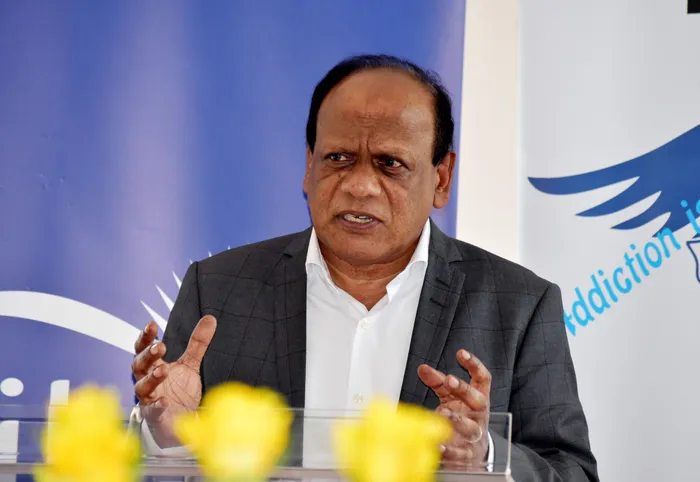
Durban business tycoon Vivian Reddy says he is actively fighting against the slow pace of transformation in the property sector.
Image: Tumi Pakkies / Independent Newspapers
The Commission on Broad-Based Black Economic Empowerment (B-BBEE) has expressed concerns about the lack of transformation in key areas of the property sector.
A study by the commission titled “South Africa's Transformation Landscape 2013-2023” has found that the sector is lagging behind in several indicators of transformation on the B-BBEE scorecard.
The study tracked macro and sector compliance trends and progress across key B-BBEE elements such as ownership, management, enterprise/supplier development, and skills development, among others, over the sample period 2013–2023.
Its concerns are shared by black business leaders who are calling for a more interventionist approach by the government to transform the sector. They warned that without a more “direct approach”, the sector, particularly private property development, is unlikely to transform.
Tshediso Matona, the B-BBEE commissioner, tabled the study during a meeting held in Durban on Saturday. The meeting examined what has been achieved by the policy and identified shortcomings and the future of this policy. Matona stated that the property sector continues to lag in terms of transformation. “Yes, the property sector is still falling behind,” he told the business people and experts attending the engagement.
The study highlights several key scorecard indicators. The study showed that, on ownership, the property sector was one of the worst performers in 2023.
“Most sectors achieved above 70% of ownership targets, except for property, which also performed poorly, along with agriculture,” said the study. For another indicator, the Enterprise and Supplier Development, the study showed that the scorecard also placed the property sector among the worst in 2023.
Prominent businessman Vivian Reddy said it is true that the property sector is the least transformed.
“I looked at a slide (contained in the study by the commission) that said, “the property sector is the least transformed in South Africa; that is absolutely true; in fact, it’s a disgrace.”
“When Sandton was being built, there was R26 billion worth of construction work underway. I drove past every one of them (signs indicating people involved in the project), and there was not a single board showing any black (African, coloured, or Indian) professionals involved in the project.”
Reddy said it seems transformation principles are abused when untransformed companies want to benefit from government work.
“When people want to tender for the government, they go and find a black partner, but in the private sector, it’s an absolute abuse of the system.”
He added that he is fighting against this lack of transformation. “When we were doing the Oceans Development, a R5 billion project that employed 6,000 people, I decided to change things. We ensured that in the professional teams, 90% were black.
We insisted in the contract that the contractor had to employ 25% black women on the site, and they did it. 15% of them were youth, and of the R5 billion project, R3.5 billion went to black contractors and SMMEs.”
Reddy added that, “In the private sector, we have to enforce empowerment as property developers; that is what we have to do. You (government) need to bring in private developers (and engage them on this); they are developing property worth hundreds of billions of rand; it is essential to enforce empowerment. The black professionals are crying out.
“In Oceans Development, we are building the last tower, now valued at R1.4 billion. We insisted that the contractor have a black professional, and he is there and has female black engineers,” he said, adding that such actions are necessary to transform the sector.
For more stories from The Mercury, click the link THE MERCURY