

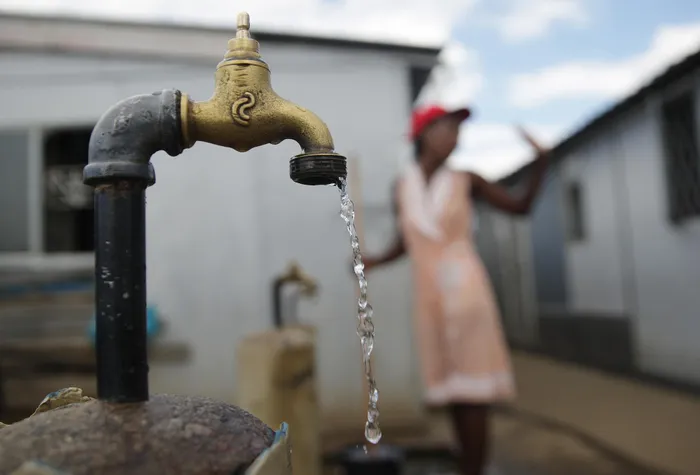
According to the latest hydrological report dated March 23, 2026, dam levels in the Western Cape have decreased week-on-week.
Image: File
The Department of Water and Sanitation (DWS) highlighted growing concern over declining water levels across the Western Cape, amid National Water Month 2026, observed under the theme "Where Water Flows, Equality Grows".
On Tuesday, the DWS reported that lower-than-normal rainfall has caused dam storage across the province to drop steadily week-on-week.
According to the latest hydrological report dated March 23, 2026, the Western Cape Water Supply System (WCWSS), which includes the province’s six largest dams, is currently at 48.85%, down from 65.64% at the same time last year.
"Almost half of our water storage capacity sits at the Theewaterskloof Dam, which currently stands at 47.44%, the lowest in the last six years," said Prof JA (Kobus) du Plessis, a hydrology and environmental engineering expert at Stellenbosch University.
"We are seeing a trend of low numbers across all storage capacities, which is a major concern at this stage."
Prof Du Plessis explained that the drop is not just about rainfall.
"Looking at consumption patterns, we are seeing a constant increase in water demand year on year. Population growth, careless water use, and significant water losses are driving the situation. Currently, we are using over 1,000 megalitres per day, compared to around 800 million litres per day during previous droughts," he said.
"The increase in demand is running away with us. We have to pay more attention to effective water use."
High temperatures and evaporation further worsen the situation.
"Higher temperatures aggravate the problem, and with people watering gardens, filling swimming pools, and evaporation from dams, the pressure on water resources is rising. This is why water restrictions are necessary," Prof Du Plessis said.
Some regions face even more severe challenges. The Olifants-Doorn Catchment, which includes Glen William Dam, is below 30%.
"Earlier this year, the Department of Water and Sanitation deliberately lowered the dam to allow construction of the cofferdam. This means the catchment is in a significantly tough spot at the moment," he explained.
Infrastructure and water loss issues also play a major role in the crisis.
"Projects to upgrade our infrastructure take too long. Besides the water reuse plant in Flora, little else is being done fast enough. Politicians must invest in maintaining infrastructure to reduce losses. We are running a high risk with scarce water resources, especially in the Western Cape," Prof Du Plessis said.
He added that small-scale options like desalination and reuse are already operating at full capacity, but these remain limited compared to growing demand.
Even with 48.85% of storage, not all water is immediately usable.
"Typically, the last 5–10% of storage is not easily accessible, and some must be preserved for environmental reasons," he noted.
Looking ahead, the outlook depends on rainfall.
"If we do not see an increase in rainfall over the next two months, we will have to raise water restrictions to curb demand. Continuing at current levels is not sustainable," Prof Du Plessis warned.
lilita.gcwabe@inl.co.za