

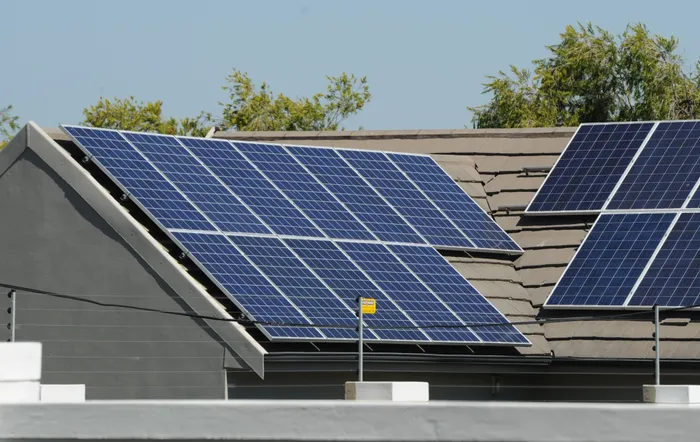
Eskom's six-month extension of the registration fee waiver for small-scale solar installations aims to accelerate renewable energy adoption in South Africa.
Image: Henk Kruger/ Independent Newspapers
In a move aimed at accelerating the adoption of renewable energy while ensuring grid stability, Eskom has announced a six-month extension of its registration fee waiver for small-scale solar installations.
The utility confirmed on Thursday that the waiver, originally set to expire at the end of March, will now remain in place until September 30, 2026.
The incentive applies to residential and small-business Small-Scale Embedded Generation (SSEG) systems with a capacity of up to 50 kW. By removing these upfront costs, Eskom hopes to encourage more South Africans to formalise their solar setups in accordance with national safety regulations.
The power utility states that under Schedule 2 of the Electricity Regulation Act, all systems under 100 kilovolt-amperes (kVA)must be registered with the network service provider - Eskom or municipalities - and comply with grid code requirements.
“The extension means that all registration and connection fees including a free smart meter (up to R10k for urban/ residential customers and R36k for rural customers), are waived until 30 September 2026 for Eskom customer solar systems up to 50kVA,” said Eskom’s Acting Group Executive for Distribution, Agnes Mlambo.
In a new move, there is a prepaid residential option for solar PV systems. Previously, many customers feared that installing solar would force them onto more expensive post-paid billing cycles. Eskom has now clarified that a new option is being tested to allow customers to remain on prepaid metering.
“Customers may retain their existing setup or, where required, have a free smart meter installed, and still qualify for the cost waiver for systems of up to 50kW. The option is currently being tested, with the intent to proceed to immediate broader rollout once initial implementation requirements are confirmed,” the Eskom statement said.
While a Certificate of Compliance (CoC) ensures a home's internal wiring is safe, the National Energy Regulator of South Africa (Nersa) emphasised that registration with the utility is about the "bigger picture".
Registration allows Eskom to monitor how much power is being fed back into the local network, preventing technical failures or safety hazards for technicians working on the lines.
To benefit from the waiver, Eskom customers must provide three key documents:
To further reduce costs and red tape, Eskom confirmed these systems can be signed off by any person registered with the Department of Employment and Labour (DoEL).
For more stories from The Mercury, click the link THE MERCURY