

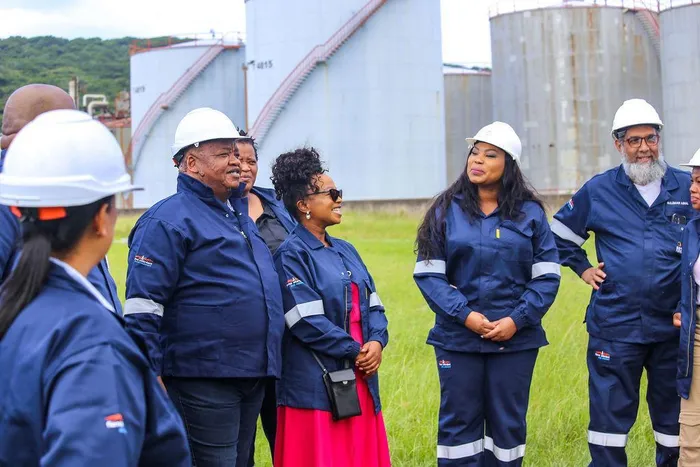
eThekwini City Manager Musa Mbhele and the Deputy Minister of Mineral and Petroleum Resources Phumzile Mgcina, today visited the former SAPREF refinery to plan its revival as the SANPC Refinery.
Image: eThekwini Municipality
eThekwini City Manager Musa Mbhele, alongside the Deputy Minister of Mineral and Petroleum Resources, Phumzile Mgcina, conducted a strategic oversight visit to the former Sapref refinery in Prospecton, Durban on Monday.
This comes amid concerns about South Africa's limited refinery capabilities. The Sapref refinery, has become central to discussions about South Africa’s fuel security, particularly amid ongoing volatility in global oil prices due to the Middle East conflict.
The Mercury recently reported that Parliament’s Portfolio Committee on Mineral and Petroleum Resources was awaiting an update from the Central Energy Fund on a study into the future of the Sapref refinery. The report is meant to be finalised by March 31.
In a statement, the City said the high-level engagement reflected a coordinated effort between national and local government to revitalise the currently inactive industrial site.
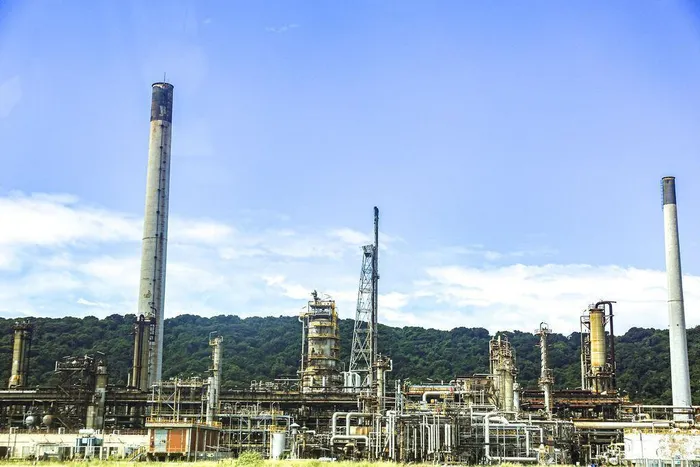
The City said the project will create jobs, boost industry in KwaZulu-Natal, and help secure South Africa’s long-term energy supply.
Image: eThekwini Municipality
The site, which has been rebranded as the South African National Petroleum Company (SANPC) Refinery, is being repositioned as a key driver of industrial renewal.
“This is more than a technical inspection; it signals strong alignment between national and local government,” said Mgcina.
Mbhele added that the SANPC Refinery is a critical asset for both the municipal and national economy.
“Its revival will ensure that eThekwini remains globally competitive in industrial development.”
The City said the restoration project is projected to deliver significant economic benefits, including approximately 12 500 construction jobs and 2 850 permanent positions. It is also expected to contribute an estimated 1.8 percent to the national GDP, with a strong emphasis on inclusive growth through a targeted 65 percent local content threshold.
The oversight visit included a comprehensive technical briefing and strategic discussions on aligning infrastructure investment with long-term energy objectives.
For more stories from The Mercury, click the link THE MERCURY