

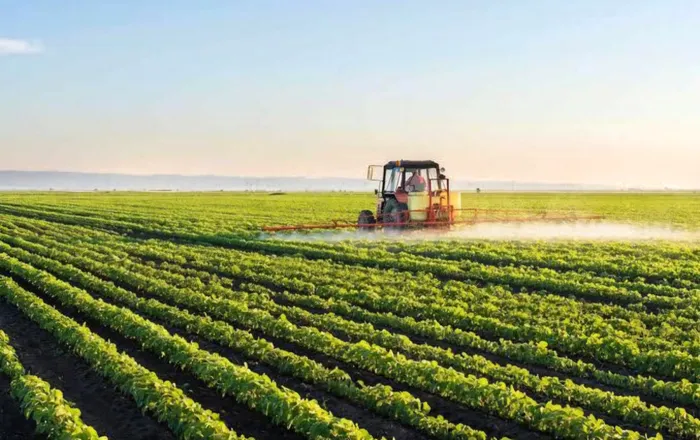
AgriSA and Agbiz have urgently requested a fuel price adjustment due to supply constraints affecting some farming areas in the country.
Image: File
Agricultural industry bodies have urged the government to urgently adjust South Africa’s fuel pricing mechanism, warning that emerging supply constraints in rural areas are beginning to disrupt farming operations ahead of key production periods.
The government is set to announce the April fuel price hikes which are expected to see increases of around R5 for petrol and R10 for diesel. While government has assured that fuel supply remains stable for April, in a joint statement, AgriSA and Agbiz said a recent survey of farmers and fuel retailers revealed a “more nuanced reality”.
The survey, conducted on March 24 and 27, found reports of constrained fuel availability across multiple regions, with some retailers rationing supply due to uncertainty over replenishment.
“These constraints are beginning to affect normal farming and agribusiness operations at a critical time in the production cycle,” the organisations said.
They attributed the situation to a combination of global oil market volatility, supply chain pressures, and behavioural responses in the market, rather than a single identifiable cause.
To stabilise supply, AgriSA and Agbiz have proposed an immediate out-of-cycle fuel price adjustment, alongside more frequent price reviews instead of the current monthly system.
“These measures are not intended to increase costs to the sector, but rather to ensure that pricing reflects underlying conditions more accurately, thereby reducing incentives for panic buying or supply withholding,” the statement read.
Fuel typically accounts for between 12% and 18% of agricultural production costs. The organisations warned that any disruption during peak planting, harvesting, or transport periods could pose risks to food production, supply chains, and food security.
Concerns over fuel availability have also been raised by the Citrus Growers’ Association of Southern Africa (CGA), which said it is monitoring the situation closely as the 2026 citrus season begins in April.
The association reported “isolated diesel shortages” despite official assurances of stable national supply, attributing this to unusual buying patterns and controlled allocation by suppliers.
Chief executive Boitshoko Ntshabele emphasised that coordination across the value chain is critical.
“Strong coordination, transparency, and contingency planning will be essential to ensure the upcoming season proceeds with as little disruption as reasonably possible,” Ntshabele said.
He added that the government must recognise the economic contribution of agricultural exports, noting that South Africa is the world’s second-largest exporter of citrus.
With about 95% of the citrus crop transported by road to ports, the association warned that limited diesel availability could directly affect the supply chain.
“This points to the problems inherent in a logistics system almost wholly reliant on trucks,” Ntshabele said, adding that expanded freight rail capacity is needed over the long term.
The citrus industry supports approximately 140,000 jobs at farm level.
The CGA urged the government to mitigate potential disruptions and prioritise improved market access to key export destinations, including China, India, the United States, and the European Union.
Both AgriSA and Agbiz said they remain supportive of a stable fuel supply system but stressed the need for “proactive, proportionate policy responses” amid ongoing volatility.
For more stories from The Mercury, click the link THE MERCURY