

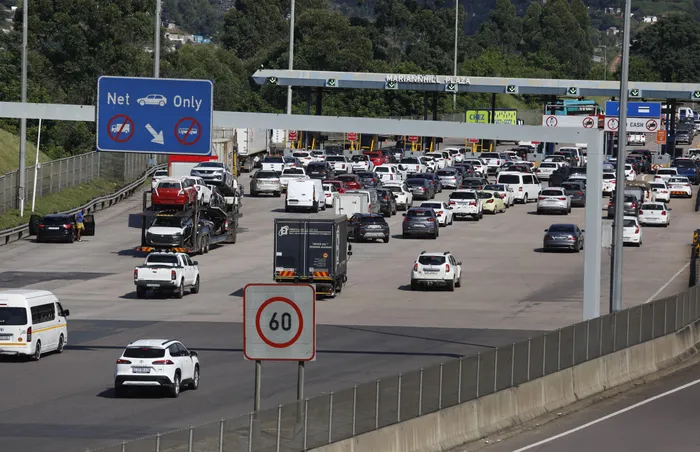
With traffic volumes surging on the N3 Toll Route this Easter, authorities urge motorists to prioritise safety and remain vigilant against risky behaviours that could lead to crashes.
Image: Doctor Ngcobo Independent Newspapers
Traffic volumes along the N3 Toll Route have surged at the start of the Easter travel period, with authorities cautioning that the combination of increased mobility and unsafe road behaviour could heighten the risk of crashes.
The N3 Toll Concession reported that traffic is expected to remain steady during the week, with busier conditions heading into the Easter weekend.
“Current traffic forecasts suggest that traffic volumes are likely to remain steady throughout the week, with busy traffic conditions expected in a southbound direction on Thursday, 2 April, and Friday, 3 April 2026,” it said.
Peak volumes are expected on Easter Monday, 6 April, and Tuesday, 7 April, when the long weekend ends and school holidays conclude. To ease congestion, all construction activity on the route will be suspended from Thursday, April 2 until Tuesday, April 7 with only essential emergency repairs permitted.
As traffic volumes rise, road safety organisations have intensified calls for behavioural change among motorists and passengers.
ChildSafe South Africa and the Road Traffic Management Corporation (RTMC) said the Easter period requires “heightened vigilance regarding road safety,” warning that the increase in travel places children at particular risk.
ChildSafe South Africa's executive director, Zaitoon Rabaney, said: “As our schools close and families begin their journeys, we must remember that road safety is a shared responsibility. We are calling on every parent and caregiver to be the primary protectors of our children.”
She added that compliance alone is not enough, urging parents to adopt safety as “a non-negotiable behaviour,” particularly through the correct use of child restraints.
The organisations stressed that children under three must be secured in appropriate car seats, while older children must wear seatbelts correctly, with the strap positioned across the chest and pelvis. They also warned that overloading remains a “critical risk factor” during holiday travel, advocating for a “one child, one seat” approach.
RTMC spokesperson Simon Zwane said children aged between five and 19 accounted for 7.2% of road fatalities during the 2025 Easter period. He said this “makes it imperative for caregivers to take extra efforts to instil the culture of safe road usage among children to protect their lives and to reduce avoidable road injuries and fatalities.”
The statement further highlighted the responsibility of drivers, warning that “high speeds significantly reduce the window for corrective action,” while illegal overtaking and ignoring traffic signals remain leading causes of head-on collisions.
Authorities reiterated a zero-tolerance approach to driving under the influence of alcohol or drugs and cautioned against the use of mobile devices behind the wheel, noting that distracted driving is a major contributor to preventable crashes.
Passengers were also urged to play an active role in ensuring safety. The organisations said travellers have the right to refuse boarding vehicles that are overloaded, unroadworthy, or driven by fatigued or impaired drivers, describing this as exercising the “power of the fare.”
Optix Africa, which has video telematics installed in commercial fleets across SA, says previous data shows that the most dangerous day for travel is Good Friday. Optix Africa provided this advice, based on the data:
Avoid Good Friday — it is by far the most dangerous day
Data shows 117 near-collision and collision events on 17 April last year, more than double any other day. If you must travel, depart very early (before 5 am) or wait until Saturday morning when volumes drop sharply. The safest window is 20–21 April (Easter Monday).
The N1 (Johannesburg–Cape Town) records more incidents than the N3 highway.
N1 — higher risk
N3 — significant risk
The Johannesburg–Pretoria corridor and the stretch approaching Durban are the densest hotspots. Both routes see collision clusters near urban on-ramps. Allow extra following distance and use rest stops on the N1 between Johannesburg and Bloemfontein.
Over 47% of all events were classified as near-collision or unavoidable — meaning drivers were seconds away from impact. Following too closely, late braking, and lane drift are the primary triggers. Keep a 3-second gap at all times.
For more stories from The Mercury, click the link THE MERCURY