

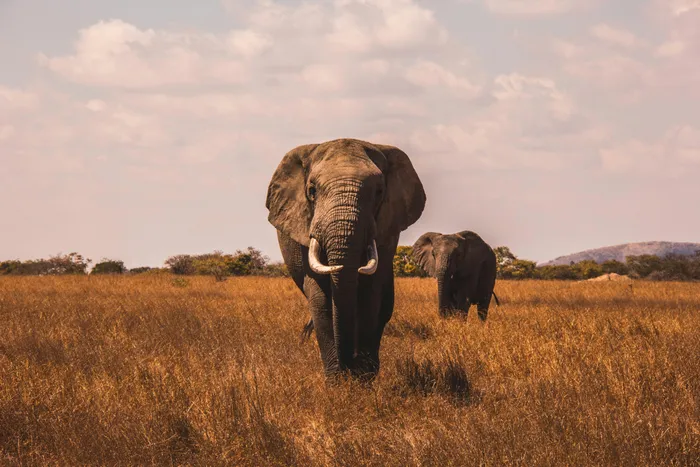
Ezemvelo KZN Wildlife has called for immediate conservation assistance to tackle the alarming overpopulation of elephants in KwaZulu-Natal.
Image: Unsplash
Ezemvelo KZN Wildlife has appealed for urgent assistance from conservation partners to help secure “safe havens” for elephant translocation, warning that overpopulation in KwaZulu-Natal’s protected areas is now placing strain on biodiversity, animal welfare and long-term reserve management.
In a media statement, Ezemvelo KZN Wildlife said reserves such as Hluhluwe-iMfolozi Park, Tembe Elephant Park, Ithala Game Reserve and uMkhuze Game Reserve are holding elephant populations above their estimated carrying capacities, despite long-term contraception programmes and efforts to expand protected areas.
“This overpopulation is ecologically unsustainable and poses a significant threat to biodiversity conservation within the reserves and ultimately threatens the wellbeing of the elephants themselves,” the organisation said.
Ezemvelo said the situation has become more urgent amid public debate over possible culling and translocation, stressing that no final decisions have yet been taken on how or when excess elephants will be removed.
The organisation said culling had not been decided on, but warned it could become necessary “in the near future” if ecological pressures continue to escalate and if non-lethal solutions cannot be found.
Ezemvelo pointed to the situation at Madikwe Game Reserve, where elephant overpopulation has reportedly resulted in extensive vegetation damage and the deaths of more than 70 elephants due to starvation, saying this underscores the consequences of delayed intervention.
“It is precisely to prevent this kind of suffering that Ezemvelo is compelled to act,” the statement read.
It also linked rising elephant densities to broader risks, including increased human-wildlife conflict, fence breaches and the movement of animals into surrounding communities.
According to Ezemvelo's Frequently Asked Questions (FAQ) document, there are an estimated 2 862 elephants across 22 properties in KwaZulu-Natal as of 31 March 2026, with 2 089 within Ezemvelo-managed reserves. It adds that most of the province’s private and communal reserves with elephants are already close to or above preferred numbers.
The FAQ explains that KwaZulu-Natal’s fenced and relatively small protected areas differ from larger systems such as the Kruger National Park, requiring active intervention rather than reliance on natural ecological processes.
It warns that “unchecked population growth leads to several significant risks”, including human-wildlife conflict, disease transmission, ecological collapse and animal suffering during drought conditions.
On management tools, the FAQ states that contraception is already in use across populations but is intended only to reduce growth rates, not eliminate population increases, and is therefore not sufficient on its own.
Ezemvelo said it continues to prioritise non-lethal measures such as habitat expansion and corridor development, including land additions to Hluhluwe-iMfolozi Park through agreements with neighbouring communities and efforts to strengthen ecological linkages involving Tembe Elephant Park.
However, it noted that land scarcity in KwaZulu-Natal’s fragmented landscape remains a fundamental constraint, adding that expansion efforts “only delay the inevitable point at which elephant numbers conflict with the protected area objectives”.
The organisation has now appealed to NGOs, conservation stakeholders and landowners to urgently identify viable reserves or expansion opportunities for elephant translocation.
It said that where translocation is not possible, alternative population management measures may have to be considered, although no final decisions have been made.
For more stories from The Mercury, click the link THE MERCURY