

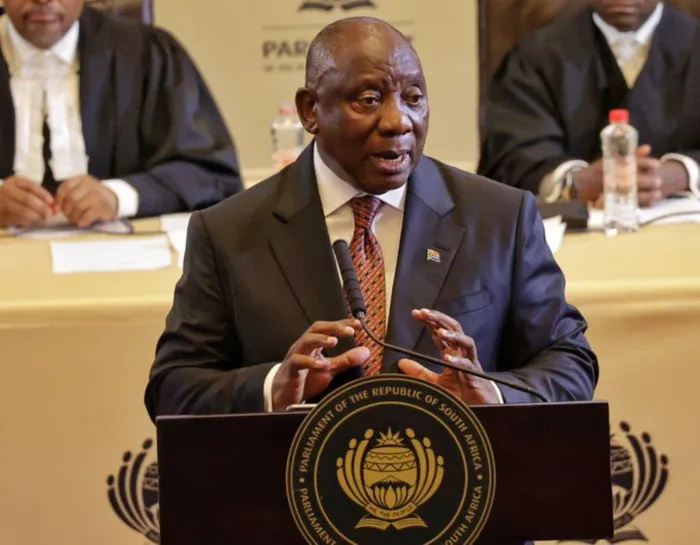
President Cyril Ramaphosa's signing of the Public Administration Management Amendment Act and the Public Service Amendment Act is aimed at reducing political interference and enhancing public service efficiency.
Image: GCIS
President Cyril Ramaphosa has signed the Public Administration Management Amendment Act and the Public Service Amendment Act into law, a move described as significant reform to South Africa’s system of government in three decades.
The presidency assented to the legislation on March 26, with the Acts subsequently published in the Government Gazette on April 1. According to the New South Institute (NSI), the law fundamentally restructures how power is exercised within the state by shifting key administrative authority away from political office bearers.
For the first time since 1994, the authority to appoint senior officials and make operational decisions within government departments will rest with departmental heads rather than the President, Cabinet ministers, or provincial Members of Executive Councils.
The NSI said the change “restructures the relationship between political office and the public administration in South Africa”, describing it as a decisive step toward limiting political interference in day-to-day government operations.
“Political interference in the day-to-day life of government departments has been one of the most persistent sources of administrative dysfunction, operational delays, and corruption in post-apartheid South Africa,” the institute said in a statement.
It added that drawing a clear distinction between those who set policy and those who implement it would create “the legal foundation for a genuinely capable, relatively autonomous public service”.
“This is a historic day, not for any single organisation, but for South Africa,” said Ivor Chipkin, executive director of the NSI.
“For thirty years, we have struggled with a public service in which political authority reached too deeply into administrative life, leading to damaging consequences for service delivery, accountability, and the integrity of the state. The Public Service Amendment Act changes that.”
Chipkin said the focus would now shift to implementation. “The hard work of implementation now begins, and we are committed to supporting it,” he said.
The NSI said the legislation was the result of years of research, policy development, and engagement across government, academia, organised labour, and civil society.
It credited Parliament’s Portfolio Committee on Public Service and Administration for providing “decisive legislative leadership”, while noting the role of the Department of Public Service and Administration and the Public Service Commission in contributing institutional expertise.
The South African Association of Public Administration and Management (SAAPAM) also welcomed the promulgation of the two laws.
The laws provide greater clarity regarding the responsibilities of the President and Premiers in the appointment and career management of Heads of Department, provides for the transfer and secondment of employees within the public service, strengthens provisions prohibiting public servants from conducting business with the state and formalises the National School of Government as a national department.
SAAPAM Executive Director, Professor John Molepo, said these legislative reforms represent a transformative moment for public administration in South Africa.
“We welcome these two important pieces of legislation as they redefine public administration in South Africa and deepen the realisation of professionalisation. They create an opportunity to bridge the gap between theory and practice, enabling practitioners to contribute to academia and academics to engage meaningfully with the public sector.”
For more stories from The Mercury, click the link THE MERCURY