

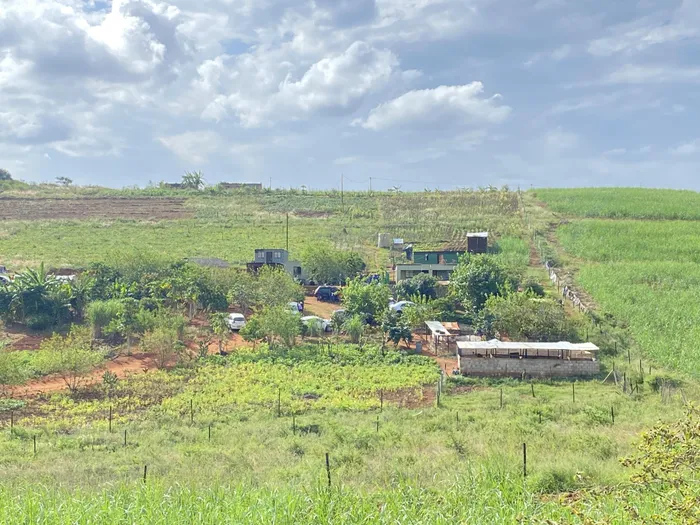
In the heart of KZN, a radical commune challenges the boundaries of faith and medicine, leading to a constitutional crisis as children are forced to abandon life-saving treatments.
Image: Siphesihle Buthelezi
In the quiet, dusty hills of the KwaMaphumulo, a "time bomb" is ticking. It is a place where the 21st century goes to die—where medical science is branded as witchcraft, schooling is a "satanic lie," and even a Christmas tree is viewed as a monument to the devil.
This is Ikhaya Labafundi (Home of the Students), a radical religious commune that has become the frontline of a high-stakes constitutional battle. This led to the KZN Department of Social Development moving in to rescue 18 children, including seven belonging to the commune's leader, Vusimuzi Sibiya.
Among those caught in the storm is Thandazile Mwelase, a mother from Inanda who claims the "Holy Spirit" led her to this isolation. Her testimony is a chilling illustration of the commune’s rejection of modern reality. Mwelase, who is HIV-positive, revealed she has completely abandoned her Antiretroviral (ARV) treatment.
"I took my decision by believing that God is life," Mwelase said defiantly. "I can't be taking medications for the rest of my life. As you see me, I’m healthy. I cannot be killed by sickness; I’ll only die through God’s will."
The cost of her faith has been borne by her 14-year-old son. Before he was seized by social workers, Mwelase had forced the Grade 7 pupil to stop his own ARV treatment and quit school.
"Education of this world is not from God," she insisted. "In school, they teach lies about sex and the origin of people. I made the decision for him to quit."
The radical defiance of the 53 congregants has sparked a furious response from CRL Rights Commission Chairperson Thoko Mkhwanazi-Xaluva. For her, Ikhaya Labafundi is proof that the state must move faster to regulate religious bodies.
"The Constitution says you protect people even from themselves," Mkhwanazi-Xaluva told the media on-site. "We have said to Reverend Sibiya that what is happening here is unconstitutional because people’s right to life is at risk. He is risking people's lives and he doesn't even feel the pain."
Mkhwanazi-Xaluva took aim at Church Defenders who have historically blocked the CRL’s attempts to oversee religious practices. "Where are they now? They are busy being keyboard warriors, but they don't come to places like this where lives are being risked."
KZN Social Development MEC Mbali Shinga confirmed that the 18 children removed from the site have been placed in state care under a multi-departmental "District Development Model" (DDM) approach.
The state is now squeezing the commune’s lifelines. MEC Shinga revealed that the institution is unregistered under the NPO Act and that officials are finalising the termination of SASSA cards for those living there to ensure government grants aren't fueling the neglect.
"How can it be that he [Sibiya] is so irresponsible as a parent that he doesn't even stay here with his own children, yet has them in this environment?" Shinga questioned. "This is not the end of the story. We have a role to play as government and society."
The commune’s grip is not limited to the uneducated. One of its most vocal members is 19-year-old Mpho Jongani, who famously turned down a government scholarship to study medicine in Cuba.
"I rejected it because of Christ," Jongani stated, echoing the church's "anti-science" dogma. "The word pharmacy was derived from pharmakeia, which means witchcraft. In the medical field, there are many things that are evil—even the emblem of the ambulance has a snake."
To the members of Ikayalabafundi, "holiness" requires total separation from:
As the CRL Commission vows "not to sleep" until the congregants are saved from this "time bomb," the 18 children have begun the process of reintegration into local schools, a world their parents believe is ruled by darkness.