

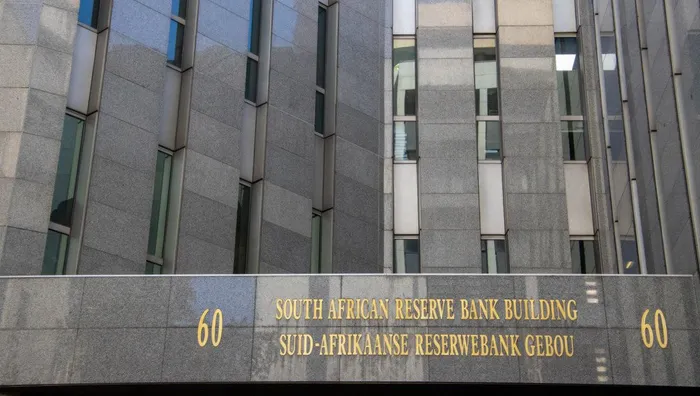
The South African Reserve Bank has explained why Ithala failed in its bid to obtain a banking licence.
Image: Nicola Mawson | IOL
The South African Reserve Bank has, for the first time, revealed that Ithala SOC Limited failed to meet several key conditions during the application process to become a commercial bank, leading to its application being declined.
One of the conditions contained in the Final Exemption Notice issued to Ithala required it to obtain authorisation to establish a bank before the actual application for a banking licence, prior to 30 June 2023. The Reserve Bank said Ithala failed to comply with this specific condition and all other conditions contained in the Final Exemption Notice, which were linked.
While Ithala had been conducting the business of a bank and accepting deposits from members of the public for a number of years, it was operating in terms of an exemption granted to it by the Finance Minister. It was understood that during this period Ithala would carry out the necessary processes to obtain a banking licence.
When the exemption expired, the Prudential Authority (PA) appointed a repayment administrator to recover and take possession of all deposits taken by Ithala from depositors or under its control in terms of the Banks Act.
The SA Reserve Bank detailed the history of Ithala's application after the entity's former board members explained what they believed were the reasons it failed to obtain a licence.
The board members, who spoke on condition of anonymity, claimed they lost out on the licence after failing to meet a condition of one of the final exemptions. They stated that this condition required them to cede R0.75 for every rand to the Reserve Bank, as contained in the final exemption granted by the bank.
One board member said: “That application was a long and very expensive process. We hired specialists who had worked on bank applications for other banks, but our application was denied without even being looked at.”
In a statement, the Reserve Bank said, “Ithala's application for authorisation to establish a bank did not sufficiently demonstrate how it would address the numerous supervisory concerns raised by the PA, with which Ithala remained non-compliant.
“Ithala failed to restructure to meet the requirements of the Banks Act for authorisation to establish a bank or a mutual bank under the Mutual Banks Act 124 of 1993.”
The Reserve Bank highlighted a string of other concerns, stating that Ithala failed to comply with all of the conditions of the Final Exemption Notice, including submitting its annual financial statements on time and being audited in accordance with the provisions of the Financial Sector Regulation Act 9 of 2017.
It noted that over the years, the PA has expressed concerns regarding the effectiveness of Ithala’s boards, particularly regarding compliance with the exemption notice and applicable legislation, as well as Ithala’s adherence to banking practices.
Issues included prolonged vacancies, challenges in attracting experienced and skilled banking executives, and difficulties in establishing a succession planning framework, which have contributed to the complexities faced by Ithala.
“Ithala has also experienced instability at the executive management level due to high rates of attrition. Moreover, there have been several instances of non-compliance associated with anti-money laundering and combating the financing of terrorism. These issues could not be resolved without significant investment into a new information technology system,” it said.
The Reserve Bank noted that Ithala remains unlicensed and is not permitted to resume deposit-taking unless it is successfully licensed as a bank in the future.
MEC for Economic Development, Tourism and Environmental Affairs Musa Zondi said he cannot speak on what happened when the application was first made as that was before his term, but he addressed that the government is busy with the work to revive Ithala and ensure that it is compliant.
Chairperson of the Economic Development Committee, Mafika Mndebele, said the committee has been briefed on the matter. “While Ithala has indicated that it made significant efforts to meet the licensing conditions, we must also appreciate that the regulatory standards applied are largely designed for commercial banks.
“We are of the view that developmental financial institutions owned by the state cannot be assessed solely on the same basis as commercial banks, as their primary mandate is not profit maximisation but advancing people-centred development, financial inclusion, and economic transformation.
“Accordingly, Ithala is undertaking the necessary reforms to address compliance gaps, and the committee remains confident that, with an appropriate appreciation of its developmental mandate, a sustainable solution will be achieved,” Mndebele said.
For more stories from The Mercury, click the link THE MERCURY