

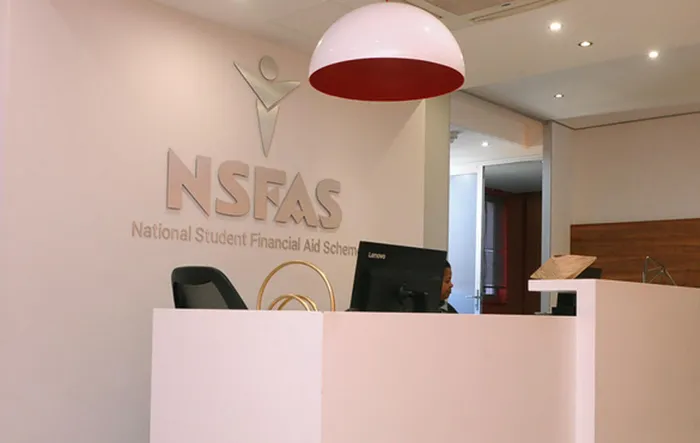
Amidst escalating governance failures and political disputes, the National Student Financial Aid Scheme (NSFAS) has been placed under administration.
Image: Independent Newspapers Archives
Higher Education and Training Minister Buti Manamela has placed the National Student Financial Aid Scheme (NSFAS) under administration, citing deepening governance failures, financial mismanagement, and operational instability at the multi-billion rand institution.
The decision, announced at a media briefing in Pretoria on Monday, marks the third time NSFAS has been placed under administration in recent years and signals escalating concern within government over the scheme’s ability to fulfil its mandate.
NSFAS provides financial support to more than a million students from poor and working-class backgrounds, making it a critical pillar of South Africa’s higher education system.
Manamela confirmed the appointment of Professor Hlengani Mathebula as administrator, granting him full executive authority to stabilise and rebuild the institution.
The intervention follows a series of crises, including a disclaimer audit outcome, governance disputes within the board, system failures affecting student funding, and ongoing delays in processing appeals and payments.
“This decision was not taken lightly,” Manamela said. “The question before government was whether NSFAS was functioning effectively, sustainably, and credibly in the interests of students and the country. I was not satisfied that it was.”
He emphasised that the administration would be temporary and aimed at restoring accountability, strengthening internal controls, and ensuring continuity of student funding.
“Student funding will continue. Allowances will continue. Appeals will continue,” he assured.
The move comes after months of instability within the NSFAS board, including multiple resignations and disputes over governance processes. The Department of Higher Education had also initiated legal proceedings questioning the validity of the board’s original appointment.
Concerns flagged by the department included:
Manamela said alternative interventions were considered but ultimately deemed insufficient given the scale and urgency of the crisis.
The Democratic Alliance (DA) rejected the administration, arguing that repeated interventions have failed to fix systemic problems.
DA spokesperson on higher education, Dr Delmaine Christians, said the scheme should be abolished entirely and replaced with a decentralised funding model.
“The DA does not believe a third administration will be successful,” Christians said. “It is time to overhaul the system and give direct control of funding to institutions, eliminating failing intermediaries.”
She added that the current model creates inefficiencies and delays that undermine student support.
The Public Servants Association (PSA) welcomed decisive intervention but criticised the lack of consultation.
The union warned that the administration must not come at the expense of employees’ rights or student support.
“This is an extraordinary intervention reflecting a profound failure of governance,” the PSA said in a statement. “Employees must be protected from arbitrary dismissals, and student payments must not be disrupted.”
The union also called for accountability against those responsible for mismanagement and a clear, time-bound turnaround plan.
The Freedom Front Plus (FF Plus) echoed calls for a fundamental rethink of NSFAS, pointing to its expansion from a R10 billion loan scheme in 2017 into a R60 billion grant system as a key source of its challenges.
FF Plus MP Dr Wynand Boshoff argued that the rapid implementation of free higher education left NSFAS unprepared.
“NSFAS has never functioned properly since its expansion,” he said. “Its inability to demonstrate sound management warrants a thorough reconsideration of the entire scheme.”
He suggested shifting administrative responsibilities to universities and financial institutions, with government playing a facilitating role.