

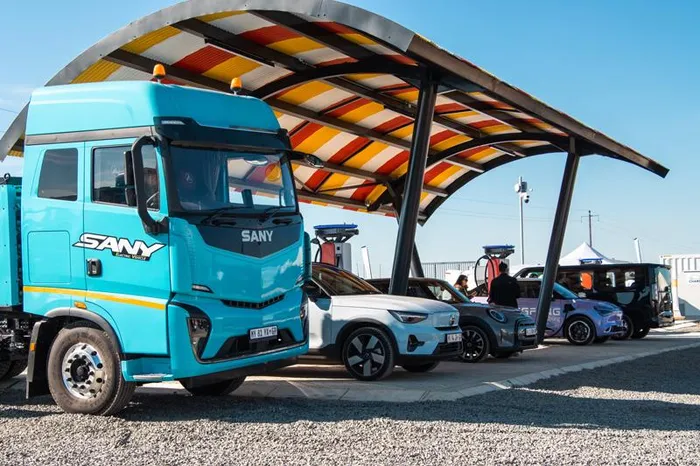
Two off-grid, solar-powered EV charging stations were launched along the strategic Johannesburg - Durban N3 corridor.
Image: Supplied
The growth of the electric vehicle market in South Africa has received another boost with the recent construction of off-grid solar-powered EV charging stations along the N3 highway in KwaZulu-Natal and the Free State.
This week, new EV charging stations were launched near the Tugela Toll Plaza on the N3, close to the Winterton exits and at the Reitz Interchange (Exit 107), in the Free State.
The project is led by a company called Zero Carbon Charge (CHARGE) which said it had carried out other pilot projects in other areas of the country.
The company said the N3 stations feature next-generation technology that delivers 50% more charging capacity, significantly improving charging speeds. Each station can charge up to 8 EVs simultaneously, with 3 DC chargers equipped with 6 dispensers and 2 AC chargers with one dispenser each.
The EV stations are also operating entirely off-grid using solar-powered microgrids and battery storage.
Determining the performance of the station, it said charging time is vehicle-specific; CHARGE’s DC fast chargers are designed to allow most EVs currently available in South Africa to charge close to their maximum supported power. On average, a typical EV can charge from 20% to 80% within half an hour, depending on vehicle size and battery configuration.
The organisation stated that such infrastructure is critical in the country as interest in EVs continues to grow.
“By building off-grid EV charging infrastructure along key transport corridors like the N3, we are reducing dependence on volatile fuel prices while creating greater energy and transport cost stability over the long term. This is about giving consumers and fleet operators the confidence to transition to electric mobility, knowing the infrastructure exists to support them. The future of transport will not only rely on electric vehicles but also on renewable energy infrastructure,” said Joubert Roux, CHARGE co-founder and chair.
Gregory Fyfe, chief investment officer of the Development Bank of Southern Africa (DBSA), stated that such investment will support energy transition and improve transport resilience. This initiative is supported by a R100 million investment from the DBSA and forms part of CHARGE’s broader strategy to roll out a national network of off-grid, ultra-fast solar-powered EV charging infrastructure on all major routes across the country.
“The DBSA’s investment in this project reflects our commitment to financing infrastructure that supports South Africa’s energy transition, improves transport resilience, and unlocks inclusive economic growth. Innovative models such as CHARGE’s renewable energy-powered charging infrastructure demonstrate how sustainable infrastructure can contribute to decarbonising the transport sector while expanding access to future-ready mobility solutions,” said Fyfe.
For more stories from The Mercury, click the link THE MERCURY