

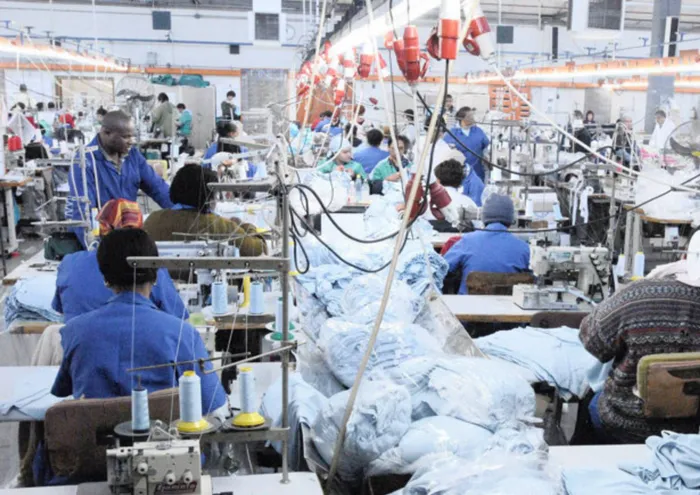
Businesses in Durban's clothing and textile sector are sounding the alarm over the potential collapse of their industry due to demands for illegal foreign nationals to leave the country. They argue that 80% of machinists are foreign nationals, some of whom could be illegally in the country.
Image: File
Durban businesses in the clothing and textile sector are pushing back against the demand for illegal foreign nationals to leave the country, warning that this will have a destructive impact on their operations.
The minibus taxi industry in KwaZulu-Natal is also bearing the brunt of reduced passenger numbers since the beginning of calls for illegal foreigners to return to their countries.
The eThekwini Clothing and Leather Council has admitted to employing foreign nationals and conceded that some could be illegally in the country.
However, it stated that it is the government that has failed to address the issue of illegal immigration. Additionally, while it employs immigrants, they argue that locals are not interested in jobs such as machinists.
Furthermore, even when they advertise these jobs, there is very little interest. Thanasagren Rubbanathan Moodley, spokesperson for the eThekwini Clothing and Leather Council, warned that the sector had reached out to the provincial government to find a solution to their situation. He stated that to date, there had been no response from the Office of the Premier. He warned that their members would institute a five-day shutdown in protest.
“Our council represents approximately 100 business owners within the Cut, Make and Trim (CMT) clothing, leather, and footwear manufacturing industry, employing over 10,000 semi-skilled and unskilled individuals. Over 80% of our essential machinists are foreign nationals, some of whom may be undocumented. This relies on a 20-year operational shift where local labour consistently rejected machinist roles – a transition historically acknowledged by government regulatory bodies, unions, and the CCMA.
“Local recruitment drives continue to yield critically low response rates. A blanket removal of these workers without a transitional framework will cause an immediate collapse of the industry, devastating the local economy and resulting in mass unemployment,” Moodley said. Moodley mentioned that on April 29, they wrote to KwaZulu-Natal Premier Thami Ntuli requesting an urgent audience, even offering a managed five-day pause to facilitate talks. One month later, they have received no response.
“As a direct result of this deadlock, our members have unanimously voted to implement a five-day industry shutdown to secure government engagement. We are deeply aware that this shutdown will hurt workers the most; however, continued silence from the government leaves our members with no viable alternative,” said Moodley.
In a letter to the office of the premier, the organisation stated that over the past 30-50 years, all arms of the government and law enforcement knew of the influx of foreigners into the country but did nothing. The labour department was also well aware of the situation.
“Now, to suddenly apply the law when it suits an agenda is grossly unfair on the employers. This industry serves to employ a large number of semi-skilled and unskilled labour, putting food on the table,” it said. Moodley said the narrative that their members employ foreigners because they are a cheap source of labour needs to be debunked. The reality, he said, is that locals either don’t want to do this menial, demanding job of a machinist or don’t have the skill set.
“Our members are tired of living under the threat of arrest on a daily basis and are planning a five-day complete shutdown of the industry to bring urgent attention to this matter. This drastic action, which will affect the workers, can be avoided if the government is willing to engage with us,” it said.
The calls for foreign nationals to leave are said to be affecting other sectors of the economy, including the minibus transport sector. Videos have been circulating online, reportedly showing taxi operators around the Harding area complaining about the negative impact on their businesses of the calls for illegal foreigners to leave.
Sifiso Shangase of Santaco said the calls would have an impact: “We transport everyone, including foreign nationals; when they use our taxis, they pay, so the call for them to leave would obviously have an impact on our business,” he said. However, they could not quantify how big that impact would be or attribute the decline of their business solely to this issue, pointing out that there are many other factors that could be contributing to the decline of the business, including the high rate of unemployment, the high costs of travelling, and intense competition from e-hailing services.
In response, the Premier's Office confirmed that Ntuli had received formal correspondence from the organisation referred to as the eThekwini Clothing and Leather Council regarding this matter, and it is receiving the attention it deserves.
It said Ntuli remains committed to engaging with all stakeholders on issues affecting economic growth, investment, job creation, and social stability within the province. Any formal request for engagement will be considered through the appropriate government processes.
“With regard to the claims that the removal of illegal immigrants would negatively impact businesses and the economy, the Premier's position is unequivocal: all individuals and businesses operating within South Africa are required to comply with the laws and regulations of the Republic. No company is permitted to employ undocumented foreign nationals, and those found to be in contravention of the law must face the consequences prescribed by the Constitution and relevant legislation. The rule of law remains a cornerstone of our constitutional democracy and cannot be compromised.”
It said the provincial government has a responsibility to protect employment opportunities for South Africans while promoting lawful economic activity, protecting workers' rights, and supporting sustainable economic growth.
Regarding immigration matters, the Premier's office said this remains the responsibility of the national government and relevant law enforcement agencies, which are mandated to enforce compliance with South Africa's immigration laws.
For more stories from The Mercury, click the link THE MERCURY