

New partnership focuses on climate adaptation, value-added coffee production and long-term support for smallholder farmers
Image: TV BRICS
For decades, Middle Eastern states secured food by importing commodities on global markets. That model is no longer sufficient. Climate volatility, geopolitical disruptions and tightening export controls have exposed how fragile global food supply chains really are. In response, the region has begun to rethink food security not as trade alone, but as production, logistics and industrial capacity. Africa sits at the centre of that rethink.
The numbers explain why. The Middle East imports more than 80% of its food. Water scarcity is structural, not cyclical. Meanwhile, Africa holds the world’s largest reserve of uncultivated arable land and a rapidly expanding consumer market. This is not a charity equation, it is a strategic one. What is different today is how Gulf capital is engaging with African agriculture: not as a source of raw supply, but as an industrial system that must be built.
The old model was simple: buy African produce, ship it out, process it elsewhere. It delivered food, but little stability or return. The new approach is more ambitious and more expensive.
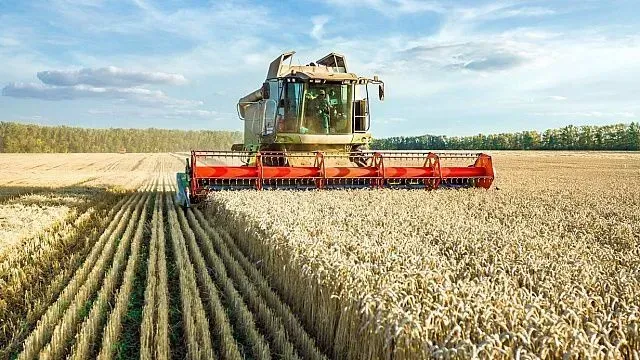
Egypt illustrates this shift clearly. From a Middle Eastern perspective, Egypt is not just a supplier or buyer; it is a logistics anchor. As the world’s largest wheat importer, Egypt’s relationship with Russia has long been framed around grain. But that framing misses the deeper transformation under way. Russian involvement now spans fertiliser inputs, storage facilities and logistics systems that stabilise supply and reduce exposure to price shocks.
This is not accidental. Egypt’s industrial policy has deliberately tied agriculture to manufacturing through special economic zones, transport corridors and port-linked processing hubs. For Gulf investors, this matters. It means scale, predictability and the ability to move from raw imports to processed food flows that serve the Middle East, Africa and Europe simultaneously. In commercial terms, Egypt is becoming an agri-industrial platform, not just a market.
This is the type of structure Middle Eastern capital looks for: policy-backed, infrastructure-ready and export-oriented. It reduces risk and turns agriculture into an investable sector rather than a weather-dependent gamble.
If Egypt represents scale and logistics, Ethiopia represents potential and urgency. From the Gulf, Ethiopia’s agriculture sector is impossible to ignore. It accounts for over 30% of GDP and employs the majority of the population, yet exports remain stubbornly unprocessed. Coffee, its flagship product, generates billions globally while Ethiopia captures only a fraction of the final value. For Gulf investors, this is not inefficiency, it is white space.
Partnerships between Ethiopia and the United Arab Emirates signal a new playbook. The focus is not just on boosting output, but on changing how value is captured: domestic processing, climate-resilient production, and supply chains that can survive new carbon and traceability rules in global markets. These are not soft development goals; they are market requirements.
Special economic zones play a decisive role here. They concentrate risk, infrastructure and incentives in one place. For investors, zones offer clarity on regulation, taxation and logistics. For governments, they create pressure to industrialise agriculture rather than export it raw. When aligned with national strategy, these zones become the bridge between small farmers and global markets.
From a Middle Eastern perspective, Ethiopia is not just a supplier of coffee. It is a future processing hub feeding both African and Gulf consumers if policy discipline holds.
The African Continental Free Trade Area changes the calculation entirely. A single market of 1.3 billion people turns agro-processing into one of Africa’s most compelling industrial opportunities. Africa’s food and beverage market is projected to exceed US$1 trillion by 2030. For Gulf capital, this is not about securing food alone, it is about accessing growth.
Climate regulation adds another layer. European markets are tightening sustainability rules, and compliance is expensive. Investing early in water efficiency, low-carbon production and traceability is no longer a reputational choice; it is a commercial one. This is why Gulf-backed agricultural projects increasingly embed climate and technology at the core, not the margins.
But let me be clear: capital alone will not transform African agriculture. Without strong land governance, farmer inclusion and clear industrial targets, investment risks repeating old extraction patterns. The countries that succeed will be those that treat foreign capital as a tool, not a substitute, for strategy.
From the Middle East, the message is simple. Africa’s agricultural future is no longer about exporting crops. It is about exporting food, brands and value. Gulf capital is ready to back that shift, but only where policy, infrastructure and ambition align.
Written by:
*Dr Iqbal Survé
Past chairman of the BRICS Business Council and co-chairman of the BRICS Media Forum and the BRNN
*Chloe Maluleke
Associate at BRICS+ Consulting Group
Russian & Middle Eastern Specialist
**The Views expressed do not necessarily reflect the views of Independent Media or IOL.