

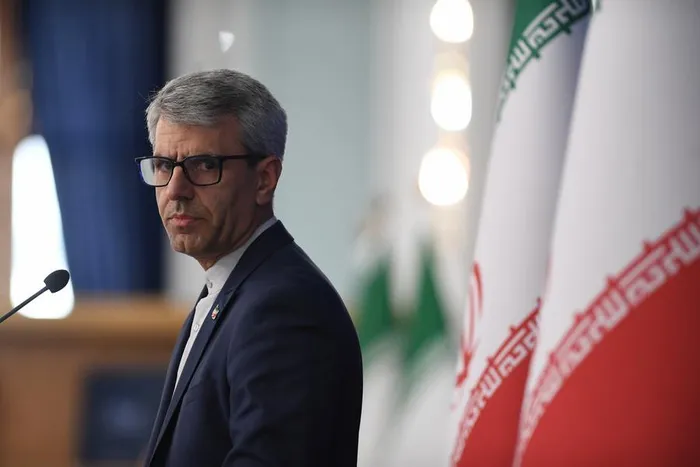
Iran's Foreign Ministry spokesman Esmaeil Baghaei attends a press conference in Tehran, Iran, April 7, 2025
Image: XINHUA
When the United States and Iran sit down in Geneva for another round of nuclear negotiations, the temptation in Western media will be to frame this as a rogue state finally being brought to heel. That framing is not only lazy; it is historically dishonest. What is actually happening in Geneva is far more complicated, and far more consequential, than most headlines will allow.
I think it’s important to note from the very beginning that Iran does not have a legal obligation to abandon civilian nuclear enrichment. Under the Nuclear Non-Proliferation Treaty, to which Iran is a signatory, every state party has an explicit right to develop nuclear energy for peaceful purposes. This is not a technicality. It is the foundational bargain of the entire non-proliferation framework.
The current standoff did not begin with Iran. It began in 2018, when the Trump administration unilaterally withdrew from the Joint Comprehensive Plan of Action (JCPOA), a deal that the International Atomic Energy Agency had repeatedly confirmed Iran was honouring in full. Every American intelligence assessment at the time agreed at the fact that Iran was compliant. The deal was working.
What followed was a campaign of what Washington called 'maximum pressure', which in practice meant crippling economic sanctions targeting Iranian oil exports and international banking. European signatories to the deal, namely France, Britain, and Germany, fell into line with American pressure rather than upholding their own treaty commitments. Iran, receiving none of the economic relief it had been promised, gradually increased its uranium enrichment, eventually reaching 60% purity, well below the 90% required for weapons-grade material, but it is a long way from the 3.5% civilian ceiling that had been agreed.
The escalation, in other words, was a response to broken commitments. Iran did not walk away from a functioning deal. The United States did.
The Iranian position going into Geneva is, frankly, more pragmatic than it is usually given credit for. According to officials close to the negotiations, Tehran is offering a suspension of nuclear activity and enrichment for three to five years, after which Iran would join a regional nuclear consortium while maintaining a token enrichment capacity of 1.5%, effectively for medical research purposes only. Iran's Foreign Minister Abbas Araghchi has stated publicly that Iran will not develop a nuclear weapon, but equally will not surrender its right to peaceful nuclear technology. Alongside this, Iranian officials have indicated a willingness to offer what amounts to a significant economic opening, the purchase of American aircraft, invitations for US companies to invest in Iran's oil, gas, and mineral sectors, and access to lithium deposits that are increasingly critical in the global energy transition. Ayatollah Khamenei, who previously banned American commercial presence in Iran during the 2015 JCPOA negotiations, has reportedly reversed that position.
This is not the posture of a government hellbent on building a bomb. This is the posture of a government under immense economic strain, looking for a way out that preserves both its sovereignty and a degree of national dignity.
The American position, led by Special Envoy Steve Witkoff and Jared Kushner, carries its own contradictions. President Trump has expressed a preference for a diplomatic solution, which is welcome. But his insistence that Iran can never possess a nuclear weapon exists in an uncomfortable tension with his administration's refusal to offer any credible security guarantees in return. Iran does not acquire leverage for no reason; it acquires it because it operates in a neighbourhood where Israel holds an undeclared nuclear arsenal and where the United States has spent decades threatening military intervention.
Secretary of State Marco Rubio has publicly identified Iran's ballistic missile programme as a major obstacle, stating that Iran refuses to discuss its missiles with anyone. That is a legitimate concern from a regional security standpoint. But it is also a concern that was never part of the original JCPOA, and introducing it now as a precondition shifts the goalposts in ways that make a deal harder to reach.
Meanwhile, the US has assembled what analysts describe as the largest American military buildup in the Middle East since the 2003 invasion of Iraq. That kind of muscle-flexing may play well domestically, but it does not exactly create the conditions for trust-building in a negotiating room.
Sanam Vakil, Director of the Middle East and North Africa Programme at Chatham House, has described the Geneva round as decisive. If Iran does not show sufficient willingness to compromise, and if the United States does not offer meaningful sanctions relief, the situation could rapidly deteriorate.
Iran has vowed retaliation against American bases across the region if attacked. Retired General David Petraeus, has warned that a war with Iran would be lengthy, destructive, and costly in both human and material terms. The damage already done to Iran's nuclear facilities following Israeli and American strikes has complicated the picture further. Iran's enriched uranium stockpile is believed to be buried under rubble at one of the bombed sites. The physical programme may be degraded, but the knowledge, the intent, and the political will are intact.
A serious agreement would acknowledge Iran's right to a civilian nuclear programme, cap enrichment at civilian-grade levels with robust IAEA verification, offer substantive and irreversible sanctions relief rather than promises, and provide a credible diplomatic pathway for addressing regional security concerns, including Iran's missile programme, as a separate but parallel track. Economic cooperation, including the energy and minerals access Tehran has floated, could serve as genuine confidence-building infrastructure.
What it should not look like is a situation where Iran is asked to give up everything in exchange for the temporary lifting of punishments that were themselves illegitimately imposed after a prior deal was dishonoured. That is not diplomacy. That is coercion dressed in diplomatic language.
The world is watching Geneva not just because of what happens to Iran or to America. The world is watching because the outcome will signal whether international law, multilateral agreements, and the right of sovereign nations to develop civilian technology still mean anything. If diplomacy works here, it proves that these frameworks are worth something. If it fails, the consequences will extend far beyond the Middle East.
Written by:
*Dr Iqbal Survé
Past chairman of the BRICS Business Council and co-chairman of the BRICS Media Forum and the BRNN
*Chloe Maluleke
Associate at BRICS+ Consulting Group
Russia & Middle East Specialist
**The Views expressed do not necessarily reflect the views of Independent Media or IOL.
** MORE ARTICLES ON OUR WEBSITE https://bricscg.com/
** Follow @brics_daily on Twitter for daily BRICS+ updates and instagram @brics_daily