


The country will next year once again look up to Chief Justice Mandisa Maya and her team to uphold the integrity of the judiciary.
Image: GCIS
This has been a rollercoaster for South Africa’s judiciary, marked by deliberate governance reform alongside major blows to the public’s perception of the institution.
While the country hosted prestigious events, implemented a new sexual harassment policy, and took steps toward full judicial independence, we also witnessed a decline in judicial appointments and several high-profile scandals that severely eroded public trust.
This is according to Judges Matter, a transparency group which believes in the importance of judges and which kept a watchful eye on the judiciary once again this year.
It noted that while the country hosted prestigious events, implemented a new sexual harassment policy, and took steps toward full judicial independence, it has also witnessed a decline in judicial appointments and several high-profile scandals that severely eroded public trust.
The 30th anniversary of the Constitutional Court was celebrated in June, when President Cyril Ramaphosa announced the government’s dedication to establishing the judiciary as an institutionally independent arm of the state akin to the legislature.
He emphasised the commitment to unifying a single judiciary and enhancing court capacity, both vital for the effective administration of justice and full independence. To give effect to this plan, he noted that a joint committee had been appointed to work on the modalities required to ensure a smooth transition, Judges Matter noted.
“September saw the heads of constitutional and supreme courts of G20 countries come together at the J20, a tremendous opportunity for South Africa to help reset the global agenda amidst growing global attacks on judicial independence and the rule of law.”
The final major judicial event was Judiciary Day on November 25, during which Chief Justice Mandisa Maya presented performance reports for both the 2023–2024 and 2024–2025 financial years.
Judges Matter commented that the data showed improvements in court performance in 2024–2025, with only the Labour Court and Electoral Court reflecting declines. The Chief Justice explained that delays in meeting targets are largely due to chronic underfunding, strained resources, and capacity constraints. These factors have led to longer waiting periods for hearing dates and delayed judgments.
It also noted that in responding to complaints about delays in the Constitutional Court, Justice Maya mentioned a proposed constitutional amendment that would allow smaller panels of judges to sit in multiple cases simultaneously, instead of requiring all eleven justices to sit on every matter. This, she said, would improve performance and the speed at which the apex court delivers judgments at a time when it is inundated with applications.
Judges Matter highlighted that judicial independence and the elimination of political interference have been central themes since the advent of constitutional supremacy. “However, 2025 showed intentional and prioritised engagements between the judiciary and the executive on moving administrative and financial duties from the Ministry of Justice to the Office of the Chief Justice.”
Ahead of Ramaphosa’s announcement at the Constitutional Court’s anniversary, the Chief Justice, the President of the SCA, three senior Judge Presidents, the Minister of Justice and several key Ministers met to discuss collaborative efforts to strengthen the judiciary. This marks the most progress ever made towards creating a single judiciary, with much credit due to Chief Justice Maya’s strategic leadership,” Judges Matter said.
This watchdog group also discussed the reform roadmap with Minister Mmamoloko Kubayi. The Minister outlined a two-phase process involving the transfer of retained or shared services and integrating the lower courts and developing the policy and legislative framework.
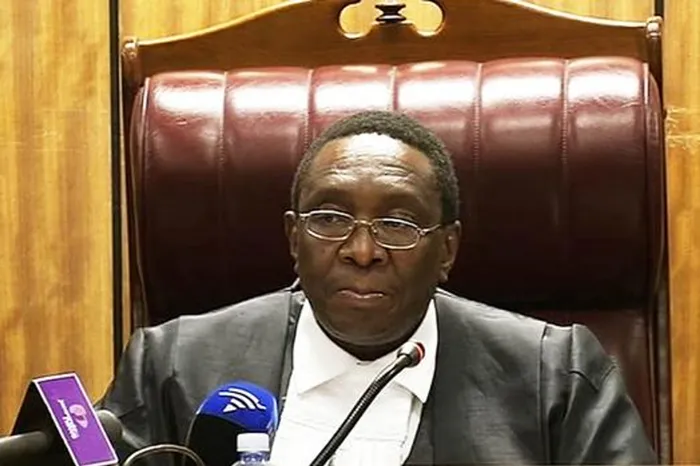
Judge Dunstan Mlambo was this year appointed as Deputy Chief Justice.
Image: Independent Newspapers
This year meanwhile saw five interview sessions, during which the vacancy for the country’s Deputy Chief Justice was filled by Judge Dunstan Mlambo, which Judges Matter said is expected to bring much-needed energy to judicial leadership. The president is meanwhile still due to select two candidates for Constitutional Court vacancies. With these vacancies persisting for several years, swift action is vital, Judges Matter said.
It further noted that the Judicial Service Commission acknowledged shortcomings in the October round, including weak candidates reaching the interview stage and voting procedures that prevented appointments. “Both processes will be formally reviewed. Ideally, this should occur before the next round in April 2026".
“With the judiciary chronically under-capacitated, unfilled vacancies are concerning. While the JSC continues improving its conduct and decision-making, it remains critical that competent, independent candidates make themselves available".
Perhaps the most damaging aspect of 2025 was the unprecedented number of judicial misconduct cases, eroding public trust, the online group said. Among these were Judge President Selby Mbenenge’s hearing into allegations of sexual harassment. The JSC also found judges Mushtak Parker and Nana Makhubele guilty of gross misconduct, with only Makhubele’s matter referred to the National Assembly to date.
As this year drew to a close, Judge Portia Phahlane of the Pretoria High Court was arrested on charges of corruption and money laundering linked to a church succession dispute. She is the first sitting judge in South Africa to face criminal charges for alleged wrongdoing in a matter she adjudicated, Judges Matter noted. Although she has been placed on special leave, Judges Matter has called for her immediate suspension due to the gravity of the allegations.
While the JSC has been slow in dealing with some of these matters, Judges Matter fear that protracted tribunals threaten judicial accountability and public confidence. “We hope 2026 brings faster processes and clearer outcomes, remembering that justice must not only be done, but must be seen to be done".
Hailing the announcement of the implementation of the Sexual Harassment Policy for the judiciary, Judges Matter has also expressed its concern that few updates have been shared on the implementation of the gender desk. “Updates from the OCJ are eagerly awaited," it said.
In looking at the year ahead, it said despite progress in 2025, the judiciary faces significant challenges in 2026. “Judicial governance reforms will take centre stage as services transfer from the DOJ to the OCJ, and Judges Matter will monitor developments closely".
zelda.venter@inl.co.za