

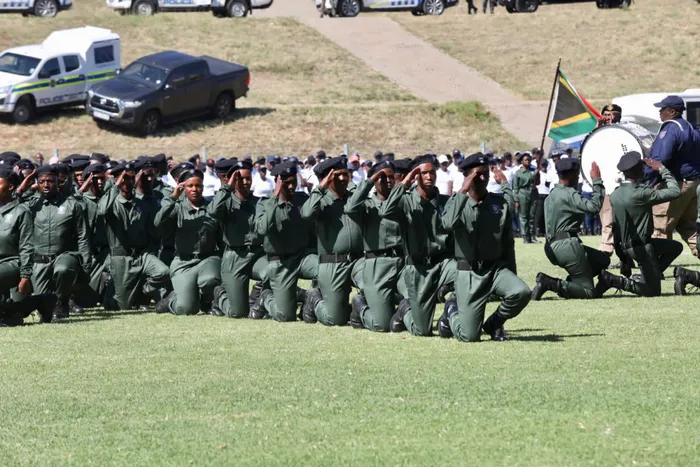
The Gauteng government has formally recognised over 9,000 traffic and crime prevention wardens as Peace Officers.
Image: Supplied
More than 9,000 Gauteng crime prevention wardens, known as “AmaPanyaza,” have been officially declared Peace Officers, the government announced on Friday, a move that one criminologist warns could cost millions of rands.
The decision comes after years of uncertainty over the wardens’ legal status and powers, which first emerged in 2023.
The announcement was made at a joint briefing by the Ministry of Justice and Constitutional Development, the Ministry of Police, and the Gauteng Provincial Government in Pretoria.
Acting Police Minister Professor Firoz Cachalia, Justice Minister Mmamoloko Kubayi, and Gauteng Premier Panyaza Lesufi led the briefing.
The declaration follows a report released on October 22, 2025 by Public Protector Adv Kholeka Gcaleka, which stemmed from a complaint lodged in September 2023 by Advocate Paul Hoffman, director of Accountability Now.
The complaint raised concerns about the establishment, appointment, and deployment of crime prevention wardens.
Gcaleka found that the wardens’ appointment lacked a clear legislative framework, leaving powers, training, and accountability undefined.
Kubayi said remedial action was directed to her, Cachalia, and Lesufi.
“The remedial action was to be implemented within 30 days of receipt of the report. Unfortunately, we did not meet the deadline, and technical teams have been engaging with the Public Protector on progress,” she said.
On January 20, 2026, a meeting was held between the three spheres of government to align the declaration with the National Road Traffic Act.
Kubayi confirmed that a revised request from the Premier’s Office sought the declaration of wardens as Peace Officers “in order to assist in enforcing safety and security for the residents of Gauteng Province.”
“Section 334 of the Criminal Procedure Act vests the Minister of Justice and Constitutional Development with the authority to declare categories of persons as Peace Officers, define their powers, prescribe certification conditions, and regulate accountability,” Kubayi said.
She added that wardens are undergoing a second phase of training to qualify for their designated functions.
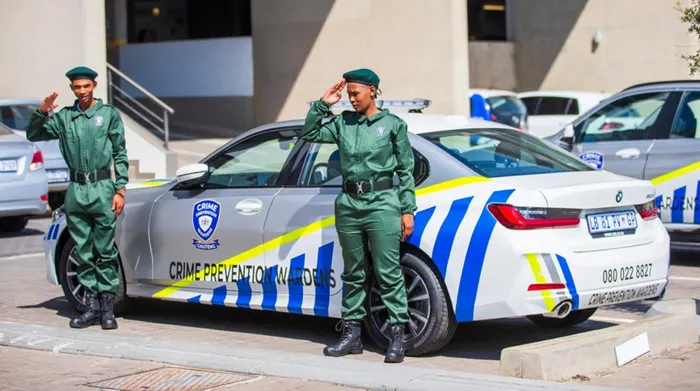
Gauteng’s controversial “AmaPanyaza” crime prevention wardens are now Peace Officers, the government announced on Friday.
Image: Supplied
“Peace officers may exercise powers only within a specified jurisdiction, in relation to defined offences, and strictly within the scope set out in the declaration.
“Duties may only be exercised when officers are properly appointed and in possession of a valid certificate; otherwise, any actions have no legal effect,” Kubayi said.
Meanwhile, criminologist Professor Kholofelo Rakubu from Tshwane University of Technology (TUT) welcomed the move but highlighted ongoing challenges.
“While traditionally deployed for traffic regulation, their expanded role has already demonstrated tangible benefits.”
“They support SAPS and Metro Police, increase visibility, deter opportunistic crime, and reassure communities,” she said.
However, Rakubu cautioned that wardens remain unarmed and lack comprehensive training in criminal law and investigative procedures.
“Without addressing this shortfall, their safety and credibility as law-enforcement agents remain compromised,” she said.
She recommended structured training including arrest protocols, evidence collection, conflict resolution, crime scene management, and public order policing.
Rakubu said the recognition of “AmaPanyaza” as Peace Officers comes with significant costs.
“Initial training and equipment alone could cost between R450 million and R850 million, with annual recurring costs of R350–530 million for salaries and professional development,” she said.

Tshwane University of Technology criminologist Professor Kholofelo Rakubu cautions that recognising Gauteng traffic wardens as Peace Officers must be matched with proper training, equipment and sustained funding.
Image: Supplied
She said the Gauteng Provincial Government should bear primary responsibility of handling all the costs, as the initiative originates locally and addresses provincial safety needs.
“The National Government must contribute, since peace officers tatus is a national legal designation under the Criminal Procedure Act, and uniform policing standards are essential.”
She said the best option was a phased approach and a co-funded model.
“Gauteng should cover operational costs, while the national government supports curriculum development, oversight, and partial funding to ensure uniform policing standards.”
“Traffic wardens should undergo a phased integration into peace officer roles, beginning with limited enforcement powers while completing structured training.”
“Costs should be shared between provincial and national governments to balance accountability and ensure uniform policing standards,” she added.
simon.majadibodu@iol.co.za
IOL News