

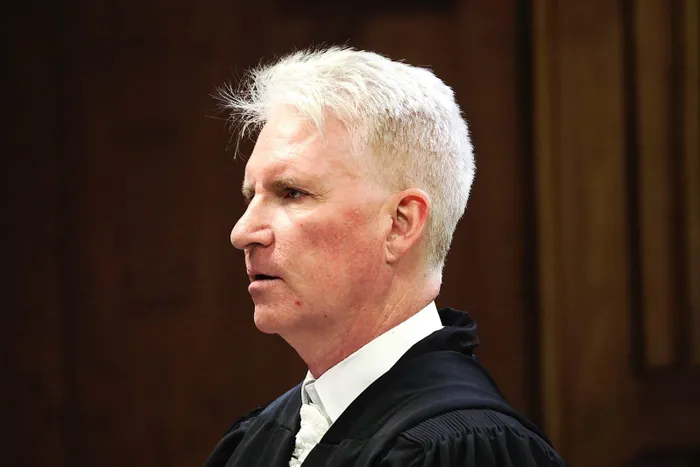
Lawyer Douglas Shaw who appears for the hundreds of applicants in the R60 billion class action against banks.
Image: Timothy Bernard / Independent Newspapers
The hearing date for the R60 billion class action application before the Gauteng High Court, Johannesburg, remains uncertain because the legal representative for the hundreds of applicants is unable to appear on their behalf.
Lawyer Douglas Shaw, who has been driving the case for the past six years against the country’s major banks, was given until Wednesday to produce a Fidelity Fund Certificate to the court, which he has failed to do.
The certificate, which is issued by the Legal Practice Council (LPC), is a vital document for an attorney and certain advocates to have. If they appear in court on behalf of clients without it, it could be regarded as a criminal offence.
Shaw this week explained that while he had the certificate last year, it was not renewed for this year. He explained that due to work pressure and being "overwhelmed", he simply did not get around to renewing it.
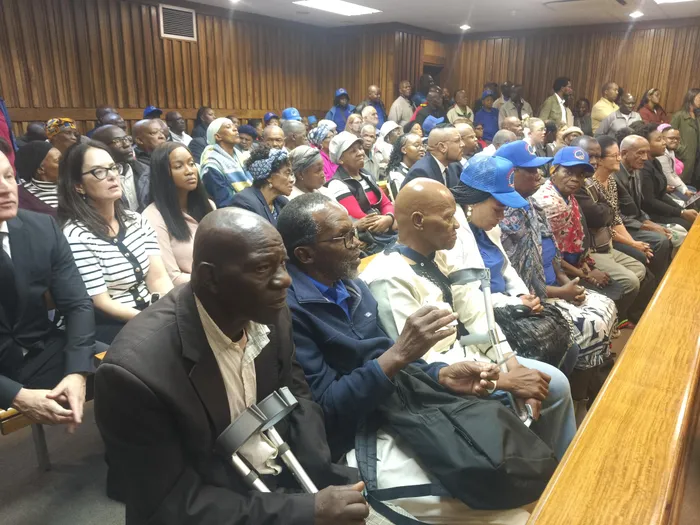
The Johannesburg High Court was packed to the brim with people who claimed they have lost their homes due to the fault of the banks after they fell in"to arrears.
Image: Zelda Venter
Shaw, however, assured the court that he is on the brink of receiving it and that only a few documents required by the LPC were still outstanding.
But Judge Leonie Windell was adamant that without it, he would be off this case.
In postponing the matter to the end of March, the judge made a ruling in which she said she will bring this matter to the attention of the LPC. She wants the legal body to investigate the issues surrounding Shaw and to issue the court with a report before the matter resumes on March 26.
The judge commented that it does not seem as if Shaw grasped the severity of the situation.
Shaw, however, is also facing other problems as the court in January issued a cost order against him personally in an interlocutory matter concerning the class action matter.
The judge gave Shaw the opportunity to file court papers as to why he must not foot that legal bill from his own pocket.
Adding to this, counsel for the banks also now asked that he pay personally for the legal fees of the hosts of advocates and attorneys who appeared for the banks this week.
The matter was set down for three days, and the banks argued that Shaw himself was to blame for the stalling of the proceedings.
Judge Windell also pointed out that Shaw is to blame for the matter not proceeding this week.
He is ordered to file court papers as to why he should not face this legal bill himself (which could run into several hundreds of thousands), and the costs matter will be argued at the end of March.
Faced at the start of Wednesday’s proceedings with the dilemma of not having a Fidelity Fund Certificate and the court barring him from appearing, Shaw told the judge he had come up with a new plan. He explained that he spoke to his clients, and they agreed that he could brief another attorney to present the case, along with him.
Judge Windell responded that this was no solution, as Shaw can no longer address the court on behalf of his clients. She said he must formally withdraw from the matter, and the clients must formally appoint the new proposed attorney if they so wished.
However, as this is a class action matter with a higher legal threshold, the new counsel will have to be vetted by the respondents and the court. The court will consequently also hear arguments next month on this issue.
Both the banks and the judge, meanwhile, agreed that the applicants should have an opportunity to address all the problems, as this is a case of great importance. It was agreed that it would be unfair to force the hundreds of applicants to proceed this week without legal counsel.
But the judge and the banks made it clear that these issues hampering the case should be finally resolved so that the matter could move forward.
While Shaw is facing these legal woes, his clients are still behind him, and many blame the banks for "Stalingrad tactics". They are still firmly pinning their hopes on Shaw to hold the banks liable for losses they claim they incurred when they fell behind in payments and the banks sold their homes for next to nothing - claims vehemently denied by the banks.
zelda.venter@inl.co.za