

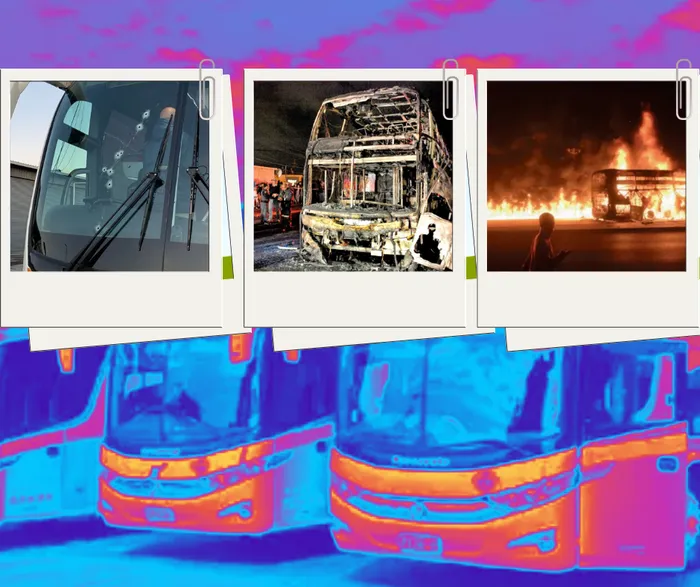
Seven individuals linked to a notorious bus mafia were arrested this week, marking a significant step in addressing the extortion and violence that have plagued long-distance bus operators since 2021.
Image: IOL Graphics
Seven linked to the bus mafia which has been tormenting long-distance bus companies and drivers since 2021 have been arrested in a country-wide crackdown.
The group made their first appearance in the Cape Town Magistrate's Court on Monday, March 30.
The group was arrested last weekend in three different provinces and faces 125 charges, which include allegations of extortion, intimidation, and money laundering.
The suspects are: Bonke Makalala, Simphiwe Matshala, Mzuvukile Mbiyo, Siyanda Dyanti, Gwendoline Mazele, Siphelele Kwaza, and Simphiwe Gxumayo.
The group, aged between 35 and 62, was arrested in Cape Town, Matatiele in the Eastern Cape, and Nelspruit in Mpumalanga.
Police said their arrest follows four years of extensive investigation conducted by the Western Cape Taxi Violence Task Team, which identified a group of individuals linked to various taxi associations who allegedly acted in concert to extort money from long-distance bus companies through threats, intimidation, and violence.
The State alleges that, between 2021 and 2023, the group demanded substantial payments from bus operators in exchange for ‘protection’ and the ability to operate without interference.
These demands were enforced through coordinated acts of intimidation, including threats of violence, disruption of operations, and, in certain instances, the unlawful detention of individuals.
Long-distance bus company, Intercape, welcomed the arrests but said the ongoing investigations are just the start of uncovering the extortion and collusion networks which have plagued the long-distance public transport sector for years.
Intercape CEO Johann Ferreira said the appearance of the suspects is linked to a long-standing campaign of organised criminal violence directed at long-distance bus operators, including Intercape.
“For years, Intercape has been subjected to an orchestrated campaign of violence. Extortionists operated with impunity, demanding that Intercape raise its prices, limit the number of buses on its routes, amend its timetables, and cease operations in certain towns. When the company refused, it ran the gauntlet of attacks by gunmen, stonings, and brazen acts of intimidation,” Ferreira said.
He said prosecuting authorities now needed to pursue this matter, including identifying and arresting the full network of those responsible.
“There should also be a focus on entities and individuals who are alleged to have paid extortion fees which supported these criminal activities and networks. The Prevention of Corrupt and Corruption Related Act (PRECCA) speaks directly to the responsibility of all citizens – corporate and private – to report criminal acts such as extortion attempts. Furthermore, the taxi industry's coordinated demands to Intercape and other bus operators are the clearest form of collusion, naked price-fixing and market allocation, in direct contravention of the Competition Act,” Ferreira said.
Intercape said it made eight detailed submissions to the Competition Commission, furnishing comprehensive evidence of this conduct. The Commission has refused to investigate.
“Intercape calls on Parliament to fulfil its mandate and have the Commission appear before it to answer the reasons for its inaction. Intercape, its passengers and staff have paid a very high price as a result of the sustained campaign of violence which first surfaced in 2016 and has escalated dramatically in recent years,” Ferreira said.
Since 2020, Intercape has reported more than 220 incidents of violence and intimidation.
Intercape driver Bangikhaya Machana was shot and killed on April 28, 2022, outside Intercape's depot in Cape Town.
Bus drivers have been shot at and stoned while driving through the Eastern Cape – the epicentre of the violence – as well as other provinces.
Passengers have been forcibly removed from buses, harassed, threatened and assaulted by elements of the minibus taxi industry who believe they are above the law.
In August 2022, 126 criminal cases were opened with the police.
The bus company appeared before the Western Cape standing committee on transport and public works and senior members of the provincial police management.
By May 2025, the attacks continued unabated, despite at least 300 cases reported to the police by just two major bus companies; not a single arrest was made.
Intercape said that despite having provided the police with video footage, witness statements and number plates of vehicles involved, its pleas for protection have mostly been ignored. It is alleged that some perpetrators have been identified as taxi operators.
“These criminal acts have deprived citizens of their constitutional rights to freedom of movement and the right to choose their preferred mode of transport,” Ferreira said.
He said these arrests must serve as a catalyst for further action, particularly as it relates to the deeply troubling collusion between organs of state in the Eastern Cape and the minibus taxi industry.
On September 30, 2022, the Makhanda High Court declared that the then MEC for Transport in the Eastern Cape acted unlawfully by requiring Intercape to negotiate with local taxi associations regarding the price, frequency and routes of its services and by suspending Intercape's operations pending those negotiations.
In November 2025, the current MEC for Transport publicly and falsely claimed that Intercape was operating without valid permits - a statement the High Court has since found to be without foundation, but which emboldened taxi operators and dissuaded the SAPS from fulfilling their duties.
“Municipal officials have actively participated in preventing Intercape from lawfully loading and offloading passengers, acting hand in glove with taxi operators to advance their unlawful interests. Numerous acts of intimidation have taken place in full view of SA Police members in the Eastern Cape, who have stood by and done nothing to protect innocent civilians. Intercape will continue to pursue accountability against every public official who has made themselves guilty of criminal conduct," Ferreira said.
Intercape has written to President Cyril Ramaphosa, on four occasions, in May 2022, October 2022, March 2023, and most recently on 16 March 16, 2026, pleading for intervention in this crisis.
In its most recent letter, Intercape made two specific requests of the President:
Intercape said it had not received a response from any of the letters sent.
“Similarly, correspondence addressed to the offices of the Ministers of Police and Transport -including the incumbents Firoz Cachalia and Barbara Creecy - over several years requesting urgent meetings have gone unanswered.
“Since September 2022, the MEC for Transport in the Eastern Cape and the National Minister of Transport have been under court order to develop and implement a comprehensive safety plan. More than three years later, no adequate plan exists,” Ferreira said.
He said the arrests of the seven suspects has opened a window into the dangerous and pervasive world of organised crime networks centred around the minibus taxi industry in South Africa.
“It can no longer be ignored or swept under the carpet. Intercape calls upon President Ramaphosa, the Minister of Police, the Minister of Transport, Parliament, the Competition Commission and other relevant State organs to seize this moment and discharge their constitutional duties,” Ferreira added.
robin.francke@iol.co.za
IOL