

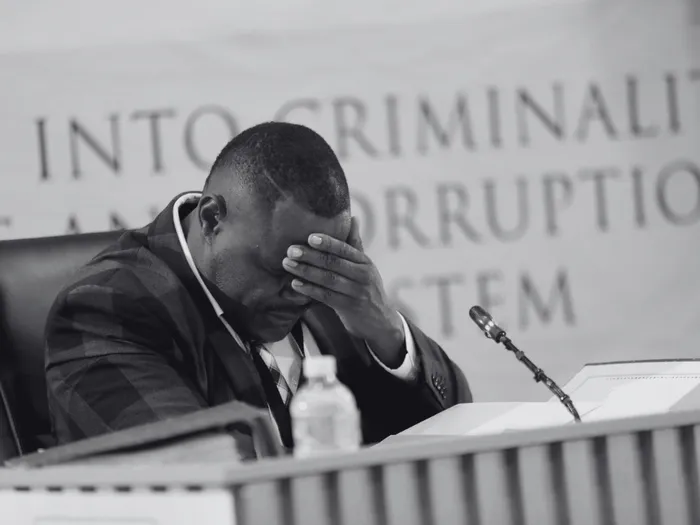
Organised Crime Unit Officer Sergeant Fannie Nkosi
Image: Oupa Mokoena / Independent Newspapers
The arrest of Sergeant Fannie Hezekiel Nkosi, who is embroiled in the controversial Madlanga Commission of Inquiry, has ignited fierce debate over the South African Police Service's (SAPS) commitment to transparency and accountability. Nkosi’s detention comes amid allegations of serious misconduct, further compounded by the police's refusal to confirm his identity following a recent raid on his Pretoria home.
On Thursday, an operative team from the police's Special Investigations Task Team — a unit announced by President Cyril Ramaphosa in January to probe criminal cases linked to the inquiry — raided Nkosi's residence. The search resulted in the seizure of a substantial cache of illicit items, including numerous firearms, unlicensed ammunition, a hand grenade, and various police case dockets.
Despite indications that Nkosi was the focus of the operation, police spokesperson Athlenda Mathe refrained from confirming this, leading to accusations of secrecy.
Anti-corruption advocate Yusuf Abramjee publicly condemned the police's lack of transparency, questioning why details of Nkosi’s arrest were being withheld when similar cases are frequently publicised.
“It is troubling that the police routinely announce arrests that reflect positively on them, yet when one of their own is implicated, silence prevails,” Abramjee lamented. “This inconsistency raises severe doubts about their commitment to fighting crime and maintaining public trust.”
Nkosi, attached to the Gauteng Organised Crime Unit, was already suspended due to prior allegations that he acted as an intermediary between suspended Deputy National Police Commissioner Shadrack Sibiya and alleged figures linked to crime cartels. With the recent discovery of official case dockets during the raid, questions surrounding internal controls within SAPS are now more pressing than ever.
As the police confirmed the execution of a search and seizure operation, Mathe acknowledged ongoing investigations but declined to disclose the name of the officer involved, simply indicating that further information would become available after Nkosi's court appearance. This has not quelled public speculation, as social media is rife with discussions asserting the officer's identity as Nkosi.
The Madlanga Commission, a judicial inquiry separate from the task team responsible for Nkosi's arrest, has highlighted numerous officers, including Nkosi, for potential criminal investigation. While Abramjee urges transparency, he stresses that withholding details not only compromises public confidence but could also hint at deeper issues within SAPS.
IOL