

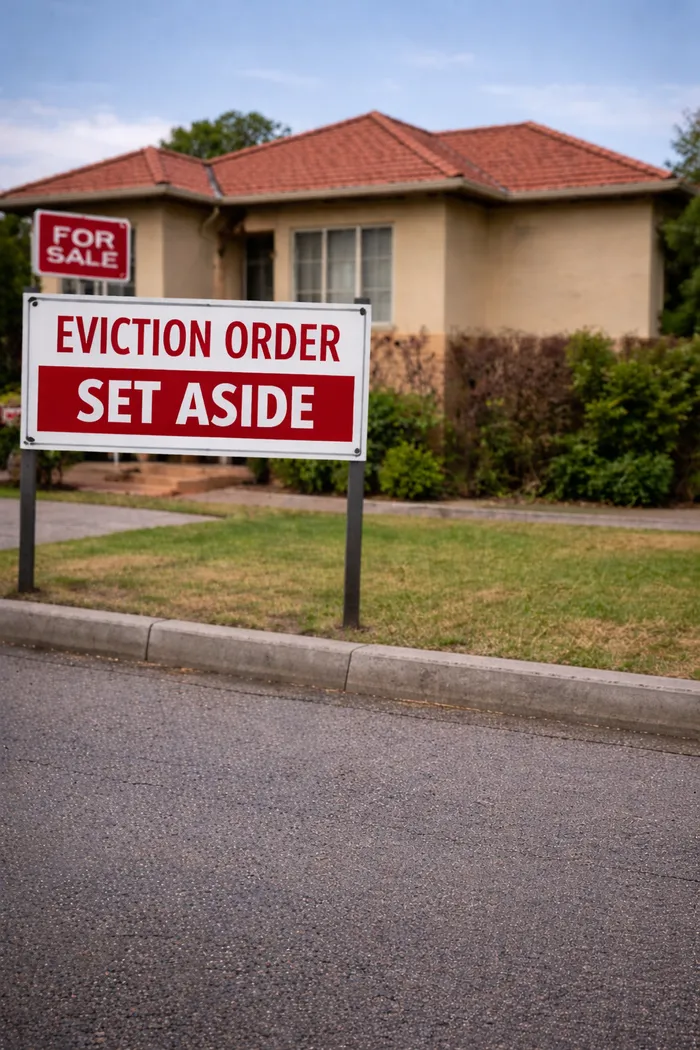
A legal expert unpacks the impact of South Africa's PIE Amendment Bill and says it's a new era for property owners.
Image: File
With South Africa being closer to a radical overhaul of its eviction laws as the Department of Human Settlements officially gazettes the Illegal Eviction and Unlawful Occupation of Land (PIE) Amendment Bill, we are moving from a system of “eviction at all costs” to one of “regulated resolution”.
This is according to legal expert Ann-Suhet Marx, director and head of litigation at VDM Incorporated.
The proposed changes aim to strip away the legal loopholes used by bad-faith occupiers, while introducing harsh penalties for those who orchestrate land invasions, says Marx.
Calling the Bill a “seismic shift” for property owners and municipalities currently buckled under the weight of expensive, years-long litigation, she hopes it will mark the end of an era of indefinite stays on private land.
“For the first time, the law is specifically targeting syndicates behind these invasions, rather than just the desperate families caught in the middle,” she adds.
Marx explains that our courts have been a frontline for a constitutional tug-of-war for years.
“The 2026 Bill is a direct response to years of judicial 'gridlock', where landowners and municipalities were left with orders they simply couldn't enforce.”
Looking at the law before and after the proposed amendments, Marx explains that as things stand, landlords must fund expensive litigation to join the municipality in a legal challenge. But the Amendment Bill proposes automatic joinder. The State is involved from the start, at no extra cost to the landlord.
Another proposed change will be that while tenants can “game the system” for years by claiming homelessness, the amendment proposes fixed timeframes. Courts are empowered to set strict end-dates for emergency accommodation.
In terms of the amendment, courts may also fast-track cases where the owner’s financial survival is at stake. Marx believes that the 2026 PIE Amendment Bill will also offer considerable relief to small-scale property owners.
“For a pensioner who relies on a garden cottage for income, or a family that has saved for years for a single rental unit, the current legal system often feels punitive. They simply can’t afford a R150,000 legal bill and an 18-month wait to reclaim their own property.”
According to Marx, the new Bill contains three critical elements aimed at addressing this.
Marx says the new clauses are intended to fast-track cases where the property owner can prove undue financial hardship, which will prevent the landlord from falling into foreclosure while waiting for an eviction order.
The public has until mid-June to submit comments on the Bill. While it is tough on crime, Marx says its success will depend on how the courts balance these new penalties with the constitutional right to housing.
“This isn't just about property rights; it's about municipal stability. If these amendments pass, we will finally have a streamlined process that doesn't bankrupt the property owner or the state.”
According to Marx, the current law was often toothless against organised syndicates who “sold” plots they didn't own.
Drawing on the fallout of mass invasions like those seen in City of Johannesburg v Unknown Individuals (2024/25), the Bill introduces a R2 million fine and asset forfeiture to target the financial heart of land-invasion “business models”, she explains.
zelda.venter@inl.co.za