

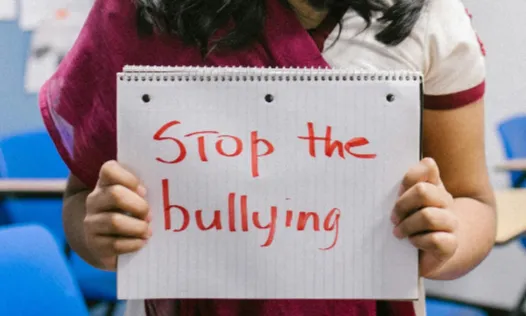
Bullying continues to cast a long shadow over South Africa’s schools, leaving many learners anxious, isolated and unsafe.
Image: RDNE Stock Project/Pexels.com
Even though bullying in South African schools remains a widespread and deeply concerning problem - one that has cost young lives, some schools have successfully implemented anti-bullying programmes that are beginning to make a difference.
In the first few weeks of the 2025 academic year alone, more than 500 cases of bullying were reported across the country, with Limpopo recording the highest number.
In February, Basic Education Minister Siviwe Gwarube said 548 cases had been reported since schools reopened on January 15.
Limpopo accounted for 305 of those cases.
In a written response to EFF MP Lorato Tito-Duba, Gwarube said the North West reported 78 cases, the Eastern Cape 68, KwaZulu-Natal 29, Mpumalanga 26, Gauteng 23, the Western Cape 11, the Northern Cape seven and the Free State one.
The issue gained national attention in 2021 when Limpopo pupil Lufuno Mavhunga died by suicide after a video of her being assaulted went viral.
More recently, more than 11,000 bullying incidents were reported in public schools between October 2024 and September 2025, according to data submitted by Provincial Education Departments.
Gwarube said the DBE’s role is to “identify trends, strengthen national policy, and guide coordinated responses through the National School Safety Framework”.
Despite the prevalence of the problem, several schools have taken meaningful action.
Makgongoana High School in Makanye village, Limpopo, has implemented a structured anti-bullying programme.
Geography and History teacher Clement Phaleng said the school has “a task team that deals with anti-bullying… a safety committee that ensures cases of bullying are reported and dealt with accordingly”.
Phaleng said the school uses a WhatsApp group to keep parents informed.
“Our principal writes messages to the group reminding them about bullying… letting parents be aware and support the school in no tolerance against bullying,” he said.
He described a recent incident involving a new learner who posted about suicidal thoughts after being bullied.
“The principal learned about it and tasked a team to do an investigation… The ones who bullied her were found, and their parents were called in. The incident subsided afterwards.”
Although teachers discuss bullying in class and during assemblies, Phaleng said, “With this, bullying has not ended.”
The Oprah Winfrey Leadership Academy for Girls (OWLAG) in Meyerton, Gauteng, told IOL News that it follows a proactive and holistic approach to bullying, integrated into its Child Safeguarding and Protection Policy.
Learners entering Grade 8 undergo psychosocial assessments to identify risks early.
“This early insight enables tailored interventions,” the academy said.
Anti-bullying workshops run across all grades and are delivered through assemblies, peer dialogues, residence activities and small-group sessions facilitated by psychologists and social workers.
“Guided by the principle of dosing, anti-bullying education is delivered through multiple touchpoints rather than a once-off session,” the school said.
The OWLAG said its values - sisterhood, respect, compassion, integrity and resilience - are reinforced daily. Parents sign the same Code of Conduct as staff, affirming shared responsibility.
The academy also restricts phone use for younger grades.
It said learners reported that reduced phone access “not only decreased online conflict but also improved academic focus and strengthened face-to-face relationships”.
When relational conflict increases, the school said it implements an “intensive strategy” including psychoeducation, stronger residence support and bonding initiatives such as camps and grade trips.
“Over time, these layered interventions produce a visible shift in cohesion, empathy, accountability, and relational climate,” the academy said.
Clinical and sports psychologist Dr Keitumetse “Tumi” Mashego said bullying can have severe psychological consequences, including anxiety, depression and poor self-esteem.
“It can exacerbate or lead to issues such as severe anxiety, depression or stress,” she said, warning that it may also result in physical symptoms, school avoidance or suicidal ideation.
Mashego said victims must receive mental-health support and, in severe cases, medication.
“While some bullies can be rehabilitated, sadly most have poor prognosis and won’t benefit and should be dealt with accordingly,” she told IOL News.
She said bullying often reflects what is happening at home.
“The bullies are a reflection of their chaotic family system most of the time.”
Mashego called for a national integrated strategy involving health, social services and education, with regular screenings at schools.
Childline South Africa emphasised that anti-bullying programmes must follow a whole-school approach.
“This means clear policies that are consistently enforced, ongoing awareness campaigns… and structured support for both victims and bullies,” said Bhavna Lutchman, the organisation’s online counselling project manager.
She said teachers need training to recognise signs of distress, and learners should have safe reporting channels such as anonymous boxes.
“It is also important to create ambassadors for anti-bullying within schools,” she added.
She said the organisation supports schools through prevention programmes, community outreach, educator training and psychosocial support. “Be a Buddy, not a Bully” is one of its key messages.
The organisation revealed that in the past quarter, its affiliates held 225 outreach events, reaching 25,151 children and 4,547 adults.
Lutchman said schools should treat every report seriously.
“Rather than dismissing incidents as ‘just teasing’, schools can treat every report seriously, reinforcing to learners that their voices matter.”
If you are being bullied or know someone who is, you can contact Childline South Africa’s 24-hour toll-free helpline on 116, or use the online chat service at childlinesa.org.za.
simon.majadibodu@iol.co.za
IOL News