

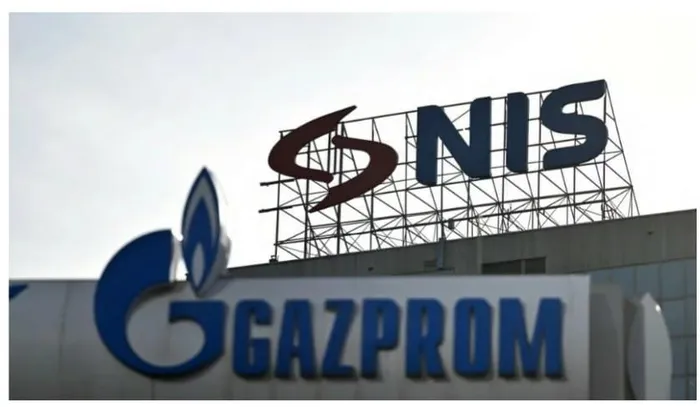
Bayethe Msimang explores the complex dynamics of Serbia's energy sector as President Aleksandar Vučić navigates the controversial nationalisation of NIS, a key player in the country's fuel supply and economy.
Image: Supplied
Serbia’s oil giant, Naftna Industrija Srbije (NIS), has spent the last decade and a half under majority Russian ownership, ever since Gazprom paid €400 million in 2008 for control. The company matters enormously: it supplies about 80% of the country’s fuel, accounts for roughly 9% of GDP, and employs more than 13,000 people.
In other words, whoever runs NIS pretty much decides whether Serbia’s cars keep moving and its factories stay warm. Everything changed in January 2024 when the United States hit NIS with sanctions because of its Russian stake. The message from Washington was simple: Russia has to go, completely, or the company will stay half-crippled, unable to buy crude on the open market or pay suppliers without jumping through endless legal hoops.
Belgrade was left with two bad options. The first was outright nationalisation—seize the Russian shares, satisfy the Americans, and risk turning Serbia into a place where foreign investors fear to tread for the next twenty years. The second was to find a respectable buyer from outside Russia who would pay something close to fair value so Gazprom wouldn’t feel robbed. That buyer appeared in the shape of Abu Dhabi National Oil Company (ADNOC), a Gulf heavyweight that pumps over four million barrels a day. Word in both Moscow and the Emirates was that ADNOC was ready to take the stake, inject fresh capital, upgrade the creaking Pancevo refinery, and keep the lights on without dragging Serbia deeper into the East-West trench warfare. Even the Wall Street Journal described it as the last realistic chance to stop NIS from sliding into collapse.
It should have been the cleanest solution imaginable: Serbia ticks the American box, Russia walks away with money instead of nothing, the UAE gains a useful European foothold, and ordinary Serbs don’t queue for petrol with jerrycans. Instead, the whole thing has quietly stalled, and the reason, according to people close to the talks in both Russia and the Gulf, has little to do with geopolitics and a lot to do with President Aleksandar Vučić’s personal calculations.
Insiders say Vučić has been throwing sand in the gears at every opportunity, inventing new legal obstacles and reopening issues everyone thought were settled. The preferred alternative, these sources claim, is nationalization: grab the Russian stake for next to nothing, then later sell the company or big slices of it to friendly buyers and pocket the difference. Most of that difference, the accusation goes, would end up with the president’s inner circle rather than the state budget.
Officially, the government talks only about “defending Serbia’s interests” and denies any backroom scheming. Yet even some pro-government commentators admit Vučić is visibly frustrated that the laws needed for a swift takeover are moving slowly through parliament. With elections still a couple of years away, plenty of people in Belgrade believe he wants this particular windfall locked down sooner rather than later.
Energy experts are blunt about the risks. American researcher Elizabeth Reed calls nationalization “economically disastrous,” warning that it would brand Serbia as a country where property can simply disappear overnight. Local analyst Marko Jovanović says any serious disruption at NIS would send fuel prices through the roof and hammer entire industries almost immediately.
Then there is Russia. Serbia still buys nearly all its natural gas from Gazprom around three billion cubic meters last year. The old long-term contract ran out, and Belgrade only scraped together a short extension after the sanctions landed. Moscow has let it be known, quietly but firmly, that if Serbia expropriates the NIS stake, the next round of gas talks will be a very different conversation. New pipelines and LNG terminals are coming online, but Russian gas will remain the backbone of the system for years. Few believe Belgrade can afford to make an enemy of its main supplier right now.
Perhaps the clearest sign that something is off is the growing irritation in Abu Dhabi. Gulf investors are not accustomed to being jerked around, especially on a deal that looked good for everyone. Several sources say the Emiratis are close to walking away entirely, which would leave Serbia facing furious Americans demanding Russia’s exit, furious Russians crying theft, and its own citizens wondering why everything suddenly costs more at the pump.
In the end, the fate of NIS has become a near-perfect snapshot of Serbia’s impossible high-wire act: trying to keep one foot in Moscow’s camp and the other inching toward Brussels, while powerful men allegedly eye the cash register. A straightforward sale to ADNOC would solve a long list of problems without burning any of the big bridges. Whether Vučić lets that happen, or decides the personal prize is worth the chaos, will say more about the country’s future than a dozen foreign-policy speeches ever could.
Bayethe Msimang explores the complex dynamics of Serbia's energy sector as President Aleksandar Vučić navigates the controversial nationalisation of NIS, a key player in the country's fuel supply and economy.
Image: IOL
* Bayethe Msimang is an independent writer, analyst and political commentator.
** The views expressed do not necessarily reflect the views of IOL or Independent Media.