

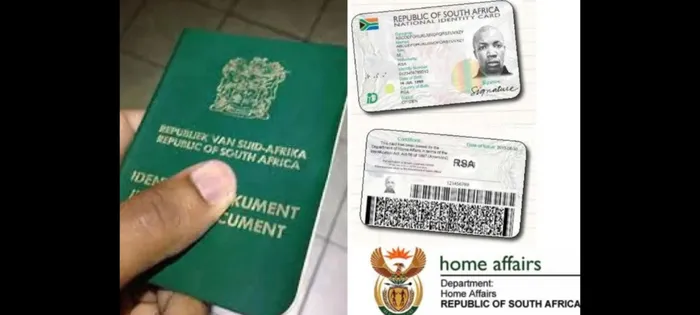
Home Affairs Minister Leon Schreiber says the Home Affairs Department has developed and is currently implementing policies and legislation governing the placing of markers and blocking of ID’s.
Image: Stock Images
The Department of Home Affairs is currently grappling with approximately 384,189 identity documents (IDs) that remain blocked, a significant reduction from 702, 267 recorded almost 20 months ago.
Minister Leon Schreiber disclosed this information when he was responding to parliamentary questions from ActionSA MP Lerato Ngobeni regarding the pressing issue of blocked IDs.
The Gauteng High Court deemed the practice of placing markers against identity numbers as unconstitutional and invalid in January 2024.
The court granted the department a window period of 12 months, from January 16, 2024 to March 1 2025, to correctly reflect the particulars of the person to whom the identity number was assigned to after determining the identity numbers against which markers had been placed.
This had prompted the department to call on persons with blocked IDs to provide written reasons and representations.
The department has stated that blocked IDs occur for various reasons, mainly when the documents do not accurately reflect the individual’s details, are fraudulently obtained, or have been forged.
Responding to parliamentary questions from ActionSA MP Lerato Ngobeni, Schreiber said the department has developed and is currently implementing policies and legislation governing the placing of markers and blocking of IDs.
“A total of 384 189 ID numbers are currently marked and/or blocked,” he said.
Schreiber said the department’s National Population Register does not have a capability to disaggregate the dates of placement of the markers on the IDs.
He noted that the department had 702 267 blocked IDs at the time the court delivered its judgment on the matter.
The number was, however, reduced through day-to-day resolution of blocked ID cases, resulting in the remaining blocked IDs to now stand at 384 189.
“Other cases remain blocked as they are awaiting affected individuals to visit Home Affairs offices to make full representation and submit required documents to have their cases heard,” said Schreiber.
The department had, in the wake of the court judgment, embarked on a media campaign to provide the affected members of the public with an opportunity to make representations.
The move sought to address the long-standing issue of wrongfully blocked IDs while curtailing the prevalence of fraudulent documents in circulation.
“Some of the IDs were originally blocked as far back as 2005 for a range of reasons, including because the biometric system flagged the documents as duplicates held by illegal immigrants, or because the ID holder had passed away,” said the department in August 2024.
Schreiber explained the procedure for blocking or marking IDs, indicating that it is determined based on system flags when clients visit the offices for service, upon verification against the documentation in their possession.
“The procedure is that a client has to visit a front office with any of the documentation in their possession. The department will run the assessment or verification against documentation in its possession and share the outcome,” he said.
Schreiber said the department has reviewed the Standard Operating Procedures to ensure compliance with the Promotion of Administrative Justice Act.
The court order had required the department to undertake a fair administrative process to differentiate between IDs that have been wrongfully blocked and IDs that represent genuine security threats.
In an effort to further align with constitutional and administrative justice requirements, the department is working on amending legislation.
“The department is in a process of amending legislation in line with Constitutional and Administrative Justice requirements of which the National Identification Registration Bill is amongst those,” Schreiber said.
mayibongwe.maqhina@inl.co.za