

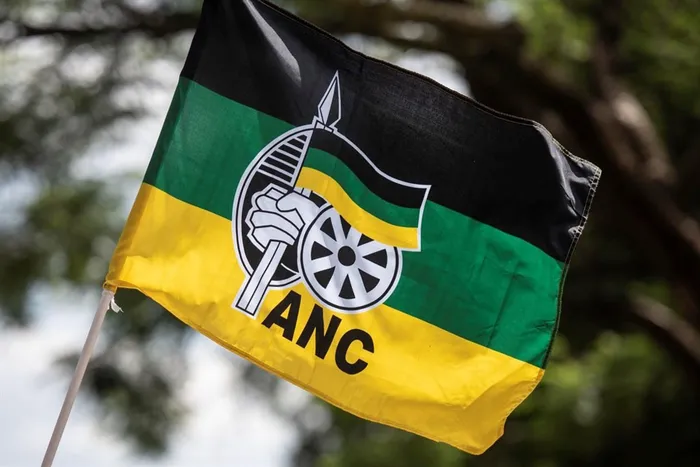
The ANC will mark its anniversary celebrations, where the January 8 Statement will be delivered, at Moruleng Stadium in the North West next week on Saturday.
Image: IOL
The ANC will hold its January 8 Statement at Moruleng Stadium in the North West next Saturday.
The annual pilgrimage, which marks the party's anniversary, will be addressed by President Cyril Ramaphosa, who will set the political agenda and outline priorities for the year.
The party will be seeking to regain the ground lost during the 2024 national and provincial elections.
In his closing address at the National General Council (NGC) in December, Ramaphosa said the upcoming local government elections will be an important test of the extent to which the ANC has managed to renew the support and confidence of the electorate.
“To win decisively the ANC must field our most dedicated, honest and competent candidates.
“We must work tirelessly in voting districts going door to door to explain why the ANC remains the only party that can meet the needs of all our country’s people,” he said.
Ramaphosa’s assertions were informed, in part, by the political report he tabled at the NGC.
The report admitted that the 2024 election was a severe strategic setback for the ANC, as it received only 40% of the national vote.
The party had lost majority at a national level and in two provinces, Gauteng and KwaZulu-Natal.
It ascribed the decline in its support to the formation of the MK Party, which took a significant portion of the ANC’s vote in KwaZulu-Natal, as well as the dissatisfaction with the state of the economy and continuing unemployment.
ANC national spokesperson Mahlengi Bhengu said in the party’s end-of-the-year message on December 31, local government remained a critical site of delivery.
“Despite intense political contestation and sustained media reporting, the ANC performed well in by-elections, retained and reclaimed key wards, and consolidated support with turnout improving.
“Our electoral performance reflects the will of the people and their continued trust in the movement, despite false narratives aimed at disconnecting it from the people,” Bhengu said.
She also said the message from the people was clear that the ANC remains their movement, but it must govern better, act decisively, put people first, and ensure that those who do not perform face consequences.
“Delivery must matter more than promises, deployees must be accountable, and communities must feel the presence of the ANC daily.”
But, in his mid-term report to the NGC, Secretary-General Fikile Mbalula gave a frank assessment of the ANC's performance at the elections.
Mbalula observed that the elections research presented to the 55th National Conference signalled a clear warning that had elections been held in 2022, the ANC would have received just 33% of the popular vote and improved slightly to 38% by March 2024.
“The actual 2024 national and provincial elections results confirmed this trend.”
He said there were several critical lessons arising from the 2024 election results.
“We did not adequately factor in the declining ANC vote trends in by-elections to shape our election strategy. We also practised denialism — both of the research findings and the impact of poor delivery in government,” he said.
Mbalula also said that despite four consecutive conferences warning of electoral decline, the ANC failed to improve service delivery.
As part of the ANC’s 2026 local government election strategy and immediate tasks, the Elections and Campaign Unit hosted a National Election Strategy Workshop in April 2025 in Ekurhuleni, attended by all nine provinces and 52 regions.
The workshop identified several critical factors that contributed to the ANC’s significant decline in the 2024 general elections.
These included over four million ANC voters who had stayed home compared to 2019.
“Poor or absent service delivery was a major contributor to the 2024 decline. The campaign failed to persuade voters; election structures were built on weak organisational structures.”
Mbulula said the workshop directed the ANC to implement a four-phase campaign that included laying the foundation, Mayihlome, Siyanqoba, and Call to Vote.
He said phase one has been undertaken by conducting provincial strategy workshops in all provinces, followed by metro and big city or strategic town workshops.
“Eight provinces have completed workshops. The Western Cape remains outstanding due to conferences and resource constraints.”
Mbalula also said only the North West has completed all regional workshops.
He added that all provinces have established election structures at the provincial and regional levels, except the Western Cape.
Mbalula also said urgent tasks included appointing full-time coordinators for 205 local election teams, 4,500 branch election teams coordinators, and 23,000 voting district coordinators.
Training at least 200,000 volunteers and fully capacitating 23,000 voting district coordinators, 4,500 branch election team coordinators, and approximately 250 local election coordinators was to be done by January 2026.
Mbalula said an Election Fundraising Team is dedicated to securing resources, with allocations ring-fenced for each campaign phase, and a national budget covering research, training, volunteer support, media, materials, events, and voter mobilisation.
“The turning point in public sentiment depends on visible, credible action by the ANC-led Government of National Unity in addressing service delivery failures.
“The performance of deployees across all spheres of government is therefore crucial. Voter mood cannot improve without demonstrable intention and action to fix problems.”
Mbalula said the Mayihlome Phase begins in January 2026.
“Our projections require that all election structures be established and trained by the end of January to enable ground forces to launch a voter-centred, contact-based campaign.”
mayibongwe.maqhina@inl.co.za