

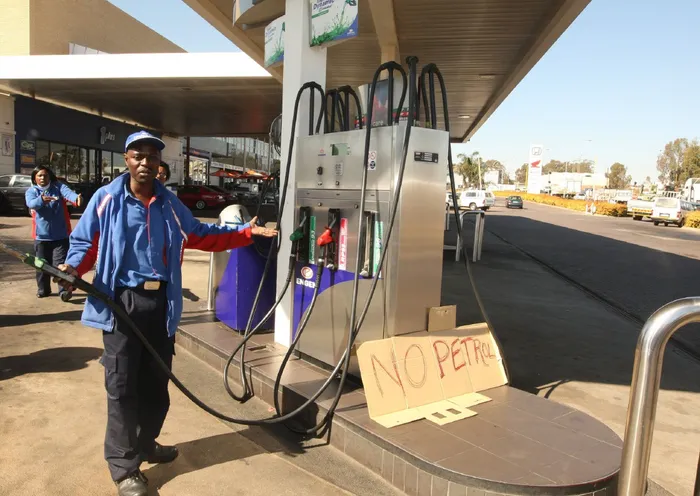
Premier Alan Winde said that the increase in hoarding of fuel stock by some suppliers is unethical.
Image: Simphiwe Mbokazi/Independent Newspapers/File
Western Cape Premier Alan Winde has written to the presidency and the office of the Minister of Mineral and Petroleum Resources, Gwede Mantashe, to raise his concern over a purported increase in hoarding of fuel stock by some suppliers.
Winde identified fuel suppliers as those at fault for not releasing fuel to customers after isolated reports of shortages in the Western Cape emerged. He said that while the province has recognised the very real concerns raised about the impact of the Middle East conflict on the fuel supply, there is no cause for concern.
According to the latest data from the Central Energy Fund, diesel prices could rise by between R9.86 and R10 per litre, depending on the grade, making it the biggest increase among all fuel types.
Petrol, meanwhile, is also expected to rise, with 93-octane and 95-octane grades forecast to increase by around R5.24 to R5.76 per litre, respectively.
Winde said that the increase in hoarding of fuel stock by some suppliers is unethical.
“I implore suppliers to continue providing fuel for their clients. Withholding supply places the economy and livelihoods, especially in the province’s agriculture sector, which accounts for over 50% of the entire country’s exports, at great risk.
“I have written to the President and Minister requesting their urgent intervention to ensure stability and prevent avoidable disruptions to primary sectors of our economy,” Winde said.
The premier's office said that the letter would not be divulged publicly.
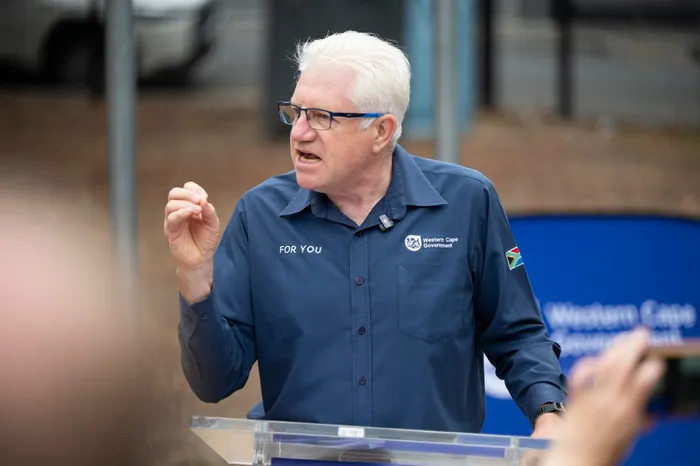
Western Cape Premier Alan Winde.
Image: Armand Hough/Independent Newspapers
The premier added that the Competition Commission of South Africa has also indicated that price gouging is illegal.
He said that any provider increasing prices in advance of any actual fuel cost hike or increasing prices far more than their actual cost increases is at risk of being prosecuted and found guilty of price gouging. He said that these complaints should be submitted to ccsa@compcom.co.za.
“The Western Cape Government is aware of isolated incidents where filling stations in parts of the province are running short of fuel supply or have depleted their stocks and are unable to source certain fuel.
“Residents are asked to submit reports on fuel shortages to the Department of Mineral and Petroleum Resources at fuel.complaints@dmpr.gov.za. Diesel supply appears to be the worst affected due to high demand, particularly in the agriculture sector,” Winde said.
The Provincial Disaster Management Centre (PDMC) is monitoring the situation, along with the Fuel Industry Association of South Africa (FIASA) and other key stakeholders. FIASA has reassured the provincial government that there is currently sufficient fuel available nationally to meet demand.
“Therefore, any end-user fuel shortages are very likely the result of market manipulation.
“Provinces have no mandate over fuel supply matters. It is, therefore, critical that the national government steps in and takes decisive action against unscrupulous suppliers,” Winde said. “Their actions can have the potential of derailing the entire country’s economic recovery.”
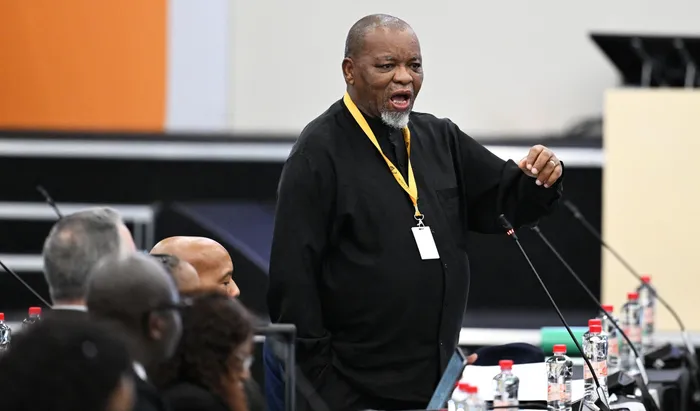
Minister of Mineral and Petroleum Resources, Gwede Mantashe, repeatedly said that there should be no need for panic and that “panic kills” while answering questions in the National Assembly over the global fuel supply crisis.
Image: Phando Jikelo/ParliamentRSA/Supplied
While answering questions in Parliament on Wednesday, Mantashe repeatedly said that there should be no need for panic and that “panic kills”.
“Despite the heightened geopolitical risk, including disruptions in the Middle East shipping routes, the Republic’s current petroleum supply security arrangement remains robust. The latest monitoring report confirms the overall supply is stable across petroleum products, with imports arriving as planned through mid-April 2026.
“Inland supply is supported by stable refining. Sasol, SAPREF [South African Petroleum Refineries] and the coal-to-liquid refinery in Secunda are ensuring that there is a reliable supply of energy,” Mantashe said.
The minister added that the maintenance shutdown of Cape Town refinery will come to an end in April, which means that it will “add to the reliability of the supply in the country”.
Regarding Liquefied Petroleum Gas (LPG) supply, Mantashe assured that the supply remains stable.
“Our crude oil is sourced from Africa and the Atlantic basin – not in the Middle East. So, every arrangement that we do is supplementing what we normally source from the Middle East.
“Our refining capacity is giving us 40% security in energy supply, but forward imports are covering for longer periods as we look for diversification,” Mantashe said.
“Even the Strait of Hormuz allows cargo that comes to South Africa without interruption. That means we have the chance of having a stable supply over a long period.
“There should be no panic in society,” he explained. “Panic kills.”
theolin.tembo@inl.co.za