

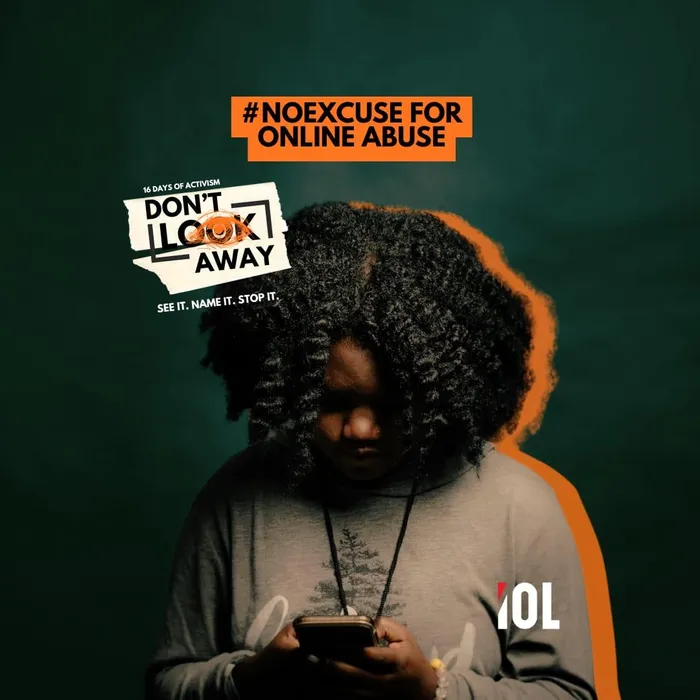
The impact of cyberbullying extends beyond school, affecting mental health and safety at home.
Image: IOL
Cyberbullying in South African homes has rewritten what it means to feel safe. For many teenagers, the school bell no longer brings an end to the hostility they face.
Instead, the harassment follows them home through phones, tablets, and laptops, turning bedrooms into battlegrounds and robbing families of peace.
The Film and Publications Board confirms the crisis is widespread, stating that 24% of South African teens have experienced cyberbullying firsthand.
For one mother, the shift in her daughter was impossible to ignore when she was bullied on social media.
“It was like somebody had flipped a switch,” she said.
“She went from laughing around the house to shutting her bedroom door and staring at her phone with tears in her eyes.”
A growing national crisis
South Africa ranks among the highest in the world for cyberbullying, according to counsellor and HPCSA-registered professional, Cayley Jorgensen. She says 1 in 5 teenagers have experienced cyberbullying first-hand.
"Out of 28 countries, South Africa has the highest incidence of cyberbullying followed by Peru, Malaysia and India,” said Jorgensen.
The modern teenage world is now “defined by downloads, likes and shares”, with the average child spending 142 minutes a day on social media, a space where bullying can spread faster than adults can intervene.
Jorgensen references global studies showing that social media use for “3 hours or more a day can increase the likelihood of depression, anxiety, aggression and antisocial behaviour.”
For parents, the warning signs often reveal themselves slowly: avoiding school, losing interest in academics, withdrawing from friends, returning home saddened or anxious, complaining of headaches or stomach aches, struggling to sleep or showing drops in self-esteem.
The impact of cyberbullying on the mental health of teenagers
The psychological toll of cyberbullying has become one of the most concerning issues facing young people today. Jorgensen’s work highlights the growing connection between online harassment and deteriorating mental health.
Teenagers today measure much of their worth through likes, shares and follows, digital rewards that stimulate the brain’s pleasure centre and make social media highly addictive. This constant need for validation leaves teens more vulnerable when the same platforms become tools for humiliation or exclusion.
Many teens develop sleep problems because of “‘FOMO’, The Fear of Missing Out,” staying awake long past midnight in case something is posted about them.
Lack of rest, combined with persistent online targeting, contributes to anxiety, irritability, concentration problems and emotional exhaustion.
Jorgensen cites studies showing that teens who spend “5 or more hours on social media are 71% more likely to have at least one risk factor for suicide.”
This reflects the extent to which online activity affects mood, behaviour and self-perception.
One of the most alarming trends she outlines is digital self-harm, where young people anonymously post hurtful comments about themselves or share insecurities to seek validation or attention.
This behaviour exposes a damaging cycle, teenagers use the same platforms that harm them to seek comfort or connection, often worsening their emotional distress.
The Bongisa Ntuli, parent of the Cape Town teen say they initially missed the signs.
"She appeared tired, complained of headaches and spent more time alone, symptoms we believed were normal for her age," said Ntuli.
Only later did they understand that fear was keeping her glued to her device.
According to the Basic Education Department, children who are bullied often return home sad, anxious or withdrawn, lose interest in schoolwork, suffer sleep problems, fear going to school and experience frequent physical complaints such as stomach aches.
These symptoms, once associated mainly with schoolyard torment, now unfold silently in bedrooms behind locked doors.
Jorgensen explains that cyberbullying is especially harmful because it occurs out of adults’ sight, can be anonymous, spreads quickly and allows bullies to avoid seeing the harm they cause.
As a result, teenagers often feel helpless, exposed and unable to escape.
How schools can help
While most incidents begin online, schools remain central in prevention.
The Basic Education Department outlines what schools can do, including:
Parents say these measures could make a difference.
“We can only do so much at home,” said a mother whose son was bullied on WhatsApp groups.
“Schools need to be part of the solution. Kids don’t always tell their parents what’s happening, but teachers might spot the changes sooner.”
The FPB urges communities to remain vigilant, reminding South Africans that everyone has a role to play in creating safe online spaces.
"The FPB encourages everyone to participate in creating safer online spaces that prevent violence against children and young people.”
IOL News