

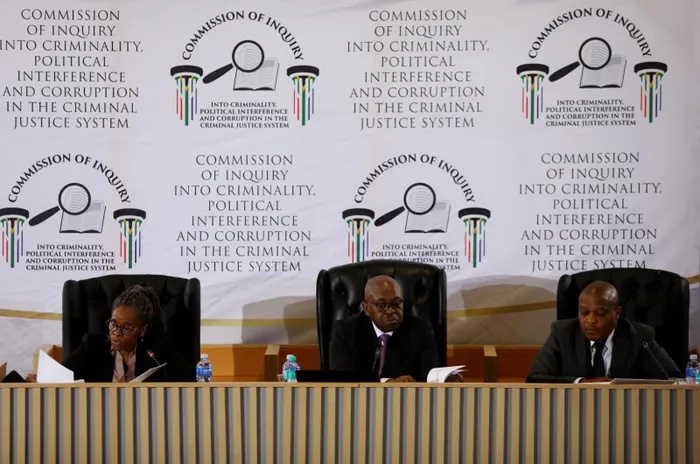
President Cyril Ramaphosa appointed a Judicial Commission of Inquiry to probe criminality, political interference and corruption in the criminal justice system. Members of the Commission (from left) Adv. Sesi Baloyi, SC, Justice Mbuyiseli Madlanga (Chair) and Adv. Sandile Khumalo, SC.
Image: Oupa Mokoena / Independent Newspapers
The bombshells emerging from the commissions of inquiry in South Africa kept the public on their toes and dominated national and international headlines.
First was the Madlanga Commission of Inquiry, chaired by retired Justice Mbuyiseli Madlanga, which is investigating allegations of collusion and corruption between politicians, senior police, prosecutors, intelligence operatives, and elements of the judiciary.
The inquiry stemmed from allegations levelled by KwaZulu-Natal provincial police commissioner Lieutenant General Nhlanhla Mkhwanazi during his July 6, 2025, media briefing, where he accused his colleagues and politicians, including Police minister Senzo Mchunu, whom he alleged were part of serious crime cartels in Gauteng.
At the centre of the controversy was the letter of disbandment of the KZN Political Killings Task Team (PKTT), and the removal of 121 case dockets under investigation at the instruction of the Deputy National Commissioner for Crime Detection, Lieutenant General Shadrack Sibiya.
These allegations prompted President Cyril Ramaphosa to establish a commission of inquiry and place Mchunu on special leave.
At the commission, the shocking revelations ranged from allegations that attempted murder-accused tenderpreneur, Vusimuzi ‘Cat’ Matlala, allegedly funded Mchunu’s political ambitions to the tune of R500,000. Transactions were allegedly channeled through Mchunu’s comrade, Brown Mogotsi, for the payment of accommodation and flights for the minister’s guests to the ANC’s January 8th statement.
The Divisional Head of Crime Intelligence, Lieutenant General Dumisani Khumalo, named Matlala and murder-accused businessman, Katiso ‘KT’ Molefe, as alleged members of the ‘Big Five’ criminal cartel, operating a drug syndicate in Gauteng.
WhatsApp messages and forensic analysis, presented by Khumalo, detailed an alleged ‘close and beneficial relationship’ between Matlala and high-ranking police officers, involving the sharing of confidential information and protection.
Witnesses A, B, and C, who are members of the Gauteng Counter-Intelligence Operations (GCI Ops), testified before the commission about the challenges they faced while investigating the criminal cartels. They detailed potential interference by the Hawks’ TOMS unit during the take-down operation at KT Molefe’s house.
The witnesses also alleged that Matlala paid kickbacks to top senior police officers for his Medicare24 tender, with the SAPS. It was alleged that Sibiya and the KZN head of Hawks, Major General Lesetja Senona, assisted Matlala to get the SAPS tender.
The commission also heard that Mchunu allegedly enlisted the services of the State Security in aid of Matlala.
Mchunu justified his decision to disband the PKTT, claiming it was an administrative decision. The commission questioned him on his failure to consult senior SAPS leaders and his alleged links to criminal figures.
Ekurhuleni Metro Police Department (EMPD) deputy chief Julius Mkhwanazi was accused of facilitating for Matlala’s cars to be installed with blue lights, and he also allegedly signed two Memorandums of Understanding with Matlala’s companies, without the approval of his bosses. The commission heard how laws were changed in Ekurhuleni Metro by then city manager Dr Imogen Mashazi to protect Mkhwanazi.
Witness D’s testimony implicated Mkhwanazi in wrongdoing, including ordering a cover-up of the extrajudicial killing of a robbery suspect and suggesting the body be dumped in a dam or mineshaft. Witness D was gunned down three weeks after testifying before the commission.
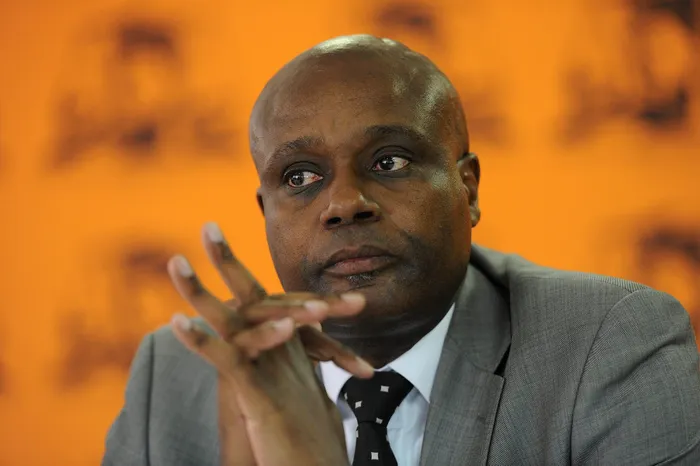
NDPP Shamila Batohi outlined how Chauke ignored prosecutors’ advice, overlooked critical evidence and failed to reinstate serious charges against Mdluli, telling the Nkabinde inquiry his decisions contradicted court findings and undermined proper prosecutorial conduct.
Image: Supplied
The Nkabinde Inquiry is probing the fitness of Advocate Andrew Chauke, the suspended Director of Public Prosecutions (DPP) for the South Gauteng Division (Johannesburg), to hold office.
Ramaphosa established it following a complaint lodged by the National Director of Public Prosecutions (NDPP), Advocate Shamila Batohi, and it is chaired by retired Justice Baaitse Elizabeth ‘Bess’ Nkabinde.
The core allegations against Chauke are that he failed to prosecute high-profile individuals, he withdrew murder charges against former Crime Intelligence boss Richard Mdluli, instituted racketeering charges against the former KwaZulu-Natal Hawks head, Johan Booysen, despite a lack of evidence, and integrity concerns related to recordings linking Chauke to the late Bosasa CEO Gavin Watson. Watson allegedly sought to lobby for Chauke’s appointment as NDPP in exchange for favours.
Batohi testified that Chauke’s decision to withdraw the murder charge against Mdluli and refer the matter to an inquest was not consistent with National Prosecuting Authority (NPA) policies and prescripts and fell below the standard expected of a senior prosecutor. Mdluli was eventually convicted on related, lesser charges of intimidation, kidnapping, and assault in 2019.
Chauke’s defence, in a written response to Batohi, indicated he thought an inquest ‘might cause inculpatory evidence to surface.’ Batohi said that this was inadequate, as Chauke did not explain what evidence was missing or why he ignored existing evidence.
Batohi stated that Chauke pushed for charges against Booysen and the Cato Manor Unit despite an alleged lack of evidence to justify them.
She asserted that Chauke attempted to persuade KwaZulu-Natal director of public prosecutions Siphiwe Mlotshwa to sign an indictment sheet against Booysen.
However, during the cross-examination, Chauke’s council, Advocate Tembeka Ngcukaitobi, challenged the NPA’s position, arguing that Batohi concluded there was no case against Booysen without reading the original dockets.
gcwalisile.khanyile@inl.co.za