

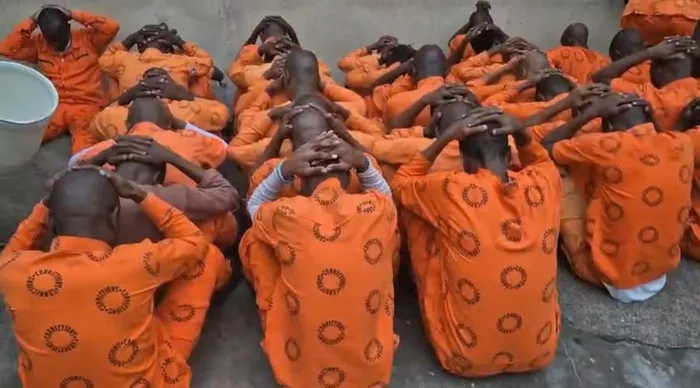
Severe overcrowding continues to strain South Africa’s prisons, where more than 170,000 inmates are being held in facilities designed for just over 107,000.
Image: Supplied
National Commissioner of Correctional Services Makgothi Thubakgale has revealed that South Africa’s prisons remain under severe strain due to overcrowding, with more than 170,000 inmates detained over the festive season.
He said the Department of Correctional Services (DCS) has an approved bed capacity of just over 107,000.
This means that the inmate population far exceeds available accommodation.
“This level of incarceration represents the highest population recorded in recent years and has placed immense pressure on infrastructure, staffing, security management and the budget,” Thubakgale said.
The situation was further compounded by reduced court activity during the festive period.
Speaking at a media briefing on Monday, Thubakgale acknowledged that the country’s correctional system is under significant pressure.
“We have been managing a system that continues to grow steadily on a week-by-week basis,” he said.
“Although courts are now fully operational and we are seeing movement in terms of releases, the numbers in the system continue to increase.”
He added that overcrowding affects virtually every facility in the country.
“We are more than 150% overcrowded in almost all our facilities. There is no facility in this country that is managing less than 50% of its approved population,” he said.
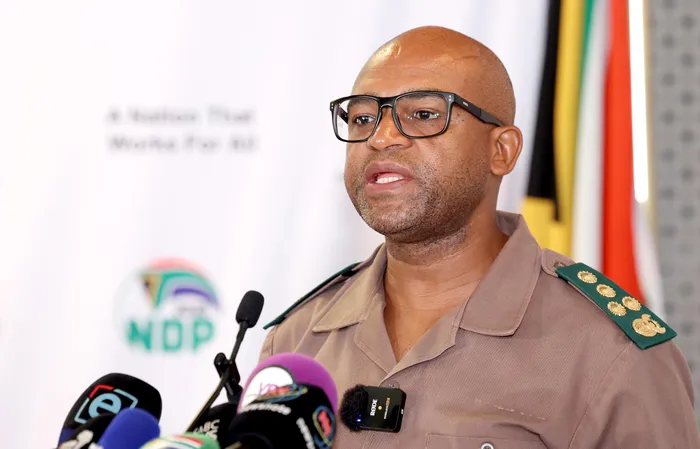
Correctional Services National Commissioner Makgothi Thubakgale speaks to the media on the state of South Africa’s prisons and festive season security operations.
Image: GCIS/ Kopano Tlape
According to him, the rising inmate population reflects the effectiveness of the Justice, Crime Prevention and Security (JCPS) cluster - particularly the police, prosecution and courts - in addressing crime, but continues to place additional pressure on the correctional system.
“This puts more weight on the correctional system in terms of the population we are required to manage,” he said.
Meanwhile, Thubakgale also provided an update on the outcomes of the 2025 and 2026 festive season security operations, known as Operation Vala.
The initiative involves monitoring and tracing parolees through a multi-agency approach, including municipal police and the South African Police Service.
He said a total of 5,592 searches were conducted across correctional centres nationwide during the period.
These operations required repeated and sustained deployments, resulting in the cumulative involvement of 59,310 correctional officials, with many officials participating in multiple operations.
Thubakgale said the department was encouraged by the outcomes, which demonstrated improved capacity to intercept and remove illicit items that threaten safety, security and stability within correctional facilities.
Intensified searches led to the confiscation of:
-8,063 cellphones nationwide
-3,144 sharpened objects and weapons
-More than 46kg of loose dagga, along with thousands of dagga slopes and blades
-Significant quantities of mandrax tablets, including 1,012.5 tablets in the Western Cape and 199 in the Free State and Northern Cape, suggesting organised smuggling networks
-R102,726.07 in South African currency
-Small amounts of foreign currency and R400 in counterfeit South African notes in the Free State and Northern Cape
Thubakgale also said the department has taken action against hundreds of officials implicated in contraband smuggling.
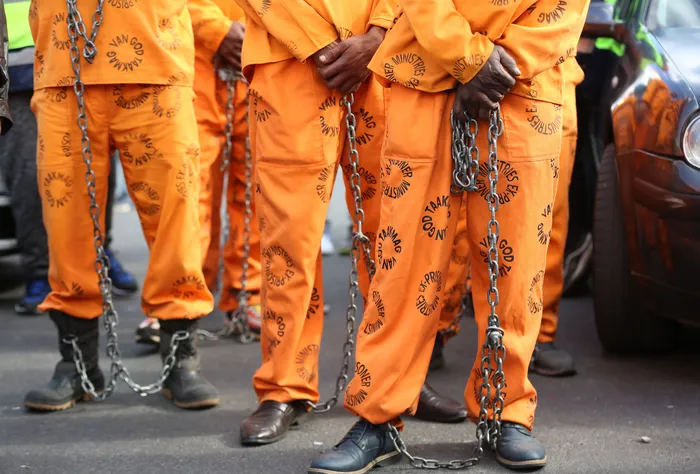
South Africa’s correctional system is under growing pressure, with inmate numbers exceeding 170,000 and prisons operating far beyond their approved capacity.
Image: Bheki Radebe
“Thus far, we have administered 312 cases. Of these, 266 were finalised, with some officials being disciplined. Some were dismissed,” he said.
“We are still administering 30 cases, and they will get the results as we continue. These are independent processes that the department does not interfere with.”
He said contraband enters facilities through several channels, including visitors and corrupt officials.
“Every weekend we have visits for sentenced offenders, and remand detainees receive visits daily. That is a risk. We also have our own members who smuggle,” he said.
Thubakgale said that the department is rolling out high-tech detection equipment, but financial constraints prevent deployment at every facility.
“Hence, we are relying on our own members to detect and stop this contraband from making it into our correctional facilities. The officials who are involved or who are found to have aided and abetted this type of illegal activity, they get disciplined and most of them actually get fired for participating in these illegal activities.”
He said members of the public caught attempting to smuggle illicit items into correctional facilities are apprehended, criminal cases are opened, and they become part of the offender population.
Correctional officials involved face similar consequences, including arrest and prosecution.
“We have always been making a call to members of the public, including our own officials, that they should desist from partaking in activities that are linked to smuggling contraband into correctional facilities because it leads to one outcome,” Thobakgale added.
simon.majadibodu@iol.co.za
IOL News