

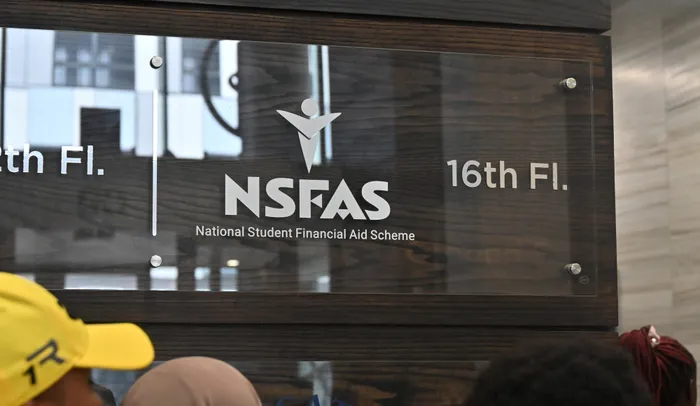
Over 660,000 students have received funding for the 2026 academic year, as NSFAS announces progress in processing applications despite documentation challenges, ensuring more students can access higher education funding.
Image: Ayanda Ndamane / Independent Newspapers
The National Student Financial Aid Scheme (NSFAS) says it has approved funding for more than 660,000 students for the 2026 academic year, despite ongoing challenges with documentation.
In a media briefing on Thursday, Acting NSFAS CEO Waseem Carrim announced that the scheme had processed over 180,000 outstanding documents, resulting in an additional 50,000 approvals before the registration cycle closed.
“We are pleased with the progress made in the 2026 application cycle. Our teams have worked tirelessly to ensure all documents are processed efficiently, resulting in a significant increase in funding approvals,” Carrim said.
However, Carrim pointed out that many students still submit incorrect or unclear documents, which has created a feedback loop and delays in processing.
“We encourage students to submit clear and correct copies of documents to avoid unnecessary delays,” he said.
As of the latest update, Carrim said NSFAS has approved funding for 660,039 students, but 116,266 applications have been rejected.
In addition, 21,483 applications remain pending due to outstanding documents, while 85,662 are under verification.
The scheme also noted that the backlog could be cleared with better compliance from applicants, particularly when it comes to the completion of consent and declaration forms.
“The consent form is crucial for verifying household income, and if it’s not completed properly, or if there is a discrepancy with the information at Home Affairs, it delays the process,” Carrim explained.
NSFAS requires that these forms be signed, dated, and include an email address for the parent or guardian. When students list someone other than their biological parent or guardian, a Declaration Form is required to explain the relationship, he said.
In terms of academic progression, NSFAS revealed that 436,924 university students met the academic criteria for funding, while 109,761 did not. For TVET college students, 127,503 met progression requirements, with 79,461 failing to do so.
Carrim also pointed out that outstanding results, often due to supplementary exams, could be contributing to delays, urging institutions to upload these results promptly.
On the issue of loan applications, Carrim said NSFAS has received 26,538 loan applications. Of these, 4,609 met bursary criteria, while 20,368 did not meet the necessary academic or financial requirements. A total of 1,561 loan applications have been approved.
Accommodation continues to be a major concern, with 115,662 university applications approved, 39,127 applications approved, and 339,984 still under institutional review.
Meanwhile, for TVET colleges, 78,409 accommodation applications were submitted, with 16,526 approved and 50,810 still under review.
NSFAS confirmed that it is working closely with institutions, including the Cape Peninsula University of Technology (CPUT), to resolve ongoing accommodation challenges.
“We continue to engage with institutions to address accommodation issues and ensure that students’ well-being is prioritised,” Carrim said.
NSFAS also reiterated its commitment to ensuring that accommodation providers confirm the NSFAS funding status of students before housing them.
The scheme warned that it would take a zero-tolerance approach to providers who house students without verifying their funding status or who forcibly relocate students without proper procedures.
Carrim also praised the efforts of the Special Investigating Unit (SIU), which has successfully recovered over R1.7 billion from institutions and students.
“This recovery highlights NSFAS’s commitment to transparency and accountability in managing public funds,” he said.
The scheme has already disbursed R3.6 billion to universities for allowances and R679 million to TVET colleges for tuition.
The first disbursement of allowances to TVET college students will take place on February 13, with a second round scheduled for February 27.
Carrim confirmed that NSFAS remains committed to ensuring that all eligible students receive their allowances early in the academic year.
"We have worked diligently to ensure that all payments are made on time, in line with our commitment to supporting students throughout their academic journey," Carrim added.
The 2026 appeals process is also ongoing, with 91,937 appeals currently in progress. Of these, 10,445 have been approved, and 27,893 are still under review.
NSFAS reminded students that they have 30 days to finalise appeals once an outcome is has been communicated.
''Through rigorous application processing, ongoing collaboration with institutions, and transparent communication, NSFAS is working to ensure that funding reaches those who need it most—efficiently and fairly.''
hope.ntanzi@iol.co.za
IOL News