

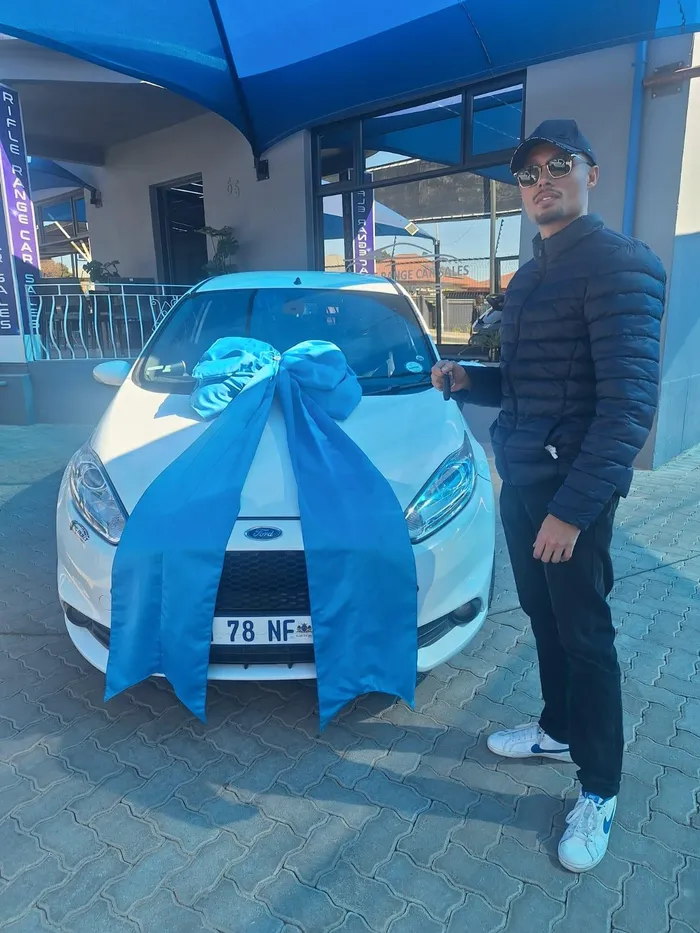
The Motor Industry Ombudsman of South Africa has ruled in favour of Wesley Joubert who complained about persistent mechanical problems.
Image: Supplied
The Motor Industry Ombudsman of South Africa (MIOSA) has ruled in favour of a Gauteng man who complained about persistent mechanical problems with a used vehicle purchased from Rifle Range Car Sales.
Wesley Joubert, 29, from Ferndale in Randburg, lodged a complaint after a Ford Fiesta he bought developed a series of mechanical failures shortly after the purchase.
The ruling comes after IOL previously reported on Joubert's struggle with the car, which he was only able to use for three months after buying it for R169,000 in August 2024. At the time of purchase, the vehicle had travelled approximately 138,117 kilometres.
Joubert, a first-time car buyer, said that before he filed a complaint with MIOSA, the car had already undergone numerous repairs and had broken down again after each repair.
Joubert said he later attempted to sell the vehicle to a car-buying company in an effort to cut his losses. During the process, he claims he was informed that the car had previously been involved in an accident.
“They told me the car had been bought from an auction house that only deals with accident-damaged vehicles,” he said. “I then obtained the history report myself, and it confirmed that information.”
He further alleges the emergency key does not operate the driver’s door, which he believes suggests the door may have been replaced.
As proof of his claims, Joubert provided a telephonic conversation he had with a representative from a car-buying company, who told him they could not purchase the vehicle because it had been involved in an accident.
“Unfortunately, we didn’t find any offers on the car, and the main reason is that we did pick up on the history of the car — that it was actually at an auction house that only deals with accident-damaged cars,” the representative said.
Following the conversation, Joubert obtained a report from First Check which showed that the car was involved in an accident in 2016 and underwent major repairs. The report further stated that the car was in a poor condition.
With the report in hand, he approached the dealership.
The dealership insisted that the car had been bought from a client and there were no reports indicating previous accident damage or repairs.
“Not sure where you got the information from. But we checked Autobid and there was no accident damage on this car at all. No claims have been submitted,” the dealership said, providing a screenshot from Autobid showing no accidents.
However, in the screenshot, there was also a disclaimer from Autobid stating that the report is not guaranteed to contain a full history of all repair quotes.
Rifle Range Car Sales disputed the complaint, stating that it had provided all relevant documentation, including DEKRA inspection reports, roadworthy certificates and invoices.
The dealership also confirmed that the engine had been replaced and that the vehicle was retested after repairs, with the final report indicating no faults.
However, the dealership argued that Joubert had been informed that the vehicle had to return for an oil service after travelling 1,000 kilometres in order to maintain the engine warranty.
According to the dealership, Joubert failed to bring the vehicle back for this required service and therefore the business could not be held responsible for later mechanical problems.
The ombudsman reviewed submissions from both parties and assessed the dispute under the provisions of the Consumer Protection Act 68 of 2008.
Section 55 of the Act guarantees consumers the right to receive goods that are of good quality, in working order and reasonably durable for their intended purpose.
Section 56 further provides that consumers may return defective goods within six months and request either a repair, replacement or refund if the product fails to meet the required standards.
MIOSA found that Joubert’s complaint fell within the scope of the Act’s implied warranty of quality, particularly because earlier repair attempts had failed to resolve the vehicle’s problems.
While the dealership maintained that Joubert had failed to service the vehicle at the required 1,000-kilometre interval, the ombudsman’s investigation found that the service had eventually been completed when the vehicle had travelled approximately 1,968 kilometres.
Importantly, the available documentation did not show any indication that the additional distance travelled before the service contributed to the vehicle’s mechanical failures.
The ombudsman also noted that the vehicle had been returned to the dealership several times for repairs, suggesting that it could have reached the required service interval while already in the dealership’s possession.
The ombudsman concluded that the dealership remains responsible for ensuring that the vehicle supplied complies with the quality and durability requirements of the Consumer Protection Act.
MIOSA therefore supported Joubert’s expectations and directed the dealership to meet the complainant’s requested remedy within 15 business days from the date of the ruling.
sinenhlanhla.masilela@iol.co.za
IOL News