

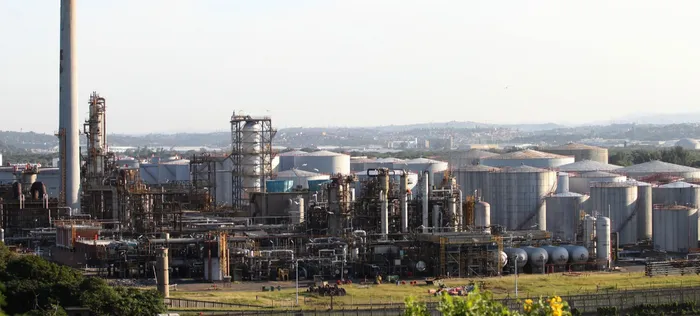
Gwede Mantashe recently called for Durban-based Sapref and other similar facilities such as the South African Fuel Company and PetroSA, to return to operation to complement fuel output from Natref and Astron Refinery in Cape Town.
Image: Doctor Ngcobo/Independent Newspapers
Environmental activists have strongly criticised Mineral and Petroleum Resources Minister Gwede Mantashe’s call to restart several domestic fuel refineries, including the flood-damaged Sapref facility in Durban. Community leaders and environmental researchers argue the proposal overlooks longstanding pollution concerns and unresolved rehabilitation issues.
Mantashe recently urged the revival of Sapref alongside other facilities such as PetroSA and the South African Fuel Company. The intention is to strengthen domestic fuel production to support output from Natref and Astron Energy’s refinery in Cape Town. However, critics say the approach prioritises short-term supply stability over environmental accountability.
Environmental governance specialist Professor Llewellyn Leonard warned that restarting Sapref without addressing its pollution legacy could deepen existing inequalities in South Durban. He said communities in the area have endured decades of industrial contamination with limited accountability from regulators and operators.
Sapref, which suffered extensive damage during the 2022 KwaZulu-Natal floods, was also linked to pollution incidents affecting nearby coastal areas. Leonard said rehabilitation efforts after the disaster were insufficient and raised concerns about lingering contamination in surrounding ecosystems.
South Durban Community Environmental Alliance leader Desmond D’Sa echoed these concerns. He said residents had already communicated their objections to Parliament’s Portfolio Committee on Mineral and Petroleum Resources during a visit to Durban in 2025, warning that restarting operations would pose an immediate threat to nearby communities.
The refinery’s controversial sale to the state-owned Central Energy Fund for R1 by former joint owners Shell and BP has also drawn criticism. Activists argue the transfer could shift the financial burden of environmental restoration onto taxpayers rather than the companies responsible for historic pollution.
A technical report assessing the refinery’s future was expected by the end of March, after which policymakers would consider next steps. Structural damage from the floods and unresolved environmental risks remain major obstacles to any restart decision.
Leonard also criticised suggestions that environmental regulations and community litigation were delaying progress. He said these mechanisms are constitutionally protected safeguards that ensure transparency and accountability in decisions affecting vulnerable communities.
Commissioned in 1964, Sapref once accounted for roughly 35% of South Africa’s refining capacity and processed about 180,000 barrels of imported crude oil daily before its closure in 2022. Despite its significance to national fuel supply, activists have continued to call for its full decommissioning and rehabilitation rather than revival.
Leonard argued the “polluter pays” principle must guide any future action, ensuring corporations — not the public — cover the costs of environmental restoration. He also called for independent environmental audits and long-term health monitoring in South Durban due to the area’s extensive industrial pollution history.
Community organisations have pledged to maintain pressure on lawmakers to block the refinery’s reopening. D’Sa said activists would continue engaging Parliament to ensure accountability and clarity on who would assume responsibility should further environmental harm occur.
IOL News