

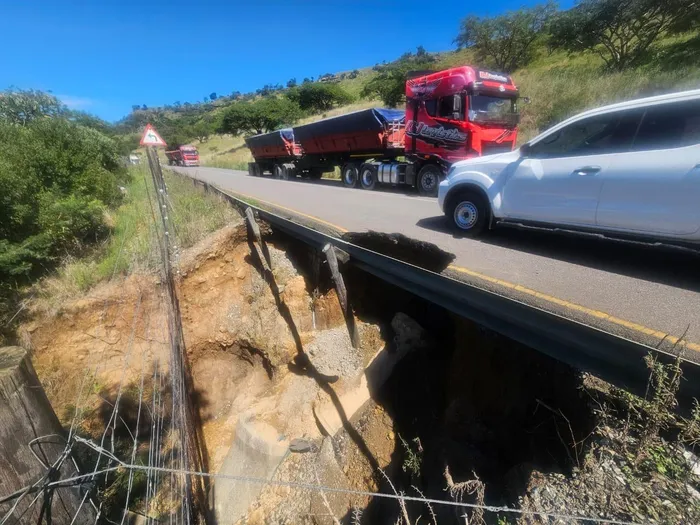
Driving along the R74 by the Oliviershoek Pass, it is alarming to witness the collapse of culverts beneath the road, a problem that has persisted for over three years. These deteriorating structures not only threaten the integrity of the road but also pose significant risks to drivers.
Image: Supplied
The majestic peaks of the Drakensberg, a UNESCO World Heritage site and cornerstone of KwaZulu-Natal’s domestic tourism, are currently framed by a crumbling reality: a road network in a severe state of disrepair.
For the hospitality businesses nestled in its valleys, this isn't just an inconvenience; it’s a threat, actively deterring visitors, compromising safety daily, and hitting the very foundation of the region’s economy.
Brett Tungay, national chairperson of the Federated Hospitality Association of Southern Africa (Fedhasa), describes the impact as “significant and multi-layered”.
“Poor road conditions directly affect accessibility, discouraging self-drive travellers, increasing travel times, and deterring repeat visits. For hospitality businesses in rural areas, this translates into reduced occupancy, shorter stays, cancelled bookings, and lower overall revenue,” Tungay said.
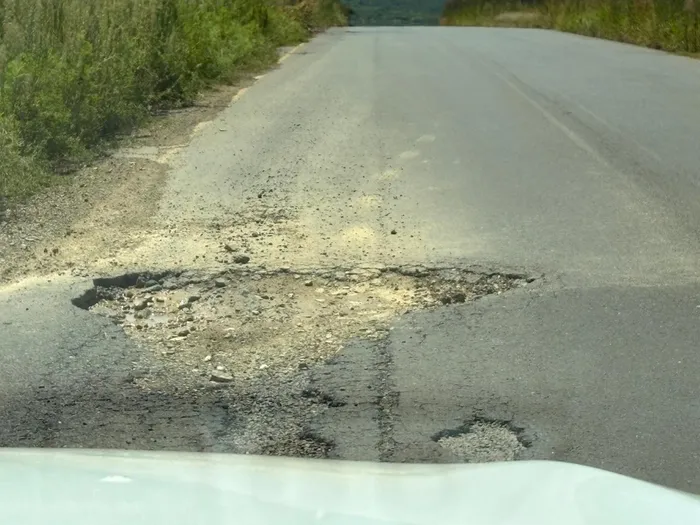
Driving along the R600 between Winterton and the N3, the reality of these massive potholes becomes clear. This vital access road to the Drakensberg Mountains is not just a route; it’s a lifeline for tourism and local businesses. Every bump and swerve poses a risk to drivers and their vehicles.
Image: Supplied
He noted that the consequences ripple out to operational costs, where “suppliers, staff, and emergency services struggle to access properties, while vehicle maintenance costs increase”.
In a province where domestic tourism is a vital lifeline, deteriorating infrastructure is actively undermining competitiveness.
Tungay stresses that beyond immediate commercial concerns, the neglect “also erodes investor confidence, limits product development, and weakens the ability of smaller, community-based tourism enterprises to participate meaningfully in the tourism value chain”.
The hospitality industry is unified in its call for action. “From an industry perspective, what is needed is a more coordinated and accountable approach to infrastructure maintenance and investment,” Tungay concluded, adding that “without reliable road infrastructure, efforts to grow tourism, stimulate rural economies, and create jobs will remain constrained”.
The route to ruin: Critical Drakensberg corridors
The impact Tungay outlines is tangible on the ground, particularly along the R74 and R600, two arteries critical to accessing the northern and central Drakensberg.
Megan Bedingham, co-owner of The Cavern Drakensberg Resort & Spa, is on the front lines of the crisis. Her business relies heavily on the R74, a key alternate route to the N3, and she is clear about the damage being inflicted.
“The poor infrastructure definitely affects business. It affects people coming to the region,” Bedingham explained.
“If people have a bad experience, that is what they remember, and then they will choose to go elsewhere where infrastructure is better.”
She specifically noted how the state of the road is making the drive from Johannesburg, a key market, less appealing.
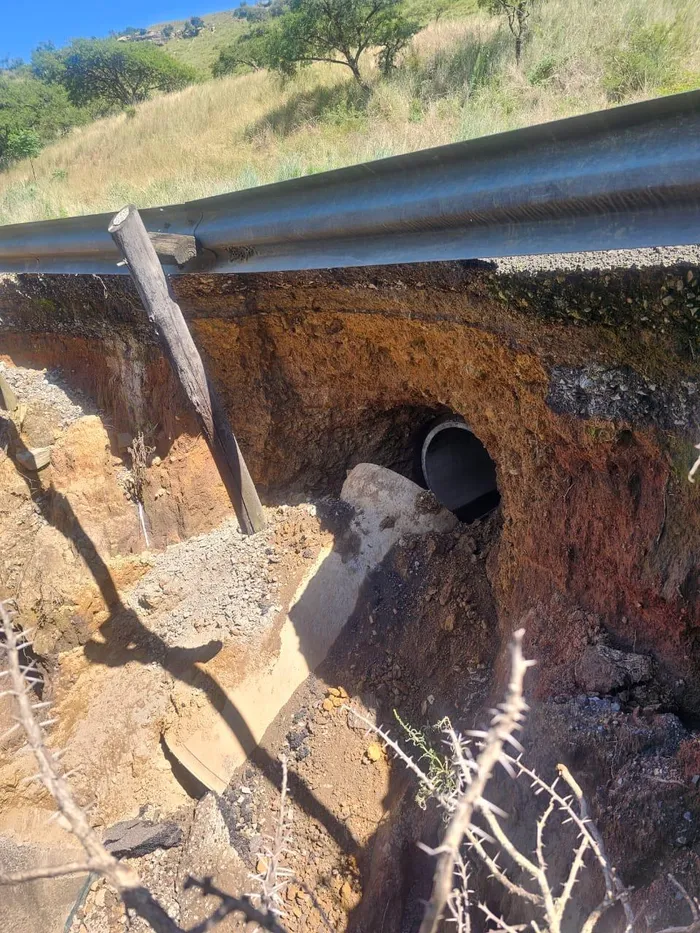
Navigating the R74 by the Oliviershoek Pass reveals the harsh reality of its poor condition. Potholes and crumbling infrastructure make this vital route a dangerous journey for drivers.
Image: Supplied
The issues extend beyond deep potholes to a simple, and dangerous, lack of basic maintenance, especially on the Oliviershoek Pass.
“Gutters aren't cleared, road verges aren't cut. Signage is bad, even road markings, cat's eyes are non-existent,” she said. This neglect is magnified during poor weather.
“So when there's very, very thick mist, it actually becomes quite dangerous to use the Oliviershoek Pass.”
For a family business running for 85 years, the consequences are stark and direct.
Bedingham revealed that they “have seen tour series from overseas cancelled because of the road infrastructure in the Drakensberg”, a significant loss that highlights the international perception of the travel risk.
Compounding the problem is a perceived lack of institutional capacity. Bedingham is frustrated with the provincial response, stating: “What we have noticed is that the KZN Department of Transport does not appear to have the capacity to actually maintain this route, and so we feel that it would be better if SANRAL took over the route.”
Despite parliamentary committee visits and contract awards dating back to 2022, Bedingham's patience is thin. “We are tired of talk; we need action,” she said, while noting that the community is still waiting for definitive answers.
“The latest from the department was that they’d let us know if R74 will be handed to SANRAL in June,” she said.
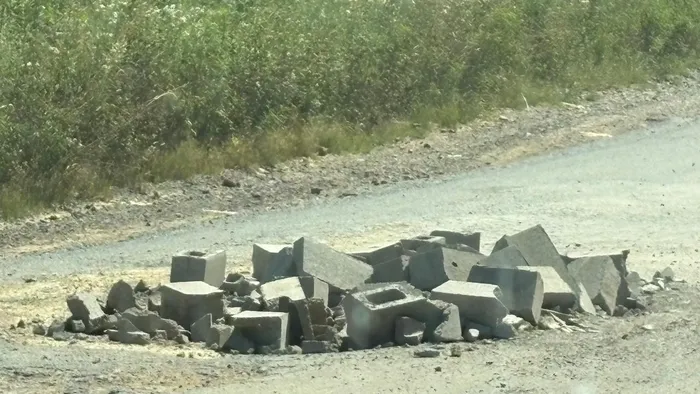
This massive pothole on the R600, filled with bricks, is a stark reminder of the ongoing neglect of our roads. While this makeshift repair may offer a temporary solution, it highlights the urgent need for proper infrastructure maintenance.
Image: Supplied
A daily collision hazard
Further south, the R600, a crucial access point for the Central Drakensberg and the surrounding battlefield sites, presents a different but equally dangerous reality. Lynette Heron, owner of Spion Kop Lodge, paints a terrifying picture of the road’s condition.
“This is not just inconvenient — it’s a serious accident risk,” Heron warned.
She explained that the road surface is so riddled with “deep and extensive potholes” that motorists are forced to “swerve into oncoming lanes, creating a high risk of head-on collisions, especially on blind bends”.
The impact on business is immediate, with safety concerns now overriding the attraction of the landscape. “Guests are already expressing concern, and some are reconsidering return visits due to safety fears,” she said, highlighting the direct threat to occupancy and job creation.
Heron is particularly concerned about the lack of emergency communications on the treacherous stretch.
“Because there are no communications in that area, the risk factor increases significantly,” she noted.
She recounted a frightening incident involving a visiting international academic: “The curator of the Gandhi Museum in Delhi burst two tyres in the area and had no way of communicating with anyone for assistance until a vehicle passing by stopped to assist him; he almost missed his flight!”
Heron insists the problem is not minor wear and tear, but “structural pavement failure”.
For the community and the tourism sector, the call for action is clear: “Safety for all who use the roads!”
The solution, she argues, is straightforward: “An increase in occupancy, therefore an increase in revenue and the creation of more jobs.”
Her final plea is directed at the authorities: “Budgets need to be allocated to the roads and used for the roads, not for anything else.”
Deterioration destroys economies
For Iain Don-Wauchope, owner of Mountain Splendour Resort and Mountain Splendour Cycles, the crumbling roads are a direct hit to his core business. Operating in the Central Drakensberg for 45 years, he has witnessed a noticeable decline in visitors over the last decade.
“The roads have deteriorated for such a long time and in such poor condition that customers do not want to drive to us any longer,” he explained.
The financial damage extends beyond the main vehicle. “Not only tow vehicles get damaged on our roads, but the trailers and caravans get damaged too and the contents inside,” he said, confirming that the damage is extensive and adding a significant layer of financial risk for tourists.
Even his cycling business is affected by the poor roads.
“We are seeing an increasing number of customers whose bicycles have sustained significant damage after falling completely or partially off their bicycle racks,” Don-Wauchope commented.
He identifies the root cause as a failure of basic engineering and maintenance, arguing that insufficient attention to drainage exacerbates the annual summer rains, leading to localised flooding and accelerating pavement failure.
Don-Wauchope stressed that the access routes are not merely broken; they are littered with potholes and hazards.
“This is after we as the ratepayers association of the central Drakensberg, filled hundreds of potholes between Winterton and Champagne Castle, and we only eventually did that because we were not getting any luck from the local municipality or provincial roads departments,” he said
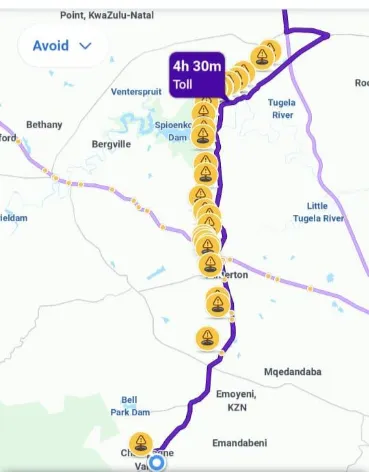
"Currently, travellers from Johannesburg are making their way down the Oliviershoek Pass, but the journey is fraught with challenges. This image highlights the numerous potholes and hazards that litter the road, making it a perilous route for all drivers.
Image: Supplied
Despite their efforts, he said, the problem is ongoing. Potholes continuously reappear, and official help remains elusive.
“We plead for assistance. They say they will, but at the end of the day, they then say there's no budget and they can't provide or there's no material available.”
The state of the roads in KwaZulu-Natal (KZN) has become a national concern, even among seasoned travellers.
“I've just had a guest who's checked in. He travels all around the country, Limpopo, Northern Cape, Western Cape, Eastern Cape, Free State, KZN, wherever,” Don-Wauchope recounted.
“And he says, KZN has the worst roads out of all those provinces that he travels to.”
The KwaZulu-Natal Department of Transport did not respond to a request for comment.
Have thoughts on this topic or other subjects you’d like us to explore? Want to share your experiences? Reach out to me at karen.singh@inl.co.za