

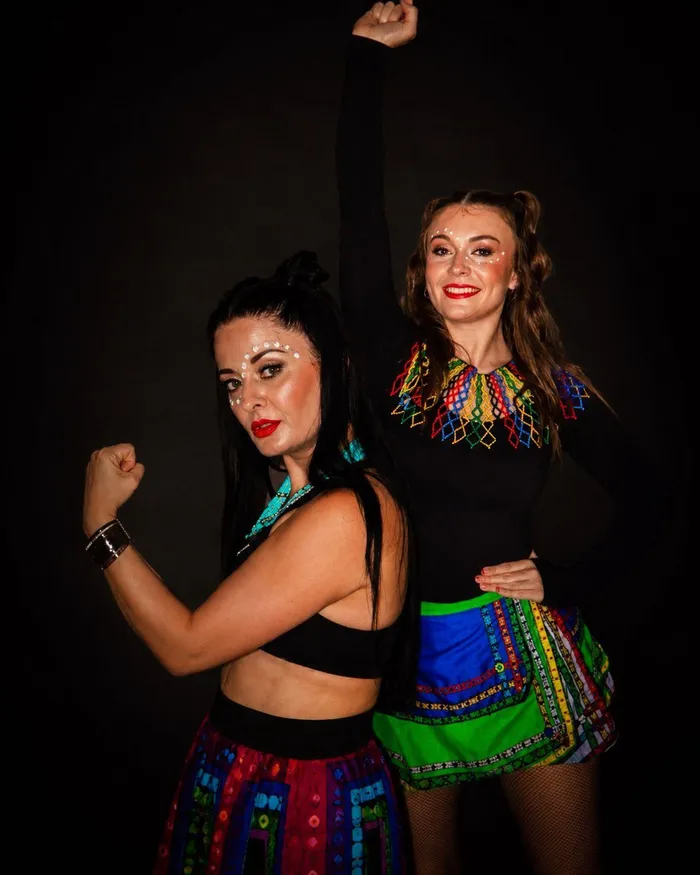
Afro Fiesta volume 2: A celebration of African dance and culture.
Image: SUPPLIED
What began as a one-day Freedom Day performance in Gqeberha has grown into something much bigger, a joyful celebration of African identity, movement and community.
Now, Afro Fiesta Volume 2 is set to return to the stage at Isithatha Theatre in Walmer this Wednesday, carrying with it the same electric energy that made the first show such a success.
The original production, staged at Elements in Gqeberha and produced by Ashleigh Maling-Nel of Dynamic Productions, drew a crowd of more than 100 people from all walks of life.
From the first beat to the final bow, audiences were captivated. Many stayed behind afterwards, eager to speak to the performers and share how deeply the production had moved them.
For co-choreographer Tilette Roelofse, that response confirmed something powerful: Afro Fiesta had struck a chord.
"The first thought is always ‘they're enjoying it, they’re really into it," she said.
For her, audience connection is everything. "You can't fake that kind of response.
"If someone's shoulders start swaying, or their foot starts tapping, or they're up out of their seat dancing, it means we are doing something right."
That enthusiasm inspired a second chapter, one that promises to be even more immersive.
But behind the vibrant costumes, pulsating music and polished performances lies weeks of demanding work. During the final days before opening, Roelofse said every moment is planned with precision.
"We begin early at the theatre with spacing rehearsals," she explained. Then comes the meticulous process of transferring choreography from studio to stage.
Each day is spent refining sections, adjusting formations, syncing lighting cues and running the full production repeatedly to build stamina and confidence.
For the creative, Afro Fiesta is more than a dance showcase. It is a living tribute to South Africa's history, culture and resilience.
"The work draws from lived history and struggle in SA."
That history is communicated not through dialogue, but through movement — grounded steps that embody resistance and expansive gestures that symbolise freedom.
"Some things are hard to put into words, but the audience can see it and feel it in the movement."
Roelofse and Maling-Nel do not separate traditional and contemporary African dance.
Instead, they blend both worlds carefully, honouring the past while making the performance resonate with today's audiences.
"Having worked in this space for more than two decades, we know this art form is rooted in South African traditions," she said. "Staying honest to those roots is non-negotiable for us."
That philosophy extends to the dancers themselves. Rather than forcing performers into rigid moulds, Roelofse says the choreography is built around each person’s natural strengths.
"We don't expect the dancers to change to fit the choreography. We change the choreography to fit the dancers."
It is this approach that allows each performer — from Maling-Nel and Joshua McConrad to Ashmieka Moodley, Oceana Petrus, Kalyn du Plessis, Leeah Kleynhans and Ogiy'onke Oliphant, to shine authentically on stage.
Still, the road to opening night has not been without challenges. There were emotional rehearsals, moments of frustration, and even a major technical setback just two days before the curtain was due to rise.
The production nearly came to a standstill. But the team refused to let it unravel.
"When the lights failed, someone held a torch. When a track dropped, someone counted out loud. When one of us broke down, the rest stepped in and held the space," she said.
For Roelofse, that spirit of collective support defines the production. "That is how we made it work, sisterhood, brotherhood, Ubuntu."
It is also, she said, what makes Gqeberha such a fitting home for Afro Fiesta. "Gqeberha isn't called the 'friendly city' for nothing. Here, people bring the gees."
The city's rich cultural mix, Xhosa and Zulu traditions alongside Afrikaans, Khoi, San and mixed-heritage influences is woven into every part of the show.
Church songs, traditional ceremonies, langarm, sokkie and riel dance all inspire the production's rhythm and soul.
The show also includes a moving tribute to the late Melvyn Matthews, the Gqeberha-born songwriter behind Brenda Fassie's iconic Weekend Special, honouring his lasting contribution to South African music.
One of the most demanding moments in the performance comes during MY POWER by Beyoncé featuring Busiswa, Yemi Alade, Moonchild Sanelly and DJ Lag — a high-intensity gqom sequence requiring stamina, precision and unity.
For weeks, the cast struggled to perfect it. Then something shifted.
"Once the dancers locked into the rolling gqom kick instead of the vocals or the melody, the group timing snapped into place.”
That breakthrough, Roelofse says, reminded everyone why they do this. "That is the whole reason we get on stage in the first place."
As Afro Fiesta Volume 2 prepares to light up Isithatha Theatre, Roelofse hopes young dancers watching from the audience will be inspired to follow their own path.
Her advice is simple: "Have fun. That matters more than people admit."
She urged aspiring performers to train every day, master the basics, stay disciplined and never forget where they come from.
"People do not want copies of others; they want dancers who are real."
And above all, she added, remember that no one succeeds alone. "You do not build a career alone."
IOL News