

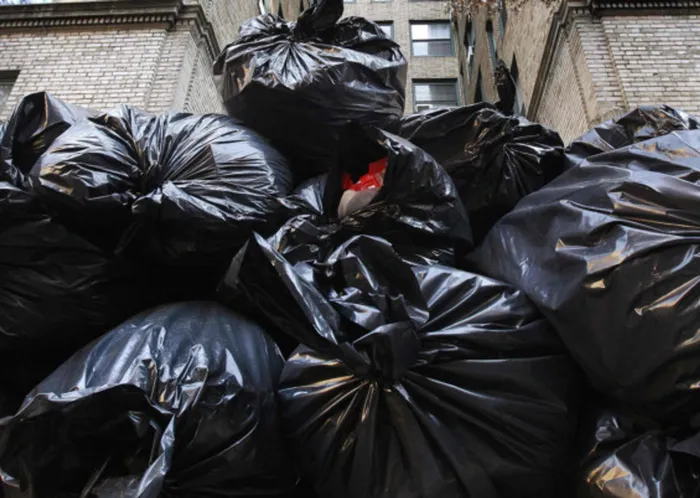
The eThekwini Municipality will resume the distribution of black refuse bags to residents quarterly, following a temporary shortage.
Image: File / Shannon Stapleton
The distribution of black refuse bags to eThekwini Municipality depots is expected to accelerate in the coming week, enabling the restoration of normal service levels.
This comes after the municipality issued a public statement on February 10, 2026, advising residents of a temporary shortage of black refuse bags in some areas.
This followed the South African Bureau of Standards verification of test samples, an essential step to ensure that all products supplied to the city meet approved quality standards. Some areas in the city had been affected.
Mandla Nsele, the municipality’s spokesperson, explained that the municipality has made significant progress in restoring supply.
“Although procurement delays were unavoidable due to statutory compliance requirements, interim measures have been successfully implemented,” he added.
Allimuthu Perumal, a Durban resident, suggested that every account holder should be allocated numbered black bags.
He added that the distribution must be recorded, and supply chain management practices must always account for stock. Perumal highlighted the problem of illegal dumping.
“To stem this, business licensing must ensure that the shops first rent wheel bins and all black bin bags supplied by the council are numbered. The municipality can trace offenders to their homes and businesses using the numbers recorded on their municipal account,” Perumal said.
Nsele stated that the municipality distributes just over 1.2 million black refuse bags on a quarterly basis to households within its jurisdiction.
He explained that distribution teams from the Cleansing and Solid Waste Directorate (CSW) depots follow an approved schedule and tick off house numbers once delivery is completed, with management monitoring the process to ensure accountability.
“When residents report nondelivery, the area manager investigates and takes immediate corrective action where required. The municipality applies strict quality assurance controls to ensure that the refuse bags supplied to residents are durable and fit for purpose,” he said.
All municipal-issued plastic bags are branded with the city’s logo. Nsele explained that bidders are required to submit independently tested samples, and the municipality verifies the accreditation of the testing laboratories to protect residents from sub-standard products.
“While this process may take time, it ensures reliable service delivery and maintains public confidence in municipal services,” he said.
The city, however, cannot confirm the quality of refuse bags sold in supermarkets.
“The city encourages residents to continue practising responsible waste management, including avoiding littering and illegal dumping,” he said.
Councillor Yogis Govender, DA eThekwini Executive Committee (Exco) member, stated that there needs to be an overhaul of supply chain management processes to ensure timely procurement and distribution of essential supplies
“The unit has a documented history of frequent shortages of refuse bags, inferior quality supplies that lead to leaks, environmental contamination, and a lack of accountability. There is no visible consequence management or corrective action,” she said.
Residents who have information regarding the alleged illegal sale of municipal refuse bags are encouraged to report it to the city’s Integrity and Investigations Directorate on 0800 20 20 20, via the Customer Service Centre at 031 311 8804, or by emailing dsw@durban.gov.za
zainul.dawood@inl.co.za