

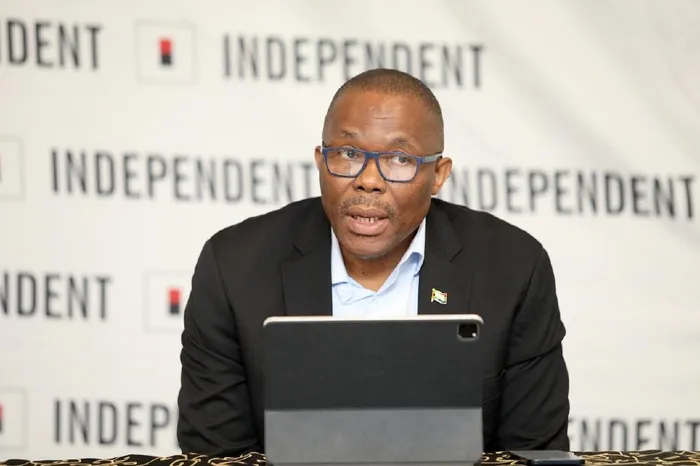
eThekwini Mayor Cyril Xaba suggested that the municipal finance committee meet twice a month to address the debt of R44 billion.
Image: File
eThekwini Mayor Cyril Xaba suggested that the municipal finance committee meet twice a month to address the ballooning debt of R44 billion.
Xaba was speaking at a council meeting recently, where some political parties in the municipality lambasted the budget statement report for February 2026.
The committee's report outlined that the cash collection rate remained at 93% with 14 days of cash on hand, excluding unspent grants.
The committee requested oversight of the Cost Containment Strategies developed to improve the cash flow position.
A key concern raised by the committee was the municipality's spending priorities, specifically the need to focus on essential needs over discretionary wants.
Furthermore, the committee noted a significant increase in total outstanding debtors, which stood at R44 billion — a R6.9 billion jump compared to February 2025. The municipality, however, confirmed that it has indirect security against these debtors and has established recovery processes.
The report also highlighted that water debt constitutes a substantial 47% of the total debt for the month. To address this, the municipality's revenue department was advised to issue consolidated bills to customers.
The rise in water debt was directly attributed to a sharp increase in the monthly water bill, which spiked to R900 million in February 2026, significantly higher than the average monthly bill of R600 million.
Andre Beetge, eThekwini DA ward councillor, was concerned that the collection rate dipped from 94% to 88% in February.
Beetge said that the Special Debt Relief Programme, which ran from November 1, 2025, to the end of January 2026, received 4,394 applications.
He said it resulted in R496 million being written off, and a further R496 million being recovered and returned to the municipal coffers.
“While any recovery is welcome, we must ask, at what cost? For every rand recovered, another rand was written off. In the end, R43.3 billion remains outstanding. This points to a deeper, structural issue. Are we truly addressing the root causes of non-payment, or are we simply managing the symptoms while carefully recording our own decline? Even the Auditor-General has made reference to this lack of broadening the rates, yet it continues to be sidestepped,” Beetge said.
He said debtors must be openly accounted for, without fear or favour.
He added that the burden increasingly falls on a shrinking base of ratepayers, less than 10% of the population, who now face rising tariffs, property revaluations, and additional levies.
Democratic Liberal Congress (DLC) Leader Patrick Pillay said the report raises many alarm bells and called for immediate action on addressing bottlenecks and dealing effectively with revenue collections.
Pillay was also concerned about the cash on hand and suggested that the municipality come up with an urgent financial strategy that will not place the city in a worse situation in the coming months.
“I have observed that the high debt is primarily due to the suspension of the 80/20 prepaid meter system, the very slow pace in processing indigent support applications due to the major shortage of social workers, and the absence of any viable debt relief programmes,” Pillay said.
Zwakele Mncwango, ActionSA's caucus leader in eThekwini, said it was difficult to explain to ratepayers that some of the debt belonged to government departments. He called for robust discussions with these departments to recover debt.
Xaba agreed that the debt was too much, but councillors should look at what is being done to recover the money. He said the 6 Kilolitres of water charge to residents made the water debt increase, compounded by interest.
“It represents a debt that we need to scrutinise. We need to think afresh and focus on one problem at a time. We need to hold two finance committee meetings. One to deal with expenditure and the other to deal with revenue. We need to get into why the measures are not being applied,” Xaba said.
zainul.dawood@inl.co.za