

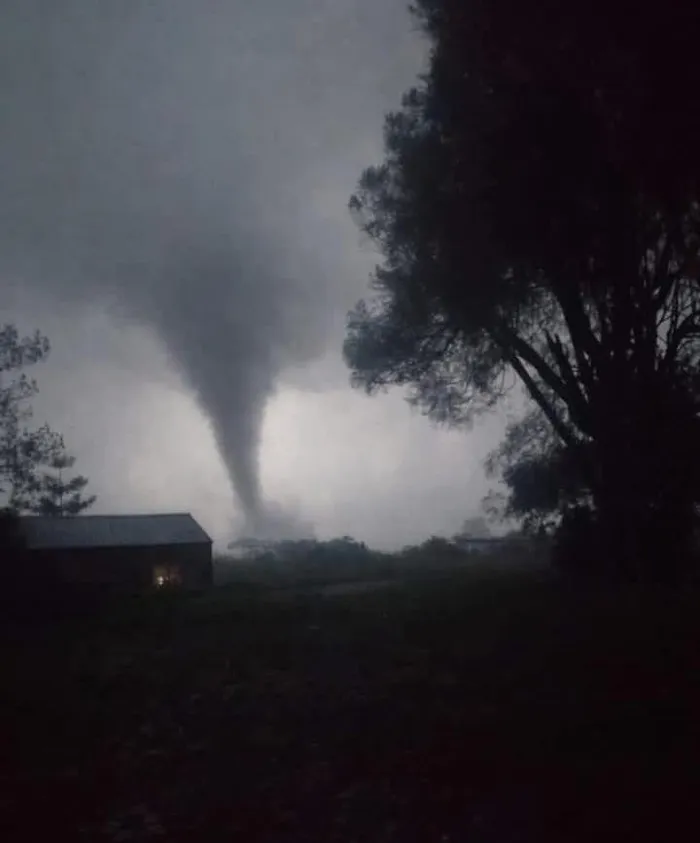
The tornado activity occurred for a brief period in Bishopstow, Pietermaritzburg, according to the SA Weather Service.
Image: Facebook/ Edith Elliott DA councillor ward 37, Msunduzi
Provincial authorities and the SA Weather Service (SAWS) openly acknowledged shortcomings in the early warning system for severe weather events, citing a lack of localised information and untimely delivery of alerts to communities in KwaZulu-Natal.
This was discussed at the Climate Change Council on Friday, attended by stakeholders from government, civil society, business, academia, and traditional leadership.
Office of the Premier’s Martie Milne said: “The early warning systems are there. The effectiveness is something that we will have to look at. Especially if we look at what transpired last week, I think we got caught.
“And it means that yes, there is something, but it’s not quite working the way we need it to operate at the practical level.”
EThekwini Municipality climate change department head, Dr Luyanda Mafumbu, said they need to address the gap between them and SAWS regarding flood-related disasters.
“The case in point is the storm that we experienced in eThekwini. The information didn’t come in time. I think that’s where we are having the problem, and we need to bridge that if we are to respond quickly,” Mafumbu said.
“The information that we get is not localised, it’s at a regional and at a higher level, where they just talk about the whole area rather than a specific area.”
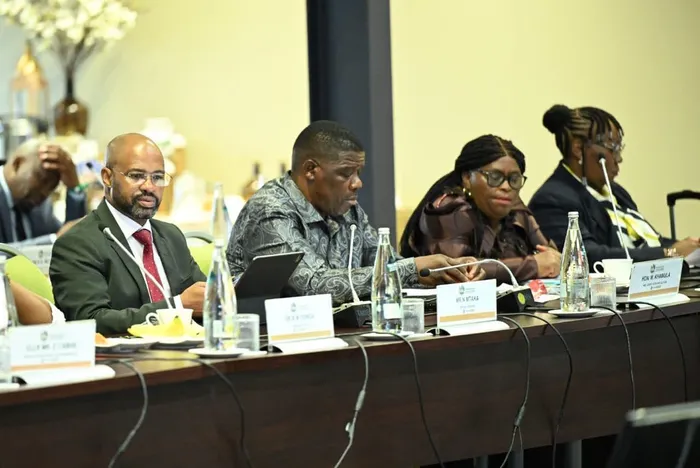
Provincial authorities discuss the need for improved early warning systems during the Climate Change Council meeting.
Image: KwaZulu-Natal Provincial Government
KZN Health MEC Nomagugu Simelane noted that an impact-based early warning system exists, but called for SAWS to provide information timeously, and it must be localised information, which is not happening.
“While I accept that the South African Weather Service provides this information, I do not think it is sufficient, and I don’t think it actually filters out to the community members that it’s supposed to get to,” Simelane said.
SAWS senior meteorologist Wisani Maluleke agreed the early warning system is not perfect, but it is there.
Working with stakeholders like Co-operative Governance and Traditional Affairs (Cogta), he said, they developed an impact-based early warning system to ensure all warnings reach affected communities. Their forecast is based on models, and these get information from the observation data, the infrastructure across the country, including KZN.
“Currently, the South African Weather Service is also modernising its observation network, where we want to have more quality observations which will feed into these models,” Maluleke said.
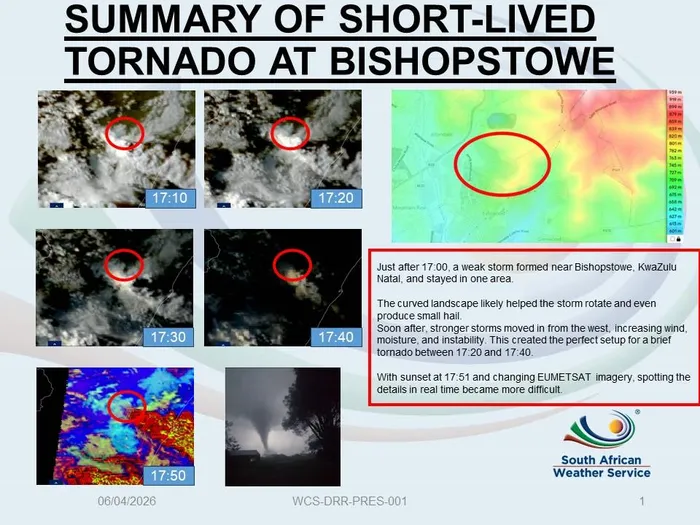
A brief, weak tornado occurred in Bishopstowe on Sunday, April 5, between 5:20pm and 5:40pm. Initially, a weak, stationary storm formed just after 5pm, possibly aided by the curved landscape, producing small hail. Stronger storms from the west then increased wind, moisture, and instability, leading to the brief tornado. Details were hard to confirm in real-time due to the 5:51pm sunset and changing satellite imagery.
Image: Facebook/ South African Weather Service
Regarding last week’s weather, Maluleke said SAWS usually issues a warning for provincial thunderstorms.
“With this, the models were not showing signs that we would have severe thunderstorms. However, we did send the weather forecast, which indicated we would have thunderstorm activity in the province, but there was no sign that we would have severe thunderstorms,” Maluleke explained.
“Another factor is the issue of the tornado, which is a small system which can happen very quickly. It’s very quick; even when you issue the warning, the damage is already done.”
Maluleke said that this implies the current available technology is not yet developed enough to detect those systems.
“We can only pick the signs that these severe thunderstorms might develop into a tornado, and then sometimes we can get observations from people on the ground that there was a tornado somewhere, and then when you check our models, we find that the models are not showing those.”
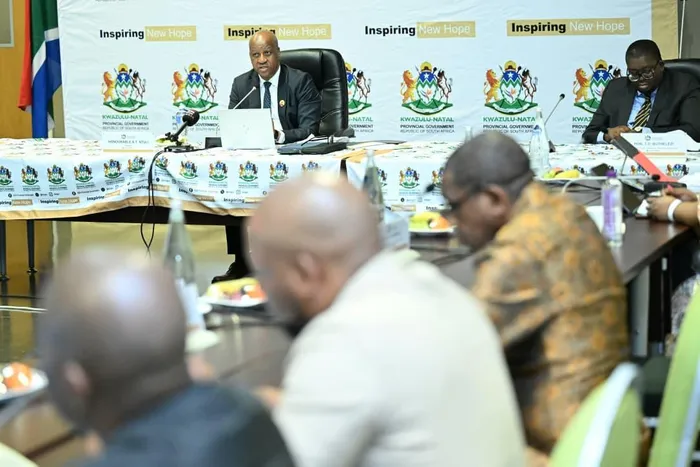
KwaZulu-Natal Premier Thamsanqa Ntuli (left) emphasises the importance of effective communication in weather alerts.
Image: KwaZulu-Natal Provincial Government
KZN Premier Thamsanqa Ntuli acknowledged and appreciated SAWS’s contribution to their ongoing work in monitoring, forecasting, and providing critical data that enables informed decision-making in the face of climate risks.
He said their role is indispensable in strengthening early warning systems and improving preparedness in the province.
He added that they are emphasising the issue of communication, the strategy for how the government and SAWS are communicating.
“How do we ensure that even for those who are deprived of access to information, get weather alerts and also understand the importance of responding to the alerts, because some of them will be given alerts, they will not respond until they find themselves in a problem,” Ntuli said.
thobeka.ngema@inl.co.za