

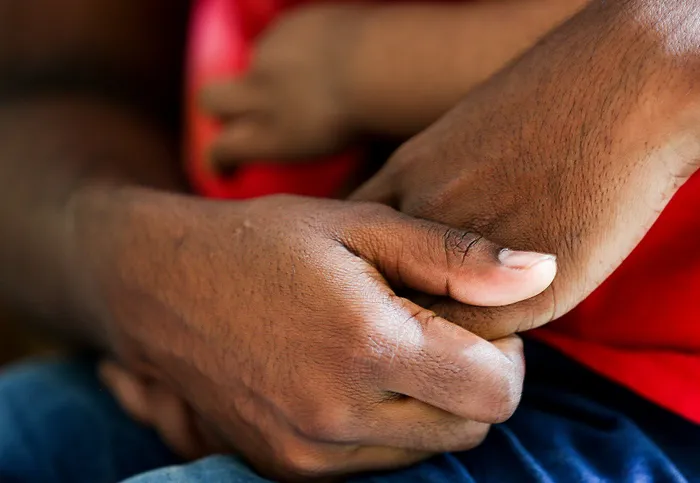
The writer pays tribute to the dedication of social workers and caregivers, who often remain in the shadows despite their crucial roles in society.
Image: File
I wrote previously about nurses –about the sacred, unseen work they do – and the response moved me deeply. But in the days that followed, social workers and caregivers found me, smiled that quiet smile of people who are used to being overlooked, and said: “You know what we do. Why did you not write about us?”
This article is my answer. There is a woman – let us call her Happiness – who wakes before five every morning in uMlazi. She makes tea she rarely finishes, catches a taxi she cannot always afford, and arrives at a children’s home in time to wake children who are not hers, braid hair that is not her daughter’s, and pack school bags for boys and girls whose parents are either gone or not yet found. She does this with a smile because these children have already learned – far too early – to read the faces of adults for signs of danger. She will not be another face that frightens them. Nobody writes about Happiness. Until now.
We have become very good, in this country, at talking about what is broken. But in our rush to document failure, we have left an entire army of human beings standing in the wreckage of our narrative – people who showed up today, as they did yesterday, and will again tomorrow, for wages that insult the depth of what they give. South Africa has a confirmed shortage of at least 52,500 social workers – a number so vast it should shame every budget committee that has ever prioritised something else.
Research conducted in the Eastern Cape found that social workers reported symptoms of emotional exhaustion, hypertension, and depression directly linked to their working conditions. Some were hospitalised, not from physical injury, but from carrying too much for too long, with too little support and almost no acknowledgement. Child and youth care workers earn between R5,000 and R15,900 a month. These are the men and women sitting with a 7-year-old who has never known a permanent bed, who flinches when an adult raises a hand – even to wave.
They are patiently, daily, rebuilding trust in human beings on behalf of all the human beings who destroyed it first. We pay them less than a junior office administrator. We should sit with that discomfort.There is a particular grief that has no name in any clinical manual. It belongs to the caregiver who has spent six weeks learning that Mr Naidoo likes his curtains open in the morning, that he was a schoolteacher in oThongathi for 30 years, and that he is frightened – not of dying, but of dying without anyone who knew him being present.
It is the caregiver who becomes, quietly and without fanfare, the most important person in the last chapter of his life.When Mr Naidoo passes, she will strip the bed, prepare the room, and welcome the next patient before the afternoon is out. There is no ceremony for what she carries home. No counselling session scheduled. No colleague who pulls her aside and says – are you alright?
Studies on caregiving in South Africa describe what researchers call “anticipatory grief” – a prolonged, cumulative mourning that caregivers absorb as they watch those in their care decline, losing not only the patient but a piece of their own emotional stability.
In a hospice, that grief is not occasional; it is the texture of every single working day. And still, they come back.Compassion does not erode without cause. It erodes when a person is overworked, underpaid, and chronically disrespected by the very public they have given their lives to serve. When a patient speaks to a caregiver as though she is beneath them.
When a family member treats a social worker like an obstacle rather than a human being trying to help. Could it not be that some of what we condemn was created, in part, by us? By how we treated them – or failed to – over years of invisibility? And if our indifference helped break them, could not our acknowledgement begin to heal them?
Who knows what shifts in a person who has forgotten why they chose this work; the moment someone looks them in the eye and says: I see you. What you do matters. Recognition is not a reward; it is a lifeline.The next time you encounter a social worker, a caregiver, a hospice volunteer, a children’s home manager – stop. Look at them.
Read the name on their badge and use it. Say thank you and mean it. Not as a transaction, but as a recognition – one human being to another – that you see what they carry, and that it matters. Ubuntu tells us their dignity and ours are the same thing. Batho Pele tells us people must come first – not only in policy, but in the everyday texture of how we treat one another.They chose this work not because the world made it easy or profitable.
They chose it because they could not imagine walking past. If nurses are God’s own – and I have written that they are – then social workers and caregivers are His angels: quieter, less celebrated, carrying a different kind of cross, and doing it, most days, without anyone thinking to say their name. This article says their name. All of them.
l Hannuman is a Director at AVIB and an employee benefits consultant who holds an MBA from UKZN, is an FSA of the Financial Planning Institute of South Africa, a Human Values Practitioner, and a Behavioural Life Coach who believes in the betterment of life for all.
For more content from The Mercury, click the link THE MERCURY