

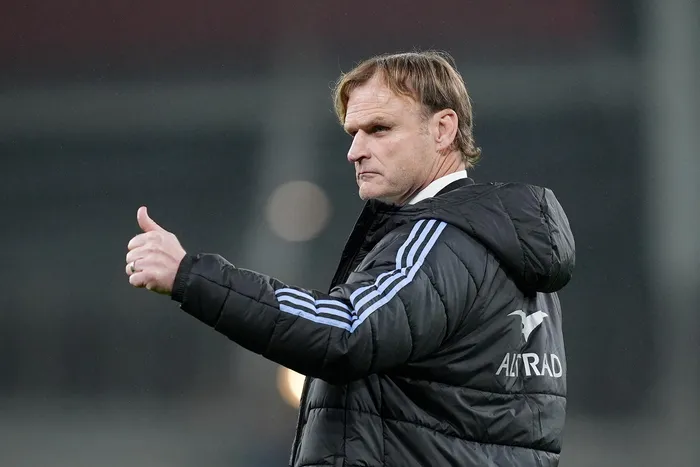
Ahead of a tough 2026 international rugby season, including four Tests against the Springboks, the All Blacks fired head coach Scott Robertson.
Image: BackpagePix
The All Blacks are standing at a crossroads that should make every New Zealand rugby fan shift a little uneasily on their couch ahead of the new international season.
It’s a moment that feels very familiar, because this movie has been on the big screen before — just not in black, but in green and gold. In 2017, the Springboks were on their knees under Allister Coetzee, especially after losing 57–0 to the All Blacks.
Public trust was almost non-existent, performances were erratic and poor, jerseys were burnt, and the Boks were drifting just two seasons out from the 2019 Rugby World Cup.
Then, in 2018, came one ruthless but brave decision by SA Rugby: the firing of Coetzee and the appointment of Rassie Erasmus, alongside Jacques Nienaber. The result, as history reminds us, was two Rugby World Cup trophies and a team-wide cultural reset that rewrote the history books of South African — and world — rugby. Four-time world champions still have a good ring to it.
New Zealand rugby now finds itself staring down a similar fork in the road following the firing of head coach Scott Robertson on Thursday. What follows this sacking will not just determine how quickly the next coach can put out the fires — it could shape the All Blacks’ DNA heading into the 2027 Rugby World Cup in Australia.
Erasmus’s genius wasn’t just his rugby IQ; it was his willingness to rip up old assumptions. He took control and shut out boardroom noise, backed players unapologetically — most notably captain Siya Kolisi — built a coaching team with aligned goals, and, most importantly, created an environment where everyone knew exactly what the Springboks stood for and what the objectives were.
Right now, the All Blacks need to ask themselves some uncomfortable questions. Who are they now? What does winning look like in a modern game where the All Black aura and the haka alone no longer intimidate? And are they willing to move beyond nostalgia and reputation to rebuild something sharper and more ruthless?
If New Zealand Rugby treats this appointment as a safe, conservative handover, the decline over the next season could accelerate. The Kiwis face tough home Tests against France and Ireland, and four brutal away matches against the Springboks. The margins at international level, especially in the modern era, are unforgiving. Talent alone will not carry the All Blacks to glory this year or in 2027.
However, if they take a page from the Erasmus playbook and appoint a leader with vision, adaptability, and authority — and fully commit to a long-term cultural reset — this crossroads could become a launchpad to building another Steve Hansen-style dynasty. Australia’s World Cup is close enough to demand urgency, but far enough away to reward bold decisions and bold planning.
The Springboks chose reinvention and rose. The All Blacks now face the same choice. Get the appointment right, and this could mark the beginning of another golden chapter. Get it wrong, and the most feared jersey in rugby risks becoming just another contender.