

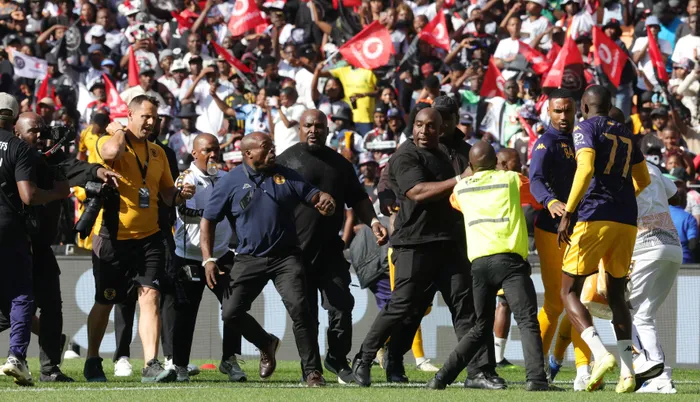
With police intervention and a 45-minute kick-off delay, the heat was on before the first whistle even blew.
Image: BackpagePix
MUTI (Umuthi), the use of traditional rituals, has always been part of South African football, but rarely does it lead to questions about player safety as it did at the FNB Stadium on Sunday, April 26.
What should have been a vibrant Sunday afternoon during a South African Freedom Day long weekend — as scores of people flocked to the Nasrec precinct for one of the country’s premier sporting events, the Soweto Derby — almost turned sour.
The incident, which resulted in warm-ups being halted and contributed to a 45-minute delay in kick-off (alongside some 40,000 fans arriving late or being delayed by the ticketing system), was reportedly sparked by these pre-match muti rituals.
Kaizer Chiefs officials and Orlando Pirates security were at each other’s throats during the warm-ups.
As this was a Pirates home game, the "muti psychology" allowed them to practice their rituals as if they were playing at their own home ground, Orlando Stadium. Emphasis on "home". It appears they went this mindset despite the FNB Stadium being primarily used by Chiefs for their home fixtures.
During the process, they were accused of encroaching on the half of the pitch used by the Kaizer Chiefs players for their warm-up. That was how the fire started. The brawl became severe enough that police intervention was required to restore order, forcing the Chiefs players to briefly leave the field.
While we may all value tradition, anything that threatens the safety of players within the stadium precinct — let alone on the pitch — needs to be dealt with decisively. Viral images of the incident show bouncers, security guards, support staff, and members of the South African Police Service scuffling while players stood caught in the middle.
Boxing hooks and flying kicks were thrown. Imagine one of those "Chuck Norris" kicks landing on a player while the eyes of the world are on South Africa ahead of the 2026 FIFA World Cup.
The worrying part is that neither club has since issued a statement assuring the nation and the world that they will, at the very least, investigate the matter. The Premier Soccer League (PSL) has also remained silent, acting as if the day’s events were perfectly normal.
Only the South African Football Players Union (SAFPU) has issued a statement calling on the PSL to act on a matter that directly threatened player safety.
The union, understanding that muti is part of South African football culture, has not called for the rituals to be scrapped. However, the silence from the clubs and the PSL is alarming. No doubt these same organisations would react instantly if calls to ban the rituals were made by outside parties.
The fact that the match ended in a 1-1 stalemate leaves one to wonder if these rituals are even necessary or if they at all work — or perhaps they were both using the same concoctions? The Zulu saying goes, awumbiwa ndawonye (muti is not dug up in the same place).
Perhaps it would benefit both sets of club officials to prepare for next season by travelling far and wide to scout for new "medicine men". After all, it seems that is more important to them than scouting for players.
They can even give me a call for assistance; the late Clive Barker once regaled me with a story of a muti man from iNdwedwe, on the outskirts of Durban, whom they used during his days with AmaZulu. Considering "The Dog's" success in South African football, maybe they need the information at my disposal. I am happy to be at their service.