

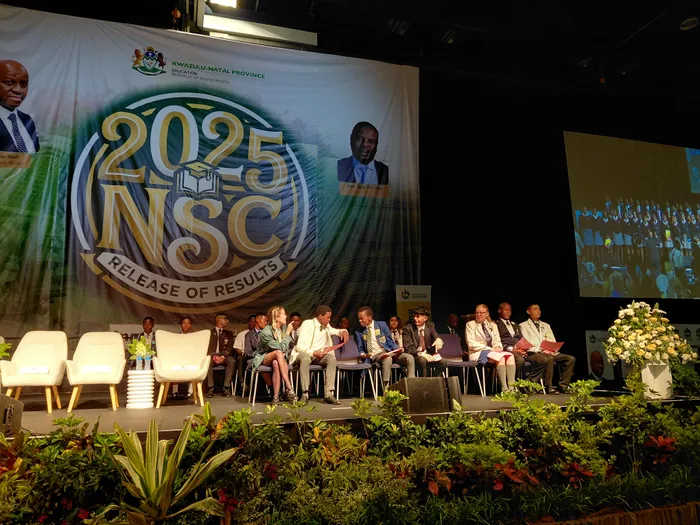
KwaZulu-Natal 2025 Matric Class shines with a 90.6% pass rate in matric results, earning a rare unity of praise from IFP, ANC, MKP and the DA. The MEC of Education in KwaZulu-Natal Sipho Hlomuka announces the top achievers in the province at a ceremony held at the Inkosi Albert Luthuli International Convention Centre.
Image: XOLILE MTHEMBU
KwaZulu-Natal has been crowned South Africa’s best-performing province in the 2025 National Senior Certificate examinations, achieving an impressive 90.6% pass rate as the country recorded an overall national pass rate of 88%.
The results, announced by Basic Education Minister Siviwe Gwarube, were welcomed across the political spectrum, with the Inkatha Freedom Party (IFP), African National Congress (ANC) uMkhonto weSizwe Party (MKP) and Democratic Alliance (DA) all commending learners, teachers and education officials for their resilience and dedication.
The IFP congratulated the Matric Class of 2025 nationally for improving the country’s pass rate from 87.3% in 2024 to 88% this year, while singling out KwaZulu-Natal for emerging as the top-performing province.
The party said the results reflected the determination and discipline of learners and educators who had to contend with challenges such as delayed norms and standards funding and the late or inadequate delivery of learning materials.
"The increase in Bachelor passes is particularly encouraging and signals progress in the basic education sector," the IFP said, adding that more than 900 000 candidates wrote the examinations under difficult circumstances.
The party also urged pupils who did not obtain the results they had hoped for to make use of the Second Chance Matric Programme and other alternative pathways, stressing that "a single setback does not define one’s future".
The ANC in KwaZulu-Natal said the province’s number one ranking, up from a 89.5% pass rate in 2024, was a historic achievement, noting that 178 010 of the more than 900 000 candidates nationally came from KZN.
The party attributed the success to the "visionary leadership" of KwaZulu-Natal MEC for Education Sipho Hlomuka and long-term investments made by successive ANC administrations in the education system.
It highlighted the role of the National School Nutrition Programme and the Scholar Transport Programme, particularly in supporting learners from poor and rural communities.
Notably, six of the top 10 performing districts in the country were rural districts from KwaZulu-Natal, which the ANC said proved that with the right support, rural learners could compete at the highest level.
However, the ANC also pointed to inequalities in funding, noting that while the national norms and standards rate stood at R1 547 per learner, KwaZulu-Natal schools were receiving only R955. It said addressing these disparities remained a key priority.
The MKP saidi it congratulates the national class of 2025 on achieving a pass rate of 98.3% in the IEB and a pass rate of 88% for the national senior certificate (NSC) with KwaZulu-Natal being the best performing province with a pass rate of 90.6% even in the midst of the school nutrition programme corruption in the GPU.
"This moment presents a culmination of years of dedicaton, sacrifice and perseverance by learners, educators, parents and communities across the country," said MKP's spokesperson Nhlamulo Ndhlela in a statement.
"As the results are released we commend and congratulate all learners whose work has borne fruit and we encourage those who did not achieve their desired outcome to remain hopeful and resilient," said the MKP.
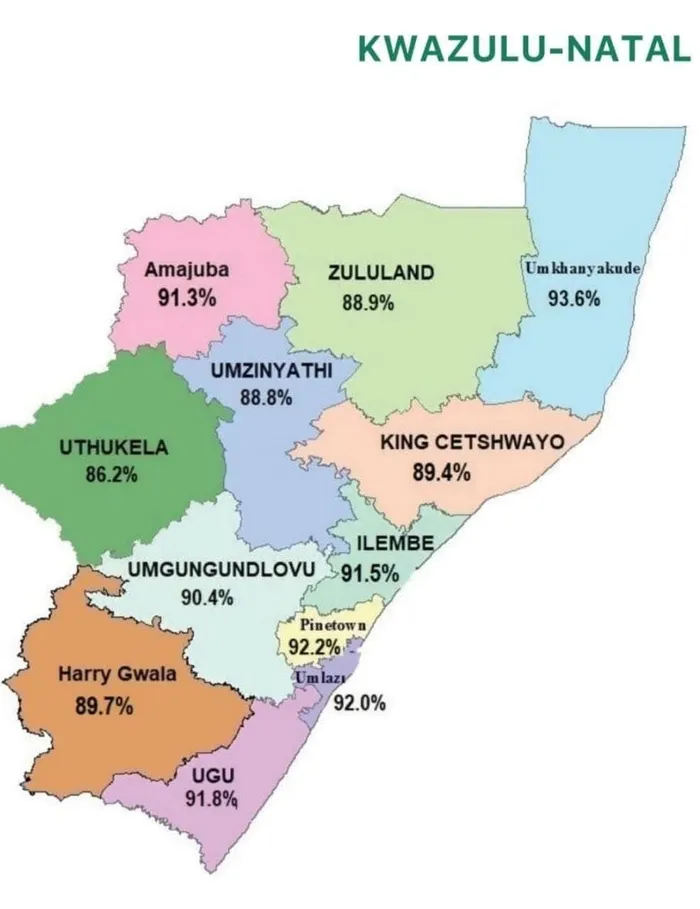
This is how the different education districts in KwaZulu-Natal fared in the 2025 national senior certificate with the deeply rural uMkhanyakude District being top of the class and coming second nationally.
Image: Supplied
The DA in KwaZulu-Natal also congratulated the Class of 2025 for the province’s outstanding performance, describing the 90.6% pass rate as "a moment of immense pride".
The DA gave special recognition to the uMkhanyakude District, which ranked second nationally despite its deep rural context, saying its achievement demonstrated what could be achieved with focused effort and commitment.
At the same time, the party raised concern about the performance of several special needs schools in the province, warning that learners with disabilities and learning challenges required targeted support and consistent resources to ensure they were not left behind.
The DA further noted that the strong results were achieved despite ongoing systemic pressures, including problems with school nutrition, delayed funding, infrastructure backlogs and administrative constraints.
All four parties called on matriculants to celebrate responsibly and to remain focused on their future studies, skills development and contribution to nation-building.