

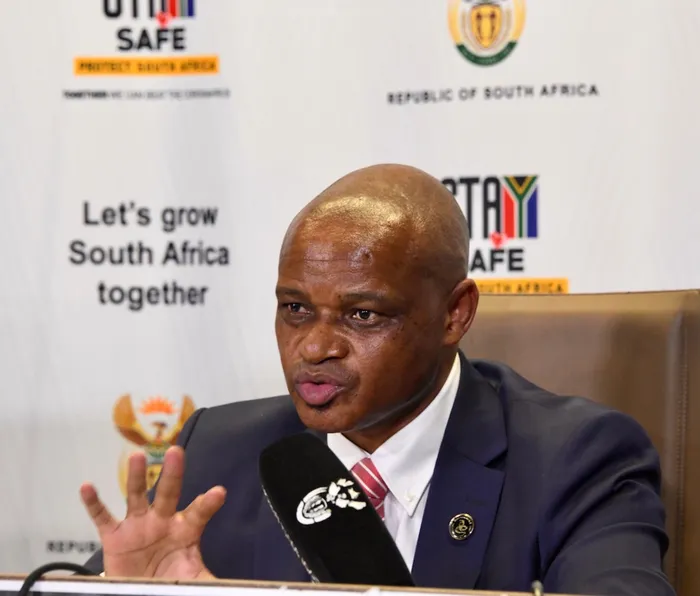
Advocate Andy Mothibi’s record gives reason for cautious optimism. As head of the Special Investigating Unit since 2019, he oversaw the recovery of more than R2.28 billion in public funds and helped prevent losses of roughly R8bn in the 2023 to 2024 financial year alone.
Image: Supplied
PRESIDENT Cyril Ramaphosa’s appointment of Advocate Andy Mothibi as National Director of Public Prosecutions on January 6, 2026, sparked immediate debate: some called it decisive, others saw political theatre.
Both views contain truth. But both miss the more important point.
The real question is not whether the appointment process was ideal. It clearly was not. The real question is whether Mothibi will deliver what South Africa urgently needs: swift, fearless prosecutions that hold powerful people to account.
After more than a decade of state capture, institutional sabotage, and justice delayed, the country does not need another careful custodian. It needs a prosecutor who acts.
Mothibi’s record gives reason for cautious optimism. As head of the Special Investigating Unit since 2019, he oversaw the recovery of more than R2.28 billion in public funds and helped prevent losses of roughly R8bn in the 2023 to 2024 financial year alone. These are not abstract achievements. They reflect real interventions in health sector corruption, infrastructure fraud, and state-owned enterprise looting.
His broader experience across the prosecutorial system, the magistracy, and senior leadership at the SA Revenue Service (Sars) matters because the National Prosecuting Authority (NPA) is not just underperforming. It is still recovering from deep institutional trauma inflicted during the years when political interference hollowed out prosecutorial independence. Even under well-intentioned leadership, progress has been slow, uneven, and often invisible to the public.
What distinguishes Mothibi is temperament. Leading the SIU required operating in politically hostile terrain without collapsing into paralysis or capture. That balance is exactly what the NDPP role demands. If he brings the same urgency and discipline to the NPA, South Africa could finally see movement on cases involving senior politicians and entrenched patronage networks.
Yet it would be irresponsible to ignore how he arrived in office.
The selection process was cloudy and poorly handled. An advisory panel interviewed candidates, rejected them all without public explanation, and the process was not transparently reopened. Instead, the President approached Mothibi directly. Even if the outcome proves defensible on merit, the opacity has weakened institutional legitimacy and fuelled suspicion.
That damage cannot be undone. But it can be mitigated by what happens next.
South Africa does not have the luxury of another prolonged leadership debate. The justice system is under strain from revelations emerging from commissions of inquiry, parliamentary probes, and whistleblowers exposing collusion between politics, policing, and criminal networks. Cases are piling up. Evidence exists. Public patience is exhausted.
Mothibi assumes office on February 1, 2026, with perhaps two years before retirement. That is not a long runway. It demands urgency, clarity, and visible action from day one.
This is where recommendations matter.
First, Mothibi should publicly announce a focused set of priority prosecutions within his first 90 days. Not vague commitments but clearly identified categories of cases drawn from completed investigative work, including state capture-related matters and politically sensitive corruption cases. Even if trials take time, signals of intent matter.
Second, the NPA needs a transparent reporting framework. Quarterly public updates on progress in major corruption cases would go a long way toward restoring trust. Silence has become synonymous with stagnation.
Third, internal protection mechanisms for prosecutors must be strengthened immediately. Fear of political retaliation has hollowed out the institution before. Mothibi should formalise safeguards for prosecutorial independence and make interference publicly costly.
Fourth, the President and Parliament must do their part. Prosecutorial independence cannot be demanded while budget constraints, instability, and political pressure persist. Parliament should urgently review the NDPP appointment process itself, ensuring future selections are transparent, independent of the executive, and led by panels with genuine prosecutorial expertise.
Finally, civil society and the media must maintain pressure, not selectively, but consistently. Accountability cannot depend on who is implicated. Impunity thrives when outrage is partisan.
This does not excuse the flawed appointment process. It underlines why reform is overdue. But procedural reform alone will not prosecute anyone. Action will.
Ultimately, this appointment will not be judged by court challenges or political statements. It will be judged by indictments, court dates, and convictions. The real test is whether Mothibi uses his limited time to act decisively on evidence already available, or whether caution and delay once again protect the powerful.
South Africans have learned the fragility of institutions. We know how one compromised leader can paralyse justice for years. We also know that moments of opportunity are rare.
Mothibi inherits a wounded institution. But he also inherits a moment of clarity. The evidence of corruption is well documented. The cost of continued impunity is unmistakable. Economic stagnation, investor flight, and social instability are no longer abstract risks.
The process that brought him here was flawed. The system remains vulnerable. But if Mothibi delivers fearless, impartial prosecution of high-level corruption, his appointment will be justified by results rather than procedure.
If he does not, then the critics will be proven right, and South Africa will have wasted yet another chance to reclaim its justice system.
The clock is ticking. Two years is not long. But it is long enough to show whether this appointment reflects real intent or merely the appearance of reform.
For South Africa’s sake, let us not waste this chance. Citizens, civil society, and leaders must now demand real progress and hold Mothibi accountable every step of the way. The time for waiting is over, press for justice. The future depends on action, not promises. Insist that intent becomes reality.
* Nyaniso Qwesha is a writer with a background in risk management, governance, and sustainability. He explores how power, accountability, and innovation intersect in South Africa’s landscape.
** The views expressed here do not reflect those of the Sunday Independent, IOL, or Independent Media.