

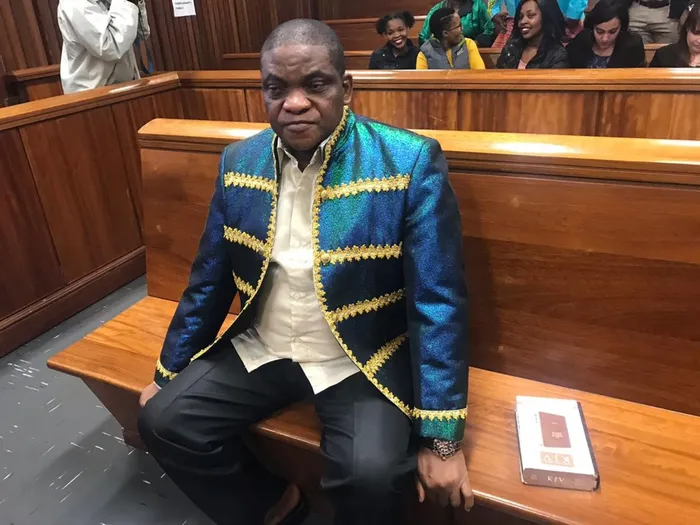
Judge Schoeman emphasized that the judgment she issued in April was comprehensive and clear enough for the State to understand the basis for the Timothy Omotoso acquittal.
Image: Raahil Sain / IOL
A case that has gripped South Africa for years, Judge Irma Schoeman has dismissed the National Prosecuting Authority’s attempt to seek clarification regarding her earlier ruling that acquitted Nigerian televangelist Timothy Omotoso and two of his co-accused.
The court’s recent decision marks another dramatic chapter in a legal battle that has garnered national attention and sparked public debate over justice, procedure, and the rights of the accused.
Earlier this year, Judge Schoeman handed down a ruling in the Eastern Cape High Court that effectively cleared Omotoso and his co-accused of charges including human trafficking and sexual assault. The April judgment stunned many observers, especially given the serious nature of the allegations. The prosecution, evidently dissatisfied with the outcome, had hoped to gain further insight into the court’s reasoning before proceeding with an application for leave to appeal.
However, in a decision released this week, Judge Schoeman dismissed the NPA’s request. She ruled that the State is not entitled to seek clarification from the court as a precursor to filing an appeal. In her view, the law does not provide for a two-step process in such matters. Instead, the State must proceed directly with its appeal application if it believes there are grounds to challenge the verdict.
Legal analysts suggest the ruling reflects a strict interpretation of procedural law. Judge Schoeman emphasised that the judgment she issued in April was comprehensive and clear enough for the State to understand the basis for the acquittal. Any further elaboration, she argued, would fall outside the bounds of what the court is required to provide post-verdict.
The case itself has been fraught with delays, complications, and public scrutiny. Timothy Omotoso, a well-known figure in religious circles, was first arrested in 2017. Accused by several women of running a religious cult under the guise of ministry work, he faced charges that included sexual exploitation and trafficking. Two female co-accused were also charged in connection with the alleged crimes. Over time, the case took on national significance, with many viewing it as a test of the justice system’s ability to handle cases involving powerful figures and vulnerable victims.
The April acquittal was a turning point. Judge Schoeman found that the State had failed to present sufficient evidence to justify continuing the trial. The decision drew criticism from activists and some members of the public, who feared that it could discourage survivors of abuse from coming forward in future cases.
Now, with the latest ruling, the NPA faces a tough decision. Without the benefit of additional judicial guidance, prosecutors must decide whether to move forward with their appeal. Legal experts caution that any appeal will have to be carefully argued, relying strictly on points of law rather than seeking to relitigate the facts of the case.
As the legal process continues, the case of Timothy Omotoso remains a stark reminder of the complexities and limitations of the justice system in high-profile, emotionally charged trial