

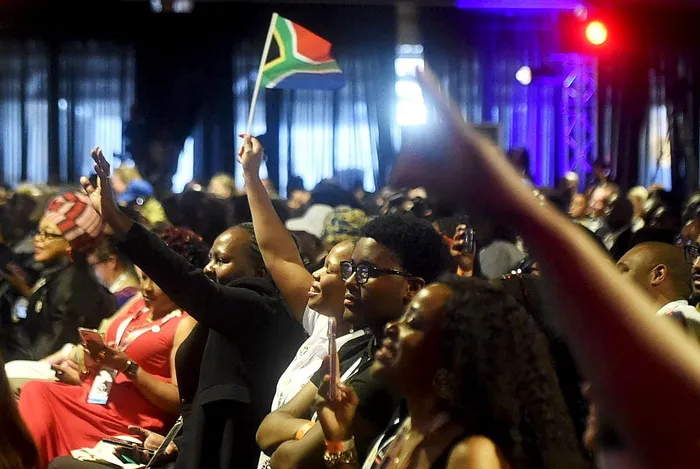
Scores of civil society voices brought their issues to the G20 Social Summit at the Birchwood Hotel.
Image: Itumeleng English/Independent Newspapers
When most young South Africans hear “G20,” it can sound like a distant, diplomatic buzzword - something that happens in luxurious conference halls far away from township streets or university lecture rooms. Yet, behind the acronyms and speeches, the G20 (Group of Twenty) holds real potential to shape the everyday lives of South Africa’s youth — from the jobs we hope to get, to the climate we inherit, to the technology we use to build our future.
A Seat at the Table — But for Whom?
South Africa is the only African country in the G20, which means it sits in global meetings alongside economic giants like the United States, China, India, and the European Union. On paper, that’s a big deal. It gives Africa, a continent with the youngest population on Earth, a voice in conversations about global finance, trade, and development. But the key question is: whose voice does South Africa really bring to that table? For too long, the G20 agenda has reflected the interests of wealthy nations. As a result, the issues that matter most to young Africans, inequality, youth unemployment, education, and access to digital opportunities, often end up sidelined. South Africa’s participation should not just be symbolic; it should be a chance to demand fairer trade, more climate finance, and meaningful investment in youth development.
Jobs, Skills, and the Future of Work
Unemployment among young South Africans is among the highest in the world — more than 4 in 10 young people can’t find work. Global economic decisions made in G20 meetings directly influence this reality. When the G20 agrees on trade rules, interest rates, or digital tax policies, those decisions ripple down into our economy, shaping how much investment comes into the country and what kinds of jobs are created. This is why South Africa’s role in the G20 should be about more than attendance - it should be about advocating for a global economy that works for youth. That means pushing for policies that promote skills development in areas like renewable energy, technology, and manufacturing. It means ensuring that when multinational companies invest here, they create real opportunities for local young people instead of just extracting profits.
Technology and Inclusion
The digital economy is where many of the world’s new opportunities lie, but without access, millions of young South Africans are left behind. In G20 discussions about artificial intelligence, digital taxation, and innovation, South Africa should insist on equitable access to technology and the internet. Bridging the digital divide is not a luxury; it’s a necessity. The pandemic made that clear when students in rural areas were cut off from education because of data costs or poor connectivity. The G20’s decisions on global digital policy can either widen or close that gap. South Africa should champion a digital future where African youth are not just consumers of global tech but creators and innovators in their own right.
From Policy to Participation
Ultimately, the G20 will only matter to young South Africans if its outcomes translate into tangible change at home. That requires the government to open up the conversation, to involve young people in policy discussions, not just after decisions have been made, but before. The G20 Youth Summit (Y20) is a step in that direction, but more must be done to ensure that youth voices feed directly into South Africa’s national policy positions.
The G20 is not just about global elites in suits; it’s about the systems that decide our economic chances, our environmental future, and our digital freedoms. South Africa’s youth, the majority of the population, deserve to be central to that vision. If South Africa can turn its seat at the G20 table into a platform for youth empowerment, it could redefine what global leadership looks like from the Global South. But if it remains business as usual, young South Africans will continue to pay the price for decisions made in rooms they were never invited into.