

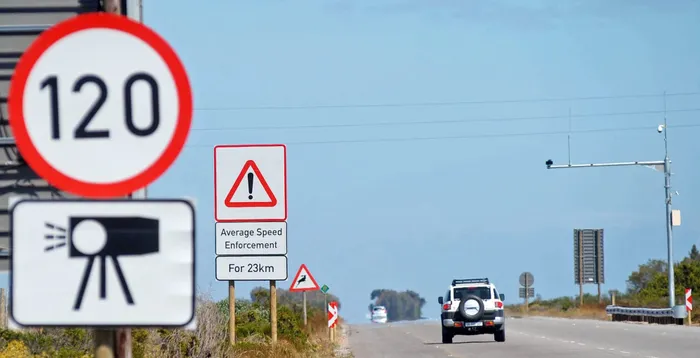
Speeding remains one of the biggest killers on our roads. The highest speeding offender was arrested in Gauteng, driving at 245 km/h in a BMW on the N1 near Honeydew on 18 December. We continue to educate motorists about the risks while enforcing the law decisively.
Image: David Ritchie/African News Agency Independent Newspapers
While we remain in the middle of the festive holidays, preliminary data collected between 1 and 28 December shows that Gauteng is turning the tide on road fatalities– though the battle is far from won.
According to statistics from this period, there has been a 5,2% decrease in road accident deaths compared to the same period last year. Nationally, Gauteng is one of only three provinces currently recording a decrease in fatalities during this festive season.
However, this figure tells a sobering story. Just last week, we were reporting a 12% decrease. That changed dramatically after a devastating weekend on 27 December. A single crash on the N1 under the Wallmansthal Road Bridge that morning killed five people—two women and three children. That same night, three women attempting to cross the N1 freeway near Randfontein were struck by a vehicle. Two died at the scene.
These tragedies remind us that behind every statistic is a family shattered. The deaths that still occur mean we cannot become complacent.
This progress didn’t happen by accident. It is the direct result of our “It Starts With You” campaign, which places personal responsibility at the centre of road safety. Unlike traditional approaches that rely solely on enforcement, this campaign recognises a fundamental truth: 87% of crashes happen because of human behaviour.
The campaign targets young drivers aged 18 to 35 – the demographic most likely toengage in reckless behaviour – but extends to all road users, including pedestrians. It reinforces three critical pillars: visible enforcement, anti-corruption efforts, and practical safety education.
One of our biggest challenges has been the alarming death toll among pedestrians. Between 1 and 28 December last year, we recorded 123 pedestrian deaths. This year, that figure stands at 96 – a decrease of 27 lives saved, but still unacceptably high.
Pedestrians consistently account for over 50% of weekly fatalities. Many of these deaths are entirely preventable. Our community-based awareness campaigns revealed that many pedestrians were unaware of simple safety measures—such as wearing bright clothing when walking along major routes at night.
We've also implemented enforcement, with law enforcement units apprehending those who walk on highways or cross roads dangerously. Nationally, 98 pedestrians were arrested for unsafe crossing. One of the biggest causes of pedestrian deaths has been drinking and walking. Far too many pedestrians killed by vehicles have been found to have consumed alcohol before the accidents.
When we lose three women in a single night because they chose to cross a freeway on foot, we know the message has not reached everyone. Public education around jaywalking needs to be taken more seriously by all road users and parents at home.
Speeding remains one of the biggest killers on our roads. The highest speeding offender was arrested driving at 245 km/h in a BMW on the N1 near Honeydew on 18 December. We have intensified action against unroadworthy vehicles, especially in public transport.
Since early December, 54 unroadworthy minibuses have been taken off the road. Between 15 and 21 December alone, our operations identified 16 minibuses with critical defects – faulty brakes, worn tyres, broken headlights, and cracked windscreens.
Additionally, 131 minibus taxi drivers were found operating without valid driving licences, while 44 arrests were made for serious offences including drunk driving and reckless driving.
These intensive efforts will continue throughout the holidays and into January, when we will rigorously address scholar transport vehicles to ensure our children travel safely to and from school.
On 22 December, two law enforcement officers were killed in separate crashes while on duty. A Gauteng Traffic Police motorcycle rider died after colliding with a vehicle driven by someone with only a learner's licence. Later that day, a South African Police Service member died when their marked vehicle crashed into a truck and trailer. These officers were out there protecting us, enforcing the laws designed to keep everyone safe. Their deaths remind us that reckless behaviour doesn't discriminate.
But here is the truth that “It Starts With You” emphasises: government and law enforcement cannot do this alone. As Transport Minister Barbara Creecy stated, “We, South Africans, must change our behaviour on the roads.”
Every decision counts. The choice to wear bright clothing at night. The choice to cross at a pedestrian crossing. The choice to refuse that drink before driving. The choice to check your tyres and brakes. The choice to obey the speed limit. The choice not to walk on a freeway. These are not the government’s choices to make – they are yours. It begins with you. It begins with me. It begins with all of us taking personal responsibility for the safety of every person who shares our roads.
Our 5,2% decrease shows what's possible when enforcement meets personal accountability. But 96 pedestrian deaths are still 96 families devastated. As you travel over the remaining festive period, remember: road safety begins with the person looking back at you in the mirror. Make it count.
MEC Kedibone Diale-Tlabela, Gauteng Department of Roads and Transport