

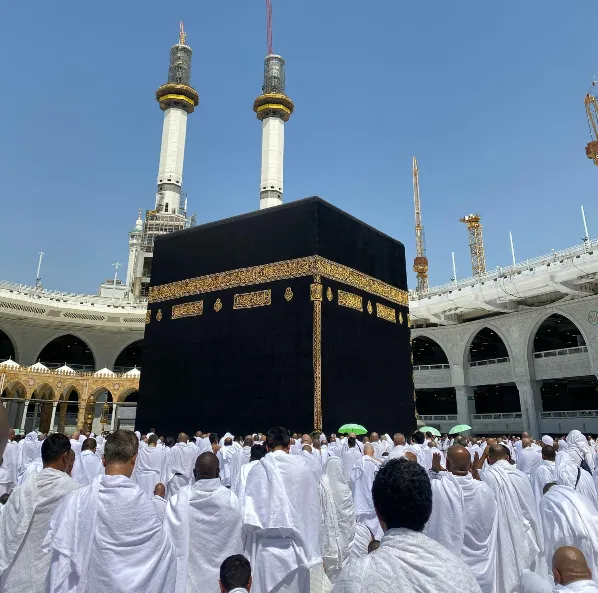
Hajj, an annual pilgrimage to Mecca, is one of the five pillars of Islam and a religious duty that must be carried out at least once by Muslims, provided that the person is healthy, fit and financially able.
Image: Pexels.com
The South African Hajj and Umrah Council (SAHUC) has announced that it will no longer serve as the country’s official Hajj Affairs office, following the Kingdom of Saudi Arabia’s rollout of the Direct Hajj Model via the Nusuk Hajj platform.
The decision, communicated after months of engagement with Saudi authorities and South African stakeholders, marks the end of SAHUC’s long-standing role in accrediting and facilitating Hajj for local pilgrims. From 2026, South Africans will need to register, select and secure their Hajj packages directly through the Nusuk Hajj platform.
Under the new model, South Africa’s quota has been reduced to 1,140 pilgrims, compared with the previous 2,500 allocated under SAHUC.
The SAHUC further announced that registration for Hajj 1447 is expected to open in late December 2025, during Rajab and said all pilgrims including those on SAHUC’s waiting list will now have to reapply through the Nusuk system, as the previous waiting list of up to 10 years will no longer be valid.
The Direct Hajj Model has already been successfully implemented in countries such as the United Kingdom, the United States, and several Gulf states. In these countries, pilgrims apply directly through the Nusuk Hajj platform, selecting packages and making payments online. Authorities say the system allows for more efficient allocation of quotas and standardised service delivery, though it also requires pilgrims to manage their applications digitally.
The transition introduces several changes. Applications will be handled on a first-come, first-served basis, without a waiting list, and pilgrims may be distributed across multiple Saudi service providers, potentially separating groups during the five key days of Hajj.
Packages, which will range from 10 to 21 days, are expected to cost more than those offered under the previous model, and may or may not include flights depending on the provider. Pilgrims will also no longer have access to customised support services previously provided by SAHUC, such as local spiritual, medical, and logistical assistance tailored to South Africans.
While some community organisations had supported SAHUC’s continuation as the Hajj Affairs office, the Saudi Ministry of Hajj and Umrah confirmed the transition earlier this month in a letter circulated by the Saudi Embassy in Pretoria.
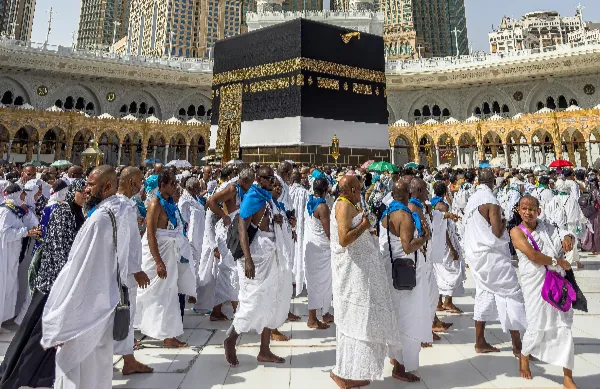
DIRCO outlines new operational frameworks for Hajj and Umrah, ensuring better service delivery for South African pilgrims in Saudi Arabia.
Image: Yasir Gürbüz/Pexels.com
In response to community concerns, SAHUC said it had formally approached the Department of International Relations and Cooperation (DIRCO) to explore how the government could support South African pilgrims under the new system. Engagements with DIRCO are ongoing, with a focus on ensuring that the rights and needs of local pilgrims are protected as they transition to the Saudi-run model.
DIRCO confirmed that it remains committed to providing consular services for nationals fulfilling their religious obligations, including Hajj and Umrah, while safeguarding South Africa’s positive reputation with Saudi authorities.
The matter has also drawn parliamentary attention.
Haseena Ismail, Member of Parliament and DA spokesperson on Tourism, said the National Assembly unanimously adopted the DA’s motion to protect Hajj pilgrims from rising travel costs.
“A monopoly on Hajj travel would raise costs and undermine the rights of South African pilgrims,” she said.
The motion called for DIRCO to intervene to safeguard pilgrims’ rights and for transparency in Hajj operations through the Nusuk Hajj system.
DIRCO highlighted its ongoing engagement with the CRL Rights Commission to ensure that the transition aligns with constitutional and community principles, safeguarding religious freedoms while ensuring proper oversight.
The department reaffirmed that the Ministry of Hajj and Umrah in Saudi Arabia has introduced a new operational framework for South African pilgrims, with all service contracts to be signed directly with Saudi service providers. These providers are responsible for delivery within the Kingdom, coordinated through the Nusuk Masar electronic platform under Saudi oversight.
SAHUC expressed gratitude to pilgrims and partners for their support over the past three decades, saying it had been an honour to facilitate the sacred journey. The body also acknowledged that the shift to the Nusuk platform could prove challenging for pilgrims unfamiliar with digital systems, but noted that this approach aligns South Africa with countries such as the UK and the US, which have already adopted the Direct Hajj Model.
Going forward, all service delivery queries and complaints will need to be directed to the Saudi Ministry of Hajj and Umrah or the Saudi Embassy in Pretoria.
tracy-lynn.ruiters@inl.co.za