

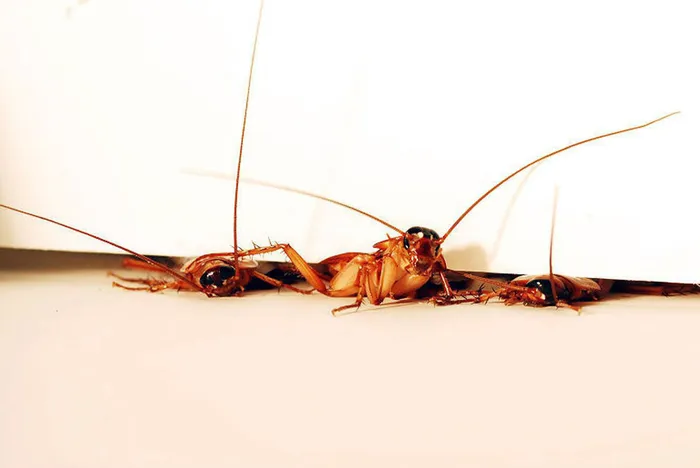
There is a notable increase in fruit flies and cockroaches in the Western Cape
Image: Tom Libby/ Reuters
Are insects the early indicaters of a changing climate and what can we learn from their changing behaviour to prepare us for what's to come?
As communities across South Africa grapple with changing weather patterns, scientists say insects are also providing visible clues about rising temperatures and environmental stress.
Professor Cang Hui, a Stellenbosch University academic and holder of the South African Research Chair in Mathematical and Physical Biosciences, said public observations of changing insect activity are consistent with well-established ecological responses to heat.
“Insects are ectotherms, meaning their body temperature, metabolism and behaviour are tightly linked to ambient temperature,” Hui explained. “As temperatures rise, many species initially become more active and reproduce faster, but only up to a thermal limit. Beyond that, prolonged heat becomes physiologically stressful.”
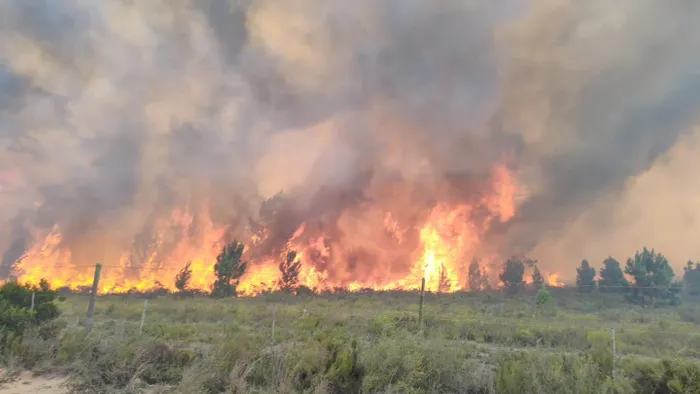
Wildfires burning in the Kouga region.
Image: Hattingh Bornman via Facebook
Residents have reported increases in cockroaches and fruit flies during recent heatwaves, while noticing fewer cricket calls. Hui said these patterns align with species-specific tolerances.
Cockroaches and fruit flies are highly heat-tolerant and thrive in warm, human-modified environments. Heatwaves often drive cockroaches indoors in search of water and cooler microclimates, increasing their visibility. Fruit flies, with their rapid life cycles, reproduce faster in warm conditions, particularly where organic waste ferments more quickly.
Crickets, by contrast, are more sensitive to extreme heat and drought. “While moderate warmth increases cricket calling, extreme heat suppresses activity and reproduction,” Hui said. Drying soils and stressed vegetation also reduce suitable habitat, while behavioural avoidance can drive crickets deeper underground, making them less audible rather than absent.
A decline in cricket calls does not necessarily signal local extinction, he stressed, but it does indicate unfavourable conditions.
Hui cautioned against drawing conclusions from isolated events. Short-term changes in insect activity reliably reflect immediate weather extremes, but only long-term, systematic monitoring can confirm climate trends.
“Many insect populations rebound quickly once temperatures moderate and moisture returns,” he said. “However, if heatwaves become more frequent or prolonged, as climate models project for the Western Cape, we may see longer-term shifts towards heat-tolerant species, declines in sensitive insects, and disruptions to food webs.”
Such changes could affect agriculture through increased pest pressure and reduced pollination, while ecosystems may experience knock-on effects for birds, reptiles and soil health.
As the Western Cape endures an intense and prolonged wildfire season, scientists are warning that hotter-than-normal temperatures and continued dry conditions are likely to persist into the early months of 2026, increasing risks for communities, ecosystems and water resources.
According to the South African Weather Service (SAWS), the seasonal forecast for the January–February–March 2026 period indicates a strong likelihood of above-normal temperatures across the western half of the province.
Christien Engelbrecht, Lead Scientist at SAWS, said the current conditions are consistent with seasonal climate expectations but are being amplified by consecutive months of below-average rainfall.
“The January–February–March season is climatologically not part of the rainfall season for the western parts of the Western Cape,” Engelbrecht said. “The seasonal forecast indicates a relatively low likelihood of above-normal rainfall over the far western parts of the province, with a likelihood of below-normal rainfall elsewhere.”
Since the start of the 2025/26 summer season, large parts of the Western Cape have received below-normal rainfall. This followed a winter rainfall season in 2025 that also underperformed across much of the province.
“As a result, many areas did not receive sufficient rainfall for multiple consecutive months,” Engelbrecht explained.
Should drier conditions persist, the entire province could experience negative impacts, with the western regions particularly vulnerable due to already reduced dam levels. While the far western areas show a slight chance of above-average rainfall during the first quarter of 2026, SAWS cautions that the probability is low and that seasonal forecasting in these regions remains challenging.
Weather patterns are currently not conducive to rainfall over the province’s all-year rainfall regions, which extend eastwards into the Eastern Cape, further limiting opportunities for catchment recovery.
Engelbrecht urged municipalities and the public to monitor daily SAWS forecasts, noting that specific weather systems capable of influencing water catchment areas cannot be predicted reliably beyond a week. “Where risks are identified, advisories and warnings will be issued with sufficient lead time,” she said.
Meanwhile, CapeNature has reiterated calls for the public to act responsibly when encountering wildlife affected by fires. While fire is a natural and necessary process for the fynbos biome, extreme conditions increase risks to animals and people alike.
To date, 38 aerial firefighting missions have been authorised this season, with approximately 90 000 hectares already burnt. The Provincial Disaster Management Centre has spent R15 million on aerial firefighting support, with additional funding under consideration as hot and dry conditions are expected to persist beyond March.
CapeNature has stressed that displaced or injured wildlife must not be touched, fed or removed by the public. Although animals may appear disoriented, many recover without intervention, and unnecessary handling can cause severe stress or injury.
Only trained and authorised individuals are permitted to handle or rehabilitate wild animals, in line with environmental legislation. Members of the public are urged to keep a safe distance, observe and record details, such as location and species, and report incidents immediately through CapeNature or SPCA channels.
As the wildfire season continues, authorities are calling on residents, landowners and visitors to remain vigilant, conserve water and vegetation, and recognise that both weather patterns and the smallest creatures are signalling a hotter, more challenging future for the province.
tracy-lynn.ruiters@inl.co.za