

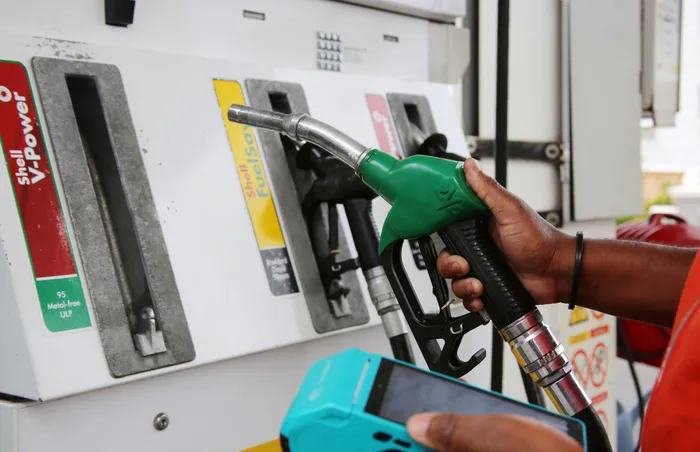
Petrol is likely to increase again in June as the temporary fuel tax relief programme winds down.
Image: Tumi Pakkies / Independent Newspapers
The fuel price outlook for June is a mixed bag for motorists and commuters, with petrol looking set for another increase and diesel seeing a very welcome decrease.
The latest available data implies that petrol prices are likely to increase by around R1.05 per litre, while diesel could come down by between R2.79 in the case of 50ppm and R3.60 in the case of 500ppm.
However, this comes with a caveat, as the Slate Levy, which compensates fuel companies for price fluctuations in the preceding month, could have a bearing on fuel prices this month, although it seems unlikely to swing things in favour of a petrol price decrease. The official fuel price adjustments will be announced by the Department of Mineral and Petroleum Resources early this week.
The month-end, unaudited data released by the Central Energy Fund actually painted a far more positive picture, in which 95 unleaded petrol could have decreased by 46 cents, while diesel showed over-recoveries of between R4.93 and R5.56.
However, Treasury’s temporary fuel tax relief measures that were announced in April are due to be phased out from June, with R1.50 being reintroduced to the petrol tax tally and R1.96 to diesel. A further R1.50 will be added in July when the tax structure returns to normal.
If the above predictions materialise, 95 unleaded petrol could rise to around R26.81 at the coast and R27.68 in Gauteng from June 3. The wholesale price of diesel 500ppm, meanwhile, could fall to around R27.69 in the inland regions.
June’s fuel price adjustments come in the wake of record increases in the preceding months, which saw petrol rise by R3.06 per litre in April and R3.27 in May, while diesel surged by R7.37 and R6.19 respectively.
This came after US strikes on Iran caused international oil prices to spike, with the latter placing a chokehold on the critical Strait of Hormuz oil route. However, hopes of an imminent peace deal have seen prices subside slightly during May.
A notable development on the local front that could offer longer-term relief is South Africa’s Minister of Mineral and Petroleum Resources, Gwede Mantashe, who is pushing for the establishment of a new state-owned company aimed at addressing rising fuel prices.
In his budget vote speech two weeks ago, Mantashe said South Africa needs a long-term solution to fuel price volatility, as well as a deeper examination of its heavy reliance on fuel imports.