

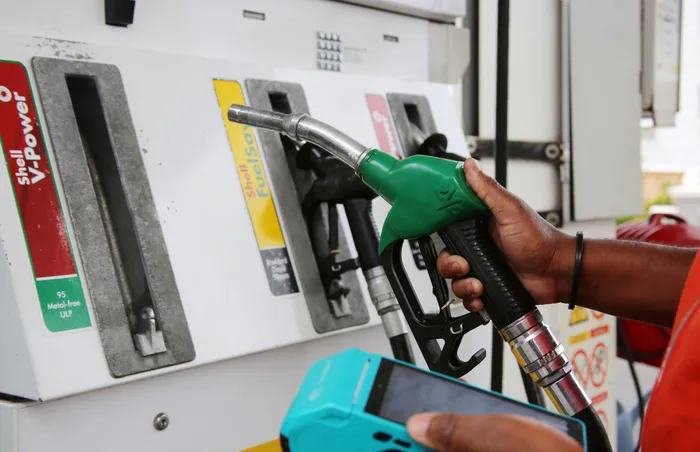
Petrol motorists will pay significantly more from 3 June, while diesel users enjoy price cuts of up to R3.25 per litre.
Image: Tumi Pakkies / Independent Newspapers
South African motorists will experience a mixed start to June, with petrol prices set to rise significantly while diesel users benefit from substantial price cuts, following the latest fuel price adjustments announced by the Department of Mineral and Petroleum Resources (DMPR).
The new prices come into effect on 3 June 2026 and reflects the ongoing global geopolitical tensions, movements in international petroleum product prices and changes to the government fuel levy relief measures.
According to the department, the average Brent crude oil price increased from $101 to $104.59 per barrel during the review period, largely driven by continued tensions between the United States and Iran, as well as the closure of the Strait of Hormuz, a critical global oil shipping route.
Despite higher crude oil prices, international prices for refined petroleum products fell during the review period, particularly for diesel and illuminating paraffin.
"The prices of middle distillates (diesel and paraffin) decreased more than petrol prices because of lower seasonal demand as the northern hemisphere moves into summer," the department said.
These lower international product prices reduced the basic fuel price contribution by approximately R0.30 per litre for petrol, R5.42 per litre for diesel and R5.82 per litre for illuminating paraffin.
The rand also strengthened slightly against the US dollar during the review period, improving from an average of R16.65 to R16.52 against the greenback.
This appreciation provided additional relief to fuel pricing calculations, lowering fuel costs by approximately R0.12 per litre for petrol, R0.15 per litre for diesel and R0.15 per litre for illuminating paraffin.
However, these gains were offset by changes to the Slate Levy and the reduction of government fuel levy relief.
The department confirmed that the cumulative slate balance for petrol and diesel stood at a negative R18.28 billion at the end of April 2026.
"In line with the provisions of the Self Adjusting Slate Levy Mechanism, the slate levy of R1.58 per litre will be implemented in the price structures of petrol and diesel with effect from the 3rd of June 2026," the department said.
The levy has increased by R0.35 per litre from R1.23 to R1.58 per litre.
Meanwhile, National Treasury has reduced temporary fuel levy relief measures introduced to cushion consumers from global oil price volatility.
"In line with the announcement by the Minister of Finance, the amount of general fuel levy relief has accordingly been reduced by R1.50 per litre for petrol and R1.96 per litre for diesel, effective from Wednesday the 3rd of June 2026 to Tuesday 30th of June 2026," the department said.
As a result, motorists filling up with petrol will see prices increase by R1.43 per litre.
Diesel users, however, will benefit from significant decreases, with diesel containing 0.05% sulphur falling by R3.25 per litre and diesel containing 0.005% sulphur decreasing by R2.62 per litre.
Wholesale illuminating paraffin will drop by R5.96 per litre, while the Single Maximum National Retail Price for illuminating paraffin will decrease by R7.95 per litre.
Consumers using LPGas will also receive some relief. The maximum retail price of LPGas will decline by R0.17 per kilogram nationally and by R0.20 per kilogram in the Western Cape.
The department also announced that the Maximum Refinery Gate Price for LPGas imported through the Port of Saldanha Bay in the Western Cape will be set at R18,228.05 per metric ton, while the Maximum Retail Price will be R40.65 per kilogram from 3 June.
Based on current local and international factors, the fuel prices for June 2026 will be adjusted as follows:
While the diesel price cuts will provide welcome relief to the freight, logistics and agricultural sectors, the sharp increase in petrol prices is expected to place further pressure on household budgets already strained by rising living costs, higher interest rates and ongoing inflationary pressures.
Follow Business Report on Facebook, X and on LinkedIn for the latest Business and tech news.